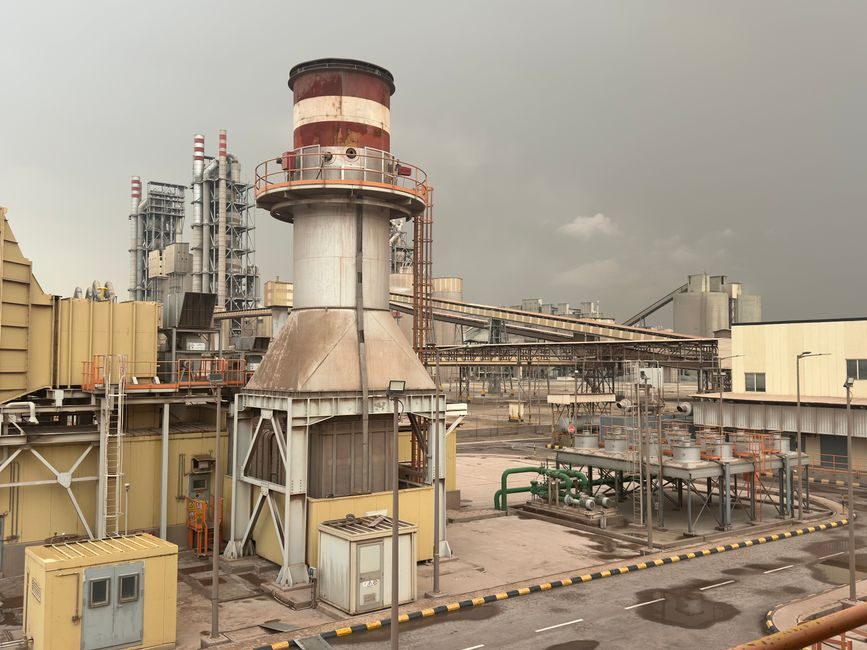
The global industrial refrigeration market is sized at USD 19.4 billion in 2021, expanding to USD 25.1 billion by 2026 at a 5.3% CAGR through the forecast window per MarketsandMarkets data [S1]. A separate Allied Market Research projection puts the market at USD 21.9 billion in 2020 reaching USD 41.7 billion by 2032 at 5.2% CAGR, with the discrepancy driven by differing scope (system-only vs full component+aftermarket) [S2].
Refrigerated warehousing holds the largest application share, CO2 (R-744) cascade systems register the fastest refrigerant CAGR, and screw compressors dominate the component mix over reciprocating units on reliability, maintenance interval, and discharge-temperature behaviour [S1]. Buyers in food processing, pharmaceuticals, chemicals, and cold-chain logistics are the four end-markets driving the bulk of new system orders [S2].
Market Size and Segment Anchors for 2026 Sourcing
Industrial refrigeration systems cool, freeze, and hold process temperatures across warehouses, food processing lines, chemical and pharmaceutical plants, and distribution hubs, with the build composed of compressors, condensers, evaporators, controls, vessels, pumps, valves, and auxiliaries [S1]. The compressor sub-segment is forecast to retain the largest revenue share of any single component in 2026, while refrigerated warehousing is the single largest end-application by value [S1].
For capacity planning, MarketsandMarkets pegs the 2021-2026 trajectory at +USD 5.7 billion in incremental revenue, equivalent to roughly USD 1.14 billion added per year on a linear basis [S1]. Allied's 2020-2032 trajectory implies a larger absolute pool (USD 19.8 billion incremental) but over a longer 12-year horizon, landing at ~USD 1.65 billion added per year [S2]. Procurement teams should anchor budget envelopes to whichever report matches their scope: system-only capex (MarketsandMarkets) vs total installed base including service (Allied).
Refrigerant and Compressor Technology Split
CO2 (R-744) cascade systems are projected to register the highest CAGR among refrigerant types through 2026, driven by low GWP (~1), thermodynamic efficiency at low temperatures, and lower build and lifecycle cost versus glycol-chilled systems at large scale [S1]. CO2 is abundant, atmospheric-resident on a long timescale, and compatible with cascade architectures that pair R-744 low-stage with ammonia or synthetic HFC/HFO high-stage for sub-zero process loads.
Within the compressor block, screw machines are gaining share over reciprocating units on three measurable criteria: higher reliability (longer MTBF), reduced maintenance frequency, and lower discharge temperatures that simplify oil management and heat-recovery design [S1]. Reciprocating compressors remain entrenched in smaller-capacity and service-replacement niches, but greenfield process plants in food, dairy, and cold storage are predominantly specifying screw packages in the 200 kW to 3 MW range per train.
Selection Criteria for Top Industrial Refrigeration Companies
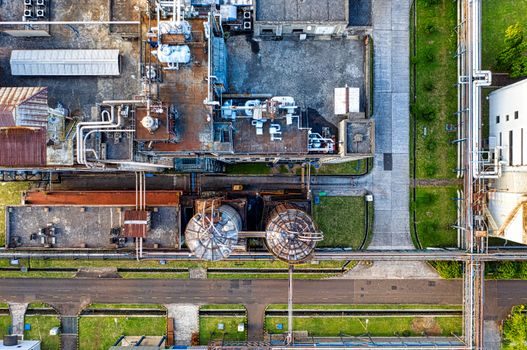
A 2026 shortlist of top industrial refrigeration companies is built on five procurement-facing criteria: refrigerant compliance (Kigali Amendment phasedown alignment, F-Gas Regulation EU 517/2014 low-GWP capability), application depth (ammonia, CO2, hydrocarbon, and HFC/HFO packages), compressor portfolio (screw, reciprocating, centrifugal), service-coverage density, and reference install base in food, pharma, and chemical process lines [S1][S2].
For process engineers, the comparison that actually drives a buy decision is refrigerant technology stack x compressor type x service reach. The table below lines the major technology options against the criteria that matter at the RFQ stage.
<strong>Refrigerant family vs decision criteria (qualitative comparison):</strong> Ammonia (R-717) — high thermodynamic efficiency, zero GWP, but toxic above 35% LEL exposure and requires IIAR 2 / ASME B31.5 process-piping discipline; suitable for large food and cold-storage plants. CO2 (R-744) cascade — low-GWP, low-toxicity, increasing adoption in retail-frozen and cold-storage; higher design pressure (~80-130 bar transcritical) raises compressor and vessel cost. HFC/HFO blends (R-448A, R-449A, R-513A) — drop-in for legacy HFC systems, GWP in the 400-700 band, near-term compliance with phasedown but not long-term; common in pharma and process cooling retrofits. Hydrocarbons (R-290 propane, R-1270 propylene) — very low GWP, A3 flammability class restricts charge size, niche in industrial packaged chillers.
Compared on these criteria, ammonia leads for large food and cold-storage builds, CO2 leads for sustainability-aligned retail and frozen-storage, and HFO blends lead for retrofit-heavy pharma and process-cooling fleets. The right refrigerant family is dictated by charge limits, plant footprint, local code adoption, and the operator's in-house ammonia-experience base, not by OEM marketing.
Real Use Cases by End-Market
Food and beverage processing is the single largest end-market, driven by frozen food retail sales up 23% in 2021 vs 2019 per the American Frozen Food Institute, and EU fruit-and-vegetable per-capita consumption of 364.58 g/day in 2021 (Freshfel Europe) — a 2.2% YoY rise [S2].
Pharmaceutical and chemical processing are the second-tier demand drivers, with industrial chillers and process-cooling skids specified to maintain tight tolerances on reactors, fermentation tanks, and cleanroom HVAC. Data-center liquid cooling is a newer adjacent load, with chiller manufacturers re-rating their industrial platforms for higher entering-water temperatures and lower leaving-water setpoints. Industrial-scale cold-storage buildouts linked to e-commerce grocery and food retailing are the third leg, with major logistics operators expanding refrigerated warehouse footprints to handle same-day and next-day chilled delivery windows.
Limitations, Failure Modes, and Regulatory Pressure
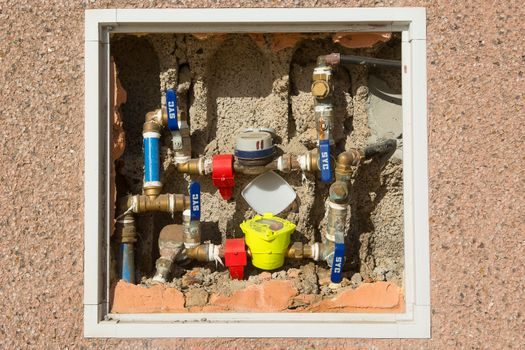
Refrigerant leakage is the dominant operational liability: per the U.S. EPA, a typical food retail store leaks an estimated 25% of its refrigerant charge annually, a figure that scales across larger industrial sites and drives direct GHG emissions and regulatory exposure [S2]. Leak detection, automatic isolation valves, and periodic tightness testing under F-Gas and EPA SNAP rules are now baseline procurement requirements, not optional extras.
Stricter refrigerant regulation is forcing end-users to phase down high-GWP HFCs on a fixed timeline, with the Kigali Amendment to the Montreal Protocol setting country-specific freeze and step-down dates for HCFCs and HFCs. Operators running legacy HFC systems are weighing retrofit to HFO blends, replacement with CO2 cascade, or conversion to ammonia — each with different capex, safety-case, and operator-training implications. Ammonia plant siting in particular triggers process-safety management (PSM / COMAH) and IIAR 2 design-rule review, and CO2 transcritical designs push the pressure envelope above conventional HFC system ratings, so vessel, compressor, and relief-valve selection must be re-engineered rather than re-used.
Sourcing Standards and Verification Checklist
Buyers should require ASHRAE 15 (Safety Standard for Refrigeration Systems) compliance, IIAR 2 (ammonia design), and IIAR 9 (ammonia contractor) certification for ammonia systems, plus ASME B31.5 (refrigeration piping) and ASME BPVC Section VIII (pressure vessels) for the pressure-boundary scope. EU projects should additionally verify EN 378 (refrigerating systems and heat pumps — safety and environmental requirements) and F-Gas Regulation EU 517/2014 conformity for refrigerant charge accounting and leak-check frequency. Process engineers should also request OEM-documented MTBF, service interval, and discharge-temperature data on screw compressors, and an OEM-validated leak-rate target (typically well below 5% per year for new builds vs the 25% retail average) [S1][S2].
The 2026 buy decision is driven less by brand familiarity and more by whether a supplier can deliver a refrigerant stack that meets the operator's phasedown calendar, a compressor package sized to the actual process load profile, and a service network that can hit response-time SLAs at the plant. Specifying CO2 cascade or ammonia now locks in low long-term regulatory risk; specifying HFO blends buys retrofit flexibility at a higher lifecycle emissions cost. For related industrial sourcing criteria, see this Top 10 Industrial Filter Manufacturers in 2026: Spec-Driven Shortlist for B2B Buyers guide, and for adjacent process-cooling equipment spec work the Compressed Air Systems 2026: Filter-Dryer Growth, Utility Models, Sourcing Reality piece lines up against chiller plant auxiliaries.
The next trackable signals for 2026 sourcing are: (1) updated F-Gas Regulation revision progress and any tightening of the HFC phasedown slope beyond the Kigali baseline, (2) ammonia charge-limit revisions in IIAR 2 and EN 378 that may shift large-plant economics, and (3) OEM announcements of transcritical CO2 skid capacities above 2 MW, which would move CO2 from cold-storage into mainstream food processing. Buyers should also watch for industrial coating advances on evaporator and condenser fin surfaces, since hydrophobic coatings directly reduce the 25%-annual-leakage class of failures by limiting corrosion at tube-sheet interfaces.
Component reference pages worth checking: industrial adhesive, and industrial borescope.