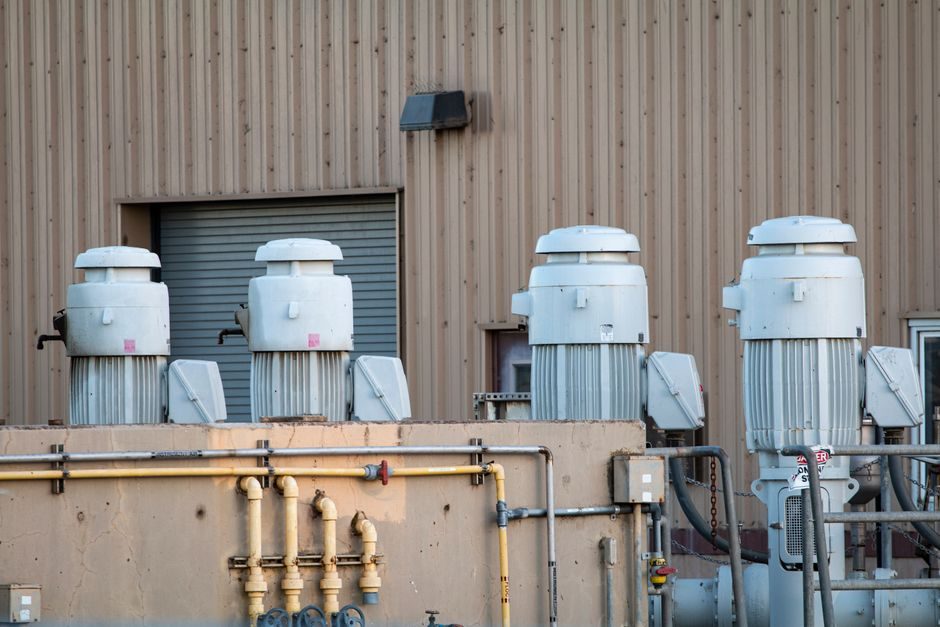
The global industrial refrigeration system market is on a USD 19.4 billion (2021) to USD 25.1 billion (2026) trajectory at a 5.3% CAGR, with compressor hardware, CO2-based refrigerant cycles, and refrigerated warehouse capacity absorbing the largest share of new 2026 spend [S1].
Food and beverage processing, cold-chain logistics, pharmaceutical storage, and petrochemical chilling are the four application bands pulling most of that growth, and screw compressor capacity plus CO2 cascade cycles are the two engineering choices buyers are converging on for greenfield plant design [S1][S2].
Market Sizing and the 2021–2026 Trajectory
MarketsandMarkets sizes the global industrial refrigeration system market at USD 19.4 billion in 2021, rising to USD 25.1 billion by 2026 — a 5.3% CAGR over the 2021–2026 window [S1]. Allied Market Research publishes a parallel but wider envelope: USD 21.9 billion in 2020 reaching USD 41.7 billion by 2032 at 5.2% CAGR, which implies roughly doubling between 2020 and 2032 [S2]. The two reports disagree on absolute market value but converge on a roughly 5% CAGR (5.3% per MarketsandMarkets for 2021–2026 and 5.2% per Allied Market Research for 2023–2032), which is the actionable growth rate for a 2026 capital plan.
Three demand drivers appear in both reports and are verifiable to source: rising cold-chain trade volume, government-backed cold-chain infrastructure in developing economies, and tightening rules on high-GWP refrigerants that push buyers toward CO2 and other low-GWP options [S1][S2]. For a process engineer, that translates into a 2026 spec sheet where the refrigerant line is no longer R-404A by default and the compressor line item is increasingly a screw or CO2-specific design.
Compressors: Screw Designs Take the Largest 2026 Share
The compressor segment is projected to hold the largest share of the industrial refrigeration system market in 2026, by component [S1]. Within compressors, screw types are gaining share over reciprocating because of higher reliability, lower maintenance frequency, smaller footprint, and lower discharge temperatures — all of which matter on a plant floor where downtime hits the whole cold store, not just one chiller [S1].
The five OEM groups named in the Technavio 2017 vendor survey — Daikin Industries, Danfoss, GEA Group, Ingersoll-Rand, and Johnson Controls — remain the reference shortlist buyers benchmark against for screw and centrifugal frames in 2026, and Carrier's published 2025 industrial-refrigeration literature positions CO2 (R-744) heating-and-cooling as a baseline food-and-drink solution rather than a niche option [S5][S8]. That vendor convergence on CO2 is the second hard 2026 trend in the spec sheet.
Refrigerant Choice: CO2 (R-744) Cascade Is the Default Direction
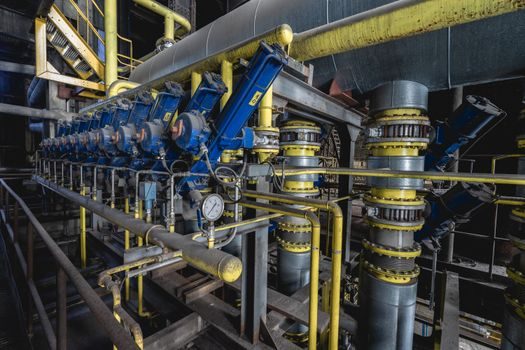
CO2-based industrial refrigeration systems are forecast to register the highest CAGR within refrigerant type through 2026 [S1]. The cited engineering rationale: CO2 is abundant, has a much shorter atmospheric residence time than HFC alternatives, and large CO2 cascade systems are cheaper to build than the glycol loops they replace, which lowers both capex and life-cycle cost on installations above the size threshold where cascade becomes economic [S1].
On the regulatory side, the U.S. EPA has flagged that a typical food retail store leaks an estimated 25% of its refrigerant charge annually, which is the operational number behind the push for lower-GWP, lower-charge systems in 2026 procurement [S2]. Carrier's 2025 food-processing literature explicitly markets CO2 heating and cooling as a default for meat, poultry, fish, fruit, vegetables, dairies, and slaughterhouse applications — a clear signal that CO2 cascade has moved from pilot to standard offering on the major OEM catalogues [S5].
Application Mix: Refrigerated Warehouses Dominate 2026 Capex
Refrigerated warehouses are projected to hold the largest application share of the industrial refrigeration market in 2026 [S1]. The demand pull is quantifiable: WTO data cited in the Allied study records international merchandise trade at USD 25.3 trillion in 2022, with a substantial share being temperature-sensitive pharma, frozen and chilled food, and chemicals that must move through a temperature-controlled logistics chain [S2].
On the consumption side, the American Frozen Food Institute reports a 23% rise in U.S. retail frozen food sales in 2021 versus 2019, and Freshfel Europe's Consumption Monitor puts EU per-capita daily fruit and vegetable consumption at 364.58 grams in 2021, up 2.2% year-on-year and 1.27% above the five-year average [S2]. Those two numbers, plus the 5.2%–5.3% market CAGR, are the clearest trackable signals a 2026 warehouse specifier should weight when sizing new cold-store capacity [S1][S2]. Refrigeration system integrators such as Cool Refrigeration Systems (covering SGS evaporators, SGS evaporative condensers, Krack, Danfoss valves, Vilter-Emerson, and CDI product lines) and United Refrigeration in East London (25+ years on cold-rooms, freezer-rooms, and plant-rooms) are the type of regional system houses absorbing that warehouse build-out [S3][S7].
Food, Pharma, Chemicals: Where 2026 Budgets Are Actually Going

Food and beverage processing and pharmaceuticals are the two application bands most often named as the top revenue contributors in 2026 industrial refrigeration forecasts [S2]. Within food, the segments explicitly cited are meat, poultry, fish, fruit and vegetables, dairies, ice-cream, desserts, and slaughterhouses — each with its own temperature band, hygiene standard, and refrigerant-charge limit [S2][S5].
On the industrial side, chemical, petrochemical, and data-center chilling are flagged as growth applications because chillers and dedicated refrigeration units are used to keep process equipment and IT hardware within thermal limits [S2]. Cold-room condensing units such as those built by CNAU, designed to simplify the traditional condensing-unit architecture for cold-room refrigeration in food freezing, storage, industrial laboratories, electronics manufacturing, and chemicals, are a representative example of the standardised packaged product that 2026 warehouse and lab buyers are specifying [S6]. For buyers sourcing the broader plant utility stack around a refrigeration upgrade, the related decisions on compressed-air filtration and warehouse gas detection now sit on the same project timeline, and spec maps such as the compressed air system market 2026 sizing and filter/dryer spec map and the multi-gas detector selection guide for warehouses are useful adjacent references for that combined utility bill.
Component-Level Comparison: What 2026 Spec Sheets Are Picking
Across the four main component categories — compressor, condenser, evaporator, and control — the 2026 spec pattern is consistent: screw over reciprocating on the compressor line, evaporative over air-cooled where water is available on the condenser, packaged electric defrost over hot-gas on the evaporator, and PLC-based controls with remote telemetry on the control panel [S1].
CO2 (R-744) cascade cycles win on GWP and life-cycle cost at the larger plant sizes; ammonia (R-717) remains the default for very large single-site industrial installations where the charge can be managed; and HFC/HFO blends are being relegated to retrofit and smaller-packaged equipment as new build moves to low-GWP cycles [S1][S5]. Screw compressors dominate because they tolerate the higher pressure ratios that CO2 cascade demands, and the absence of high discharge temperatures removes a constraint that used to force designers toward reciprocating frames for high-lift applications [S1].
Standards, Refrigerant Compliance, and the Engineering Constraints
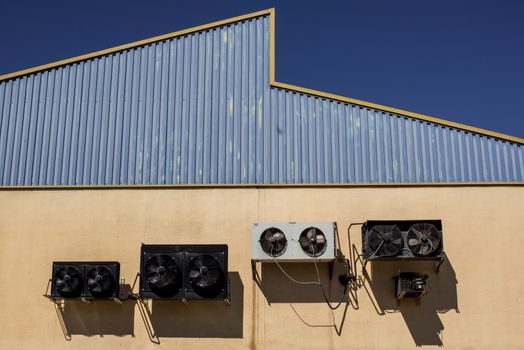
Refrigeration skid design in 2026 sits on the usual stack: ASME pressure-vessel rules for the receiver and intercoolers, IIAR standards (ANSI/IIAR 2, 3, 5, 6, 8, 9) for ammonia systems, ASHRAE 15 for refrigerant classification and machinery-room ventilation, ASHRAE 34 for refrigerant safety group numbering, and EPA Significant New Alternatives Policy (SNAP) for U.S. refrigerant approval, with parallel F-Gas regulation in the EU driving the same low-GWP shift from the other side of the Atlantic [S2]. Buyers should pin refrigerant, charge size, machinery-room classification, and ventilation rate on the datasheet before vendor selection, because each of those four numbers constrains the allowable component list.
Capacity and lead-time remain the binding procurement constraints in 2026: screw compressor lead times on the larger frames are still measured in quarters, and stainless evaporator coil supply is tight in the same window where the PE resin shortage 2026 sourcing reality is reshaping plastics-intensive adjacent components. Track two signals through the rest of 2026 to keep a spec honest: the WTO trade-growth print (used as the macro proxy for cold-chain demand) and the IIAR / ASHRAE committee output on ammonia-charge limits and CO2 high-pressure cut-outs, both of which feed directly into the 2027 plant-design envelope [S1][S2].
Component reference pages worth checking: industrial adhesive, industrial borescope, and industrial buzzer.