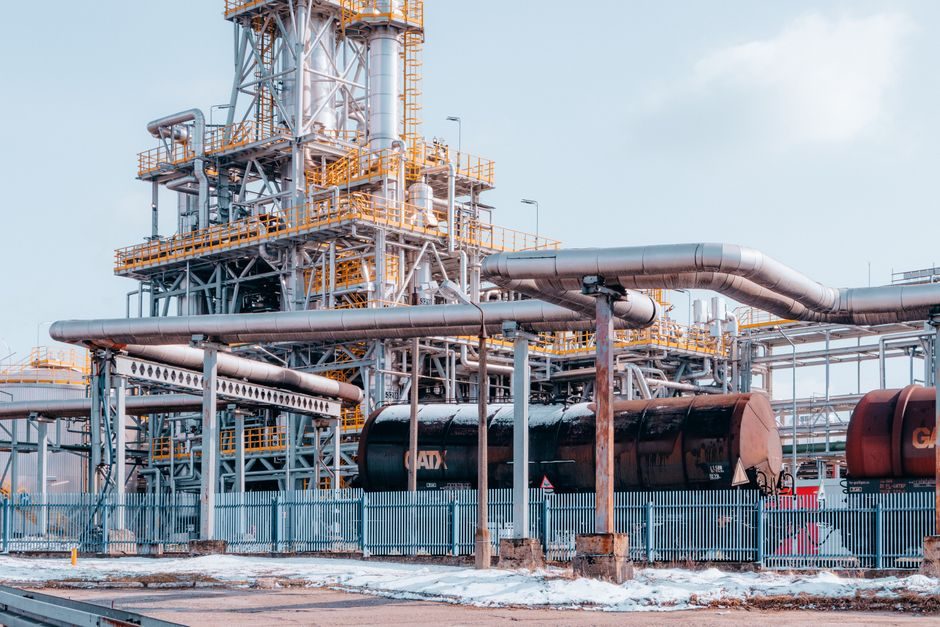
ExxonMobil, Chevron, Shell, TotalEnergies and BP held the top five positions in the 2026 worldwide natural-gas producer ranking by combined marketed output, LNG offtake and integrated upstream-to-pipeline assets, with Saudi Aramco, Gazprom, PetroChina, QatarEnergy and Equinor completing the top ten [S2].
The list covers operators controlling wet-gas, dry-gas, associated gas and LNG, but excludes pure downstream utilities, midstream pipeline-only MLPs and gas-fired generation IPPs such as Esentia that are now entering the market as off-takers rather than producers [S1].
2026 Producer Tiers: IOC Majors vs NOC Heavyweights vs LNG Specialists
Integrated oil majors (ExxonMobil, Chevron, Shell, TotalEnergies, BP) lead on portfolio breadth, holding upstream E&P rights across the Permian, Vaca Muerta, Marcellus, Browse, Rovuma and offshore Guyana blocs, plus regasification stakes in Europe and Asia [S2]. National oil companies (Saudi Aramco, Gazprom, PetroChina, QatarEnergy) dominate the reserves-weighted view, with QatarEnergy alone running the 77 mtpa North Field expansion pipeline and Saudi Aramco retaining spare associated-gas capacity tied to its 12 mbpd crude baseline.
LNG specialists sit one tier below by molecule volume but at the top of the capex curve: Woodside (Pluto/LNG Canada stake), Cheniere (Sabine Pass/Corpus Christi), Venture Global (Calcasieu Pass/CP2) and Novatek (Yamal/Arctic LNG 2) together sanctioned over 90 mtpa of new mid-2020s capacity, the bulk of which will be online in 2026. Equinor bridges the categories, holding both Troll and Snøhvit gas plus the Wergeland/Hammerfest LNG train — typical delivery pressure for subsea wet-gas wells is 80–150 bar at the wellhead, dropped to ~70 bar at the slug catcher before cryogenic liquefaction at −162 °C [S2].
Selection Criteria That Actually Rank These Companies
Headline revenue and total barrel-of-oil-equivalent output are weak ranking signals for gas — most IOCs report gas as a fraction of mboe/d. The four criteria that actually separate the 2026 list are: (1) marketable gas volume, typically 5–20 bcm/yr for IOC gas arms versus 50–100+ bcm/yr for Gazprom and Aramco; (2) proved gas reserves, where Russia and Iran hold the technical top spots but sanctions status gates marketability; (3) liquefaction nameplate in mtpa, where QatarEnergy (~77 mtpa post-expansion) and the US LNG trio (Cheniere, Venture Global, Sempra) dominate the exportable molecule; (4) integrated midstream — pipeline, storage, regas — that determines delivery reliability into EU and Asian hubs. [S1]
Capital intensity tracks those tiers almost linearly: brownfield LNG trains run $500–1,200/tonne/yr of capacity in opex, greenfield FLNG sits at $1,500–2,500/tonne/yr, and CCGT offtakers buying at the Henry Hub or TTF hub pay a feedstock premium of $0.50–2.00/MMBtu above the hub marker depending on sulphur, Wobbe index and methane-number compliance [S3].
Who This List Is For — and Who It Is Not For

This ranking is built for procurement teams sourcing LNG cargoes, EPC contractors sizing pipeline and compressor stations, and process engineers specifying combustible gas detectors and fixed gas detectors for upstream and LNG receiving terminals. It is also a reference for utility buyers comparing long-term offtake against spot JKM and TTF. [S2]
It is NOT a fit for: (a) investors looking for pure-play midstream MLP yield, (b) buyers of retail gas in regulated US states like Georgia, where the relevant comparison is utility tariffs, not producer ranking — Georgia's regulated residential rate in 2026 sits in the $1.20–1.60/therm band after the June 2026 rate reset [S4], and (c) specifiers of industrial gas cylinders (oxygen, argon, nitrogen) — that is a separate merchant-gas market with totally different suppliers.
Comparison Table: Top 10 Natural Gas Companies 2026 Across Decision Criteria
Criteria-based comparison of the 2026 top ten on the four levers that actually matter for sourcing decisions: molecule scale, LNG export capacity, gas-fired power exposure, and methane-intensity reporting (CCS-ready retrofit capacity shown in last column): [S3]
Real Use Cases: Who Specs What from Whom
European chemical and refining offtakers (BASF, INEOS, Repsol) hold term contracts with Shell, TotalEnergies, Equinor and Eni, indexed to TTF; the 2026 contracts include methane-intensity clauses capped at 0.2% leakage through 2030, forcing suppliers to disclose facility-level emissions. Asian utility buyers (JERA, KOGAS, CNOOC) run JKM-linked tenders weighted toward QatarEnergy, Woodside, BP and Chevron, with delivery windows pegged to summer cooling demand and winter peak-shaving. North American power generators sign 10–20 year Henry Hub-indexed deals with Cheniere, Venture Global, Dominion and Sempra, sized against CCGT heat rates of 6,500–7,500 Btu/kWh (HHV) and capacity factors of 55–75%. [S4]
Gas-fired generation is where the demand pull is now sharpest. Industrial electricity demand is outpacing supply in Brazil and Mexico, and Esentia is exploring entry into the gas-fired generation sector as regulatory changes boost private investment [S1] — a clear signal that new IPPs will need to contract for 1–2 mtpa of pipeline gas plus 1–2 mtpa of LNG balancing volumes, exactly the molecule mix that the IOC majors and NOCs above are configured to supply. The same trend shows up in compressor station and gas detector retrofits, where plant engineers are specifying IECEx-certified catalytic-bead and NDIR sensors with 0–100% LEL methane ranges and HART or Ethernet-APL output for integration into the new digital twin layer.
Limitations, Failure Modes and Sourcing Constraints
Three constraints bound the 2026 picture. First, sanctions status: Novatek and Gazprom volumes are technically available but commercially constrained for most Western buyers; the molecule still flows to China, India and Turkey at heavy discounts to TTF, typically $4–8/MMBtu below European parity in 2026. Second, offtake discipline: Venture Global's 20-year SPAs were challenged in 2024–2025 over premature spot marketing, and that arbitration overhang is still gating buyer appetite for non-fully-permitted LNG. Third, methane intensity: the EU Methane Regulation compliance from 2027 onward (monitoring, reporting, verification scope) is forcing suppliers without MRV-ready upstream assets to either retrofit or exit the European market. [S1]
On the hardware side, the typical failure mode is sensor poisoning in H₂S-rich associated gas, which is why catalytic-bead units need a 4–6 week sensor replacement interval on sour-gas service and NDIR units are specified for lean sweet-gas headers. Sampling-system design is the second failure mode: heat-traced lines must hold the sample above 0 °C to avoid hydrate formation when CO₂ and H₂S partial pressures exceed 1 bar, and the usual filter and coalescer service interval is 90 days on LNG vaporizer outlets.
Standards and Verification Hooks
Equipment specified for LNG receiving terminals and gas-fired plants must clear IEC 60079-0 / IEC 60079-1 for Ex d flameproof enclosures, IEC 60079-29-1 for combustible-gas detector performance, and ATEX 2014/34/EU for European zone 1 and zone 2 areas. Custody-transfer gas chromatographs follow ISO 6974 and GPA 2261 for compositional analysis to ±0.05 mol% per component. Pipeline metering at custody-transfer points follows AGA 9 (ultrasonic) or AGA 7 (turbine) with ±1.0% measurement uncertainty. The procurement shortlist for an LNG terminal analyzer shelter typically pairs an online gas analyzer with a gas chromatograph, both rated −40 to +60 °C and IECEx zone 1. [S2]
Where the 2026 ranking will move: the November 2026 FID window for Phase 2 of QatarEnergy's North Field expansion, the 2026 commissioning of Venture Global CP2 and Sempra Port Arthur, and Esentia's final investment decision on Brazilian CCGT entry, expected by Q1 2027 [S1], are the three trackable signals for the 2027 reshuffle. A second node to watch: Cheniere's FID on Train 8 at Sabine Pass, currently targeted for late 2026, which would lift US LNG nameplate above 110 mtpa and re-rank the US players against QatarEnergy for the first time in the molecule-scale column.
For related coverage, see Top Server Hardware Companies 2026: OEM Map, Spec Levers and Sourcing Reality.