
Steel casting demand is projected to expand by USD 9.87 billion from 2025 to 2030 at a 5.2% CAGR, with the total addressable opportunity rising to USD 14.20 billion and APAC accounting for 55.4% of incremental growth [S1]. Automotive and transportation led the application mix at USD 13.35 billion in 2024, while sand casting held the largest product share within the casting family [S1].
Adjacent demand signals reinforce the picture: the global coil coatings market — a downstream consumer of cold-rolled and galvanised stainless-steel and carbon-steel substrate — is forecast to reach USD 2.04 billion by 2030 at a 4.50% CAGR for 2024-2030, against a 2018 baseline of USD 5.00 billion [S2]. Together these two tracks define the bulk of mill-throughput pull through the forecast window.
Forecast Headline Numbers, 2025-2030
The Technavio steel-casting model reports a USD 9.87 billion incremental opportunity on a 5.2% CAGR between 2025 and 2030, against a market-opportunity ceiling of USD 14.20 billion [S1]. The headline CAGR sits above the parallel coil-coatings figure of 4.50% (2024-2030, to USD 2.04 billion) reported by IndustryARC [S2]. Casting therefore pulls harder on foundry output, while coil-coatings tracks the underlying cold-rolled substrate cycle with a one-step lag.
Regional concentration is the single most actionable number: APAC takes 55.4% of forecast steel-casting growth, with China, India and Japan as the named country stack [S1]. For buyers, this means three sourcing corridors — Yangtze River Delta, Chota Nagpur/Pithampur, and the Kanto industrial belt — absorb more than half of incremental tonnage, shaping both lead-time and freight economics.
Application Mix: Why Automotive and Transportation Sets the Pace
Automotive and transportation was valued at USD 13.35 billion in 2024 and is the segment Technavio flags for significant growth through 2030, ahead of construction/infrastructure, mining, power and others [S1]. The cited drivers are EV-platform conversion and lightweighting — both of which raise the steel-casting intensity per vehicle for subframes, knuckle carriers, differential housings and motor enclosures.
Construction and infrastructure is the second rail, fed by APAC real-estate build-out; IndustryARC cites that APAC held a 48% share of coil-coatings consumption as far back as 2018, with China leading regional demand and India following [S2]. Mining and power round out the segment table but carry thinner absolute weight, even though power-turbine castings (hub, rotor) attract premium pricing for high-pressure-environment service.
Product and Type Split: Sand Casting Dominates, But Alloy Tier is the Margin Lever
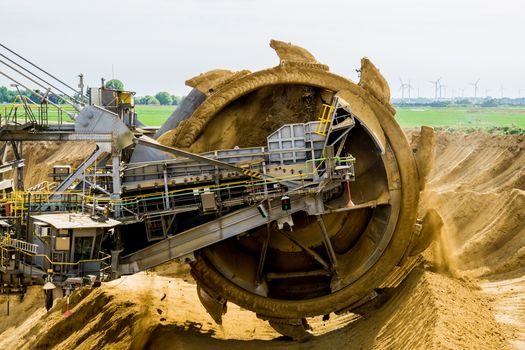
By process, sand casting held the largest steel-casting revenue share in 2024, followed by investment casting, die casting and centrifugal casting [S1]. By alloy type, the segmentation runs carbon steel, low-alloy steel, high-alloy steel, and others — with high-alloy grades (martensitic, austenitic, duplex) capturing the safety-critical and corrosion-exposed work [S1].
For a process engineer, the practical mapping is: specify alloy-steel grades where fatigue and impact dominate, carbon-steel castings where cost-per-kg is the gate, and silicon-steel routes only where magnetic/lamination behaviour is required — typically outside the casting product family. A simple matrix: sand casting covers the broadest tonnage and the heaviest sections; investment casting serves thin-wall, tight-tolerance work; die casting is the productivity lever for non-ferrous, with limited steel applicability; centrifugal casting owns the large-diameter tubular niche.
Coil-Coatings as a Downstream Read on Cold-Rolled and Galvanised Tonnage
The coil-coatings demand model forecasts USD 2.04 billion by 2030 at 4.50% CAGR over 2024-2030, with construction as the lead end-use and APAC again the largest regional bloc [S2]. The historical anchor is the World Steel Association's Steel Statistical Yearbook 2018, recording 1,690,479 thousand tonnes of global steel production — roughly 4% above 2016 — which IndustryARC cites as the substrate-volume backbone for coating demand [S2].
For specification, the relevant standards stack is well established: coated steel substrate behaviour is governed by EN 10169 for organic coil-coated products, with ASTM A755 / A755M covering the equivalent US specification for steel sheet metallic-coated by the hot-dip process and coil-coated for exposed building products. Coil-coated galvanised substrate references EN 10346 (for the metallic coating) layered with EN 10169 (for the organic topcoat). Cited drivers in the source — automotive production of 91,538,640 vehicles in 2018 (OICA) and IFAC's 42.4 billion-tonne construction-material base — point to a substrate cycle still in expansion through 2030 [S2].
Comparison: Casting vs Coil-Coatings vs Adjacent Steel Forms
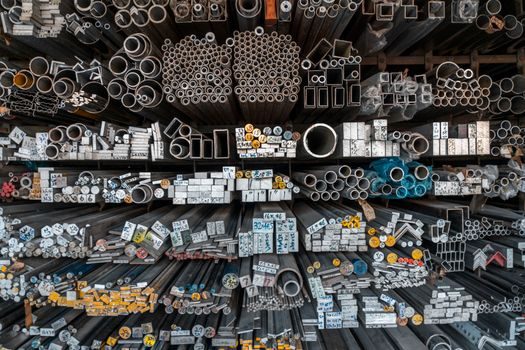
On four decision criteria — growth rate, end-use concentration, APAC share, and substrate flexibility — the steel-casting and coil-coatings tracks line up as follows [S1][S2]:
Growth rate (CAGR to 2030): steel casting 5.2% vs coil coatings 4.50% — casting leads on momentum.
End-use concentration: steel casting skews to automotive/transportation at USD 13.35 B (2024) [S1]; coil coatings skews to building/construction with APAC at 48% regional share (2018 baseline) [S2].
APAC share of forecast growth: steel casting 55.4% [S1]; coil coatings similar regional concentration but a less precise APAC split is disclosed in the source [S2].
Substrate flexibility: steel casting is a process family that can serve carbon, low-alloy and high-alloy grades [S1]; coil coatings is a finishing step applied to steel-mesh feedstocks, cold-rolled strip and galvanised substrate alike [S2]. The two are not substitutes — one shapes the part, the other protects the surface.
Use Cases, Limits and What Can Go Wrong
Steel castings fit where the geometry is complex, the section is thick, or the alloy must be highly alloyed without welded-joint liability — wind-turbine hubs, mining crusher housings, and rail bogie frames are textbook examples [S1]. Coil coatings fit any long-length steel substrate exposed to weather, chemical wash, or aesthetic demand — roofing, cladding, garage doors, white-goods cabinets, and automotive body-in-white topcoat prep [S2].
Failure modes diverge: castings fail at shrinkage porosity, hot tears, and inclusions if feeding and risering are wrong; coil-coated substrate fails at cut-edge creep, T-bend cracking, and chalk/fade when the paint system is mismatched to the UV or chemical exposure class. Sourcing failure modes cluster around APAC freight volatility — both forecasts are APAC-heavy, so a single port disruption propagates into both foundry pour schedules and cold-rolled shipping calendars [S1][S2].
Sourcing Standards, Lead Signals and Next Watch-Points

Buyers specifying into this forecast should anchor to a small standards set: ASTM A27 / A216 for carbon-steel castings, ASTM A128 for austenitic manganese, ASTM A743 / A744 for corrosion-resistant (stainless) castings, and the EN 10293 / 10295 European equivalents, with NACE MR0175 / ISO 15156 governing sour-service hydrogen-sulfide environments. For the substrate side feeding coil-coatings lines, EN 10346 (metallic coating) plus EN 10169 (organic coating) and ASTM A755 remain the controlling pair, with steel-fiber reinforcement governed by ASTM A820 for concrete composites. The standards named here are established references the engineer already works to; the forecast window 2025-2030 does not displace them. [S1]
Two trackable signals to watch through the next two quarters: (1) any update from the named national steel associations that revises the 2024 automotive-and-transportation baseline of USD 13.35 billion [S1] — a downward revision would imply softer EV light-weighting pull; (2) any disclosed change in coil-coatings regional share that breaks the historical 48% APAC figure [S2] — a meaningful swing would re-rank sourcing corridors. The Metamaterials 2024-2030 report cited for adjacent advanced-materials context places the 2023 global metamaterials market at USD 1.429 billion, with the top five vendors holding roughly 15% combined share — a separate, smaller pool that is not part of the bulk-steel forecast but useful as a high-end comparator [S3]. Sourcing teams should also cross-check inverter and downstream solar hardware trends referenced in the Solar Inverter Supply Chain 2026 coverage, since utility-scale solar structures are themselves a steel-pulling end market adjacent to the casting forecast.