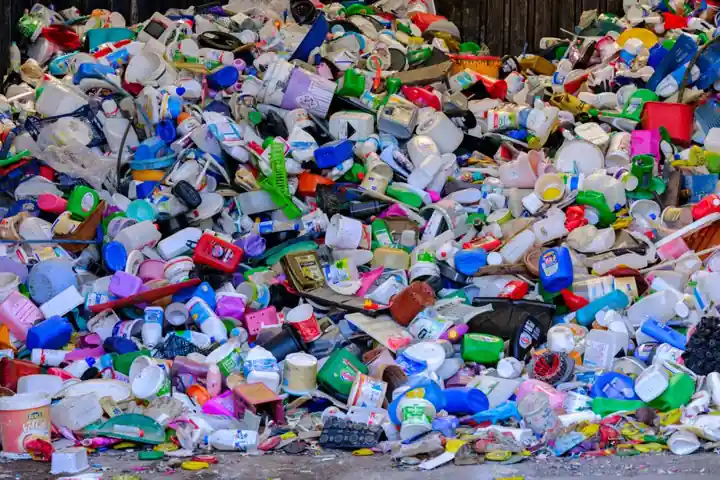
Batch-level recycled-content tracking rests on three artefacts: a per-batch chain of custody linking recovered output to its source stream, a declared specification with quantified limits (MFI, hardness, contaminants), and a per-batch allocation that feeds a minimum-percentage recipe in the next production run [S2][S5][S7].
UL Solutions concluded from PET supply-chain audits that tracing recycled content through documents and chain-of-custody is more reliable than finished-product testing, because PCR/PIR streams mix, dilute, and re-blend across many steps where laboratory methods cannot distinguish one source from another [S2].
What "batch-level traceability" actually means
Per-batch traceability ties every kilogram of credited recycled material to a named source, an output batch code, and a recovery partner; the EPA's Recycled Content (ReCon) Tool, last updated 2 October 2026, calculates embodied-carbon benefits of post-consumer content decisions but does not itself audit chain of custody [S1].
Strong programmes go finer than the batch, down to the individual big bag, so a non-conforming lot can be isolated to a single container instead of quarantining 20 tonnes [S5]. Resourcify's recycled-content module reports a credited batch list with weighbridge slips, recovery records and source documents attached, and exports a PDF certificate (RC-2026-0084 in the demo) that bundles scope, quantities, allocation and evidence [S3].
The four artefacts that survive an audit
Qualifying a recycled batch lines up four documents: a technical data sheet with measured properties, a recycled-content declaration, a third-party certification (such as Italy's CSI Plastica Riciclata), and a legal-status statement showing whether the material is a by-product or has reached End-of-Waste status under EU Waste Framework Directive 2008/98/EC [S5].
The WFD distinguishes a by-product (Art. 5 / Art. 184-bis in Italy), which was never waste if four conditions are met (integral to a process whose primary aim is not to produce it; certain further use; usable without further processing; lawful use), from End-of-Waste output, which has crossed a compliance frontier and carries a different traceability chain [S5]. Conflating the two is the most common documentation error seen in 2026 supplier audits [S4][S5].
Comparison: documentation approach vs. finished-product testing

For verifying recycled content, three approaches dominate: (1) chain-of-custody audit, which UL calls the most reliable method because it follows mass balance from collection to finished good; (2) laboratory testing such as radiocarbon or tracer analysis, which can confirm presence of biogenic or PCR content but cannot pinpoint source stream; (3) mass-balance allocation at the production batch, which credits a minimum recycled percentage against total batch weight [S2][S7].
Audit is preferred for PET because testing cannot distinguish post-industrial from post-consumer once the streams are co-extruded; mass-balance allocation is preferred for variable streams where minimum percentages are set and any surplus is banked or rolled forward; laboratory testing is reserved for spot checks and bio-based attribution where the unit cost per sample (radiocarbon AMS runs USD 300-500 per specimen in commercial labs) is justified [S2][S7].
Managing batch-to-batch variation in recycled percentage
Recycled content varies between batches because recovery yields, source mix and contamination rates fluctuate; the operational response is a recipe with a minimum recycled percentage, a declared upper limit, and a version number that records which input lots fed which production run [S7].
Schyns and Logtenberg (2022, cited 21 times) propose an aggregation method that quantifies recycled plastic through a credit-debit model at the product level, enabling batch-to-batch tracking of recycled content through to a component with an associated credit value, a structure that aligns with current EU PPWR mass-balance expectations [S6].
Records, retention and what a buyer should request
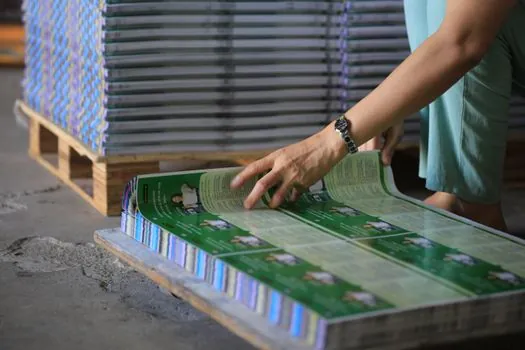
Resourcify's design rationale is explicit: keep the records behind the recycled-content figure even when materials pass through mixed batches and processing steps, separate recovered output from collected volume, and export a PDF certificate that travels with the shipment [S3].
AVI Trace takes this further into the finished packaging layer, giving buyers a batch-level record from verified post-consumer source to finished packaging for procurement, quality and compliance teams [S8]. For electronics-line demos, a 60% recycled share (40 t aluminium AL-014 + 20 t steel ST-009 credited against 100 t production need) is broken down per recovered batch with origin, weighing slip, recovery record and supplier evidence attached [S3].
Tooling, standards and verification roadmap
The EPA ReCon Tool v5 (Excel) and its web calculator apply Waste Reduction Model (WaRM) version 15 factors to estimate embodied carbon and energy of alternative recycled-content decisions, using pounds as the input unit and ton column auto-calculated, with a surrogate-material fallback when a specific material is not listed [S1].
For 2026 supplier verification, the Centres for Sustainability and Excellence recommend a four-step gate: request supplier evidence (CoC, recycled-content declarations, certifications), reconcile quantities to mass balance, validate batch codes against production records, then publish a product claim only when the four artefacts align [S4]. A trackable next signal is the publication of EU PPWR implementing acts on recycled-content calculation methods, expected to harmonise mass-balance rules across packaging; a second is the wider adoption of per-big-bag traceability beyond the rubber and silicone sectors where it is now standard [S5][S7].