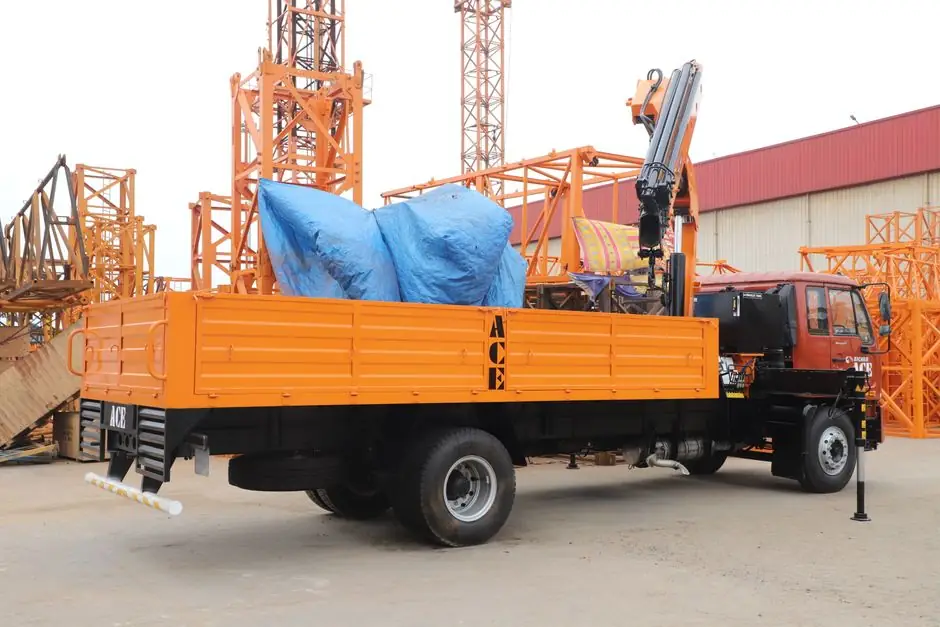
Tunneling sites demand truck cranes with compact tail-swing radius, low overall height for shaft portals, and 25-80 t lifting classes, with current XCMG and Sany catalogs exposing XCT25L5_Y (25 t) and STC500 (50 t) as the workhorse brackets [S1][S2].
Standard 5-section telescopic boom geometry, Euro III emission platforms, and CE / ISO9001:2015 supplier certifications now define the baseline for tunneling procurement, where reach into a heading and clearance under falsework gates matter more than raw on-road travel speed [S1][S5].
Headroom, tail-swing, and boom geometry inside the tunnel envelope
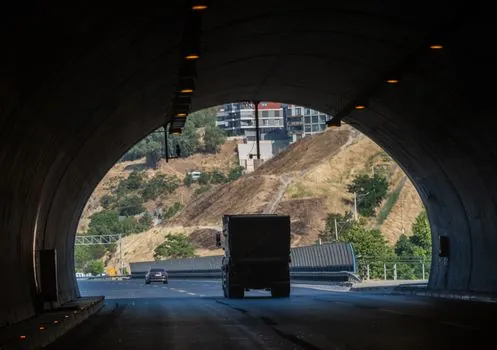
Tunneling portals and shaft collars impose a hard vertical envelope: typical rail/road tunnel clearance boxes run 4.9-7.6 m, and a 5-section telescopic boom on a 25-50 t chassis (XCT25L5_Y, STC500) usually measures 3.4-3.9 m stowed, leaving a workable 1.0-4.0 m headroom margin for jib and hook block [S1][S2].
Short tail-swing is the single most-cited selection gate for tunnel work because the crane must often work within 2-3 m of a portal wall or segmental ring; the listed XCMG 60 t XCT60_Y and the Sany 75 t STC75 both use counterweight configurations that reduce rear-pivot radius relative to a standard carrier, though exact swing-circle data should be confirmed against the OEM data plate before spec lock [S1][S2].
For shaft-only work, a knuckle-boom (折臂 / loader crane) variant on a Foton or Dongfeng chassis (1-16 t lift class) is regularly substituted where headroom is below 3 m, since the folded boom footprint drops roughly 30% versus a telescopic unit of equal capacity [S8][S9].
Capacity bands: 25 t, 50 t, 60 t, and 75 t compared
The 2026 export catalog splits tunneling truck cranes into four practical bands: 25 t (XCMG XCT25L5_Y, FOB $10,000-$100,000), 50 t (Sany STC500, $50,000-$100,000), 60 t (XCMG XCT60_Y), and 75 t (Sany STC75, $10,000-$800,000 used), with the spread reflecting age, hours, and emission tier [S1][S2].
For segment handling (typically 4-12 t per ring), 25 t units cover most NATM and TBM erection tasks; for rebar cage lifts (15-30 t) and shotcrete pump placement, 50-60 t becomes the practical floor; 75 t is reserved for TBM back-up gantry module swaps and cutterhead tooling changeouts above 40 t [S1][S2].
Selection by capacity alone is misleading: chassis length, axle count (commonly 4x2, 6x4, 8x4 for the 25-75 t bracket), and outrigger spread govern whether the crane can physically set up on a tunnel invert or bench without exceeding the 2.5-3.5 m portal width typical of metro and rail bores [S1][S5][S7].
Carrier chassis and emission tier for underground work
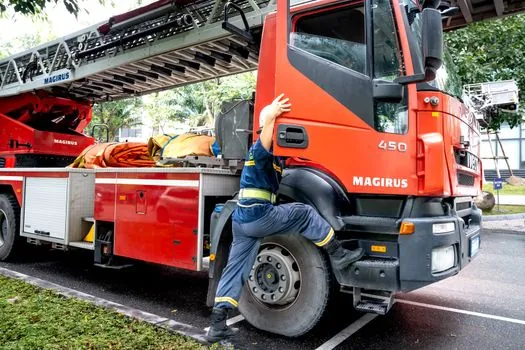
Underground air-quality rules at most metro and rail sites now require Euro III minimum, with Euro IV / Euro V mandated on newer cross-city contracts; Sany's STC75 and STC500 explicitly list Euro III, while XCMG's XCT25L5_Y and XCT60_Y are offered in matching emission tiers for export [S1][S2].
Foton and Dongfeng chassis (1-16 t knuckle-boom class) dominate the smaller shaft and station-yard segment because of parts commonality in China, but the same chassis platforms are widely re-bodied for low-speed underground movement, typically capped at 40-60 km/h on-road and 5-10 km/h off-road inside the bore [S8][S9].
For tunneling contractors running mixed fleets, the practical decision is whether to standardize on a 6x4 carrier (50-60 t lift class) for portal work plus a smaller 4x2 knuckle-boom for shaft-only lifts, rather than a single 8x4 75 t unit, since the latter cannot redeploy inside a narrow TBM starter cavern [S5][S6][S7].
Outriggers, counterweight, and ground-bearing on tunnel invert
Tunnel invert bearing capacity is usually 50-150 kPa on finished segments and 200-400 kPa on bench excavation, so outrigger pad sizing (typically 0.4-0.6 m steel plates) and full-extension outrigger span (4.5-6.0 m on 50-60 t units) are the first cross-checks before any lift is started [S1][S2].
Counterweight removal is a frequent option on the 60-75 t brackets (XCT60_Y, STC75) to reduce axle load when entering a finished tunnel, and Jining Jiaqing's CE-certified truck cranes list this as a configurable item on its special-vehicle product line, alongside the ISO9001:2015 / ISO14001 / ISO45001 system certifications required by most tier-1 contractors [S2][S5].
For shotcrete pump, rebar bundle, and segment lifter duties inside the bore, a 25-50 t unit with full-stroke outriggers and remote-controlled load moment indicator (LMI) typically outperforms a 75 t unit on a restricted pad, because the larger crane needs wider outrigger span than the invert bench can offer [S1][S2][S7].
Supplier landscape and 2026 sourcing channels
Three supplier clusters dominate the 2026 tunneling truck crane catalog: OEM-direct export channels (XCMG via Machmall, Sany via made-in-china), Shandong-based special-vehicle integrators (Jining Jiaqing, Jining Far East), and used-equipment resellers such as E.K Industry offering rebuilt truck, mobile, and crawler cranes [S1][S2][S4][S5][S6].
Lead time for a new XCT25L5_Y-class 25 t unit runs 30-45 days ex-works; used 50-75 t units (STC500, STC75) ship in 15-25 days from Jining and used-equ yards, with Okorder-style 35 t construction truck cranes quoting 100 unit/month supply capability from Tianjin loading port [S1][S2][S4][S7].
For a deeper spec walk on size classes used in heavy civil work, see the truck crane size map for road construction, and for demolition-style duty cycles that overlap with tunnel mucking, the truck crane selection for demolition projects article covers comparable capacity gates.
Selection criteria vs use-case fit
A 25 t 5-section telescopic on a 4x2 chassis fits segment erection, rebar handling, and small TBM tool lifts in metros with 4.9-6.0 m clearances; a 50 t 6x4 fits ring-build plus shotcrete pump swap; a 60-75 t 8x4 is overkill for routine tunneling but justified for TBM back-up module change-outs; a 1-16 t knuckle-boom on Foton/Dongfeng is the right tool for shaft-only lifts below 3 m headroom [S1][S2][S8][S9].
Contractors running one crane across multiple headings should bias toward the 50 t bracket (Sany STC500 / XCMG equivalents) because the same unit can serve portal erection, segment yard, and shaft work without reconfiguration, whereas a 25 t unit will be capacity-limited on rebar cages and a 75 t unit will be physically too large for finished-bore redeployment [S1][S2][S7].
For quarry-adjacent tunnel portal sites where higher hoist duty is needed, the quarrying truck crane capacity, reach, and chassis map provides a useful cross-reference, and an underground fleet planner should also weigh truck crane reference data on dump-truck and concrete-mixer support classes when sizing the support fleet around the crane.
Failure modes and contractual safeguards

The most common underground incident pattern is outrigger punch-through on segment invert, especially with 50-60 t units at full radius; the practical safeguard is a documented pad-bearing check before each shift and a written LMI radius chart tied to the actual counterweight fitted, not the catalog maximum [S1][S2][S5].
Second-tier risks include exhaust buildup in poorly ventilated tunnels (Euro III floor with mandatory forced ventilation when diesel crane runs inside the bore) and tail-swing contact with segmental rings during slewing; the latter is mitigated by selecting short-tail-swing variants of the 25-50 t class over standard carrier geometry [S2][S8][S9].
For buyers sourcing used units from E.K Industry or similar channels, a third-party load test report, OEM data-plate verification, and confirmation of outrigger hydraulic seal condition are the three document gates that prevent the most common underground re-deployment failures [S4].
Trackable next signals for tunneling crane buyers in Q4 2026: Euro V emission rollouts on the 25-50 t XCMG and Sany lines, remote-control LMI becoming standard rather than optional on the 60-75 t bracket, and increasing Jining Jiaqing-style special-vehicle integrators offering pre-certified CE / ISO9001:2015 packages for direct metro-contractor delivery [S1][S2][S5].
For the relevant spec sheets and selection criteria, see truck mounted crane, and dump truck.