
Online turbidity and suspended-solids analyzers like the TurbSense platform from Process Instruments use nephelometric light scatter with auto-variable LED intensity to stay in range across clean potable and dirty waste streams [S1]. For a buyer, that single sentence tells you the dominant industrial design: 90 deg scattered-light detection, with the light source and detector geometry chosen to match the regulatory method (ISO 7027 or U.S. EPA 180.1) that the plant reports against.
On the lab side, current Fisher Scientific catalog filters show 8 turbidity meter models, split across tungsten (3 SKU), LED (1), and infrared LED (1) light sources, with response times of 2 s, <2 s, 5 s, and <5 s, and display options including backlit LCD, LCD, and LED [S2]. That is the spec envelope you have to map your sample to, before you look at brand or price.
Measurement principle: nephelometric 90 deg is the default
Turbidity is an optical property, not a concentration: a light source illuminates the sample and a detector measures scatter [S3]. Nephelometric meters place the detector at 90 deg to the incident beam, which ISO 7027 and the U.S. EPA both anchor their reporting methods to because the geometry is least sensitive to stray light and to particle colour [S3]. The Thermo Scientific Orion AQUAfast AQ4500 method, built on the AQ4500 turbidimeter, is U.S. EPA approved for drinking water and wastewater reporting, and its ISO Nephelometric mode satisfies ISO 7027; the lower-cost Orion AQUAfast AQ3010 is also ISO 7027 compliant [S3].
Two other geometries exist: ratio turbidimeters use a 90 deg detector plus a transmitted-light detector and mathematically combine them, which extends the clean range into the thousands of NTU without saturating; surface-scatter sensors are used in inline sludge and paper-stock applications where the optical surface sits against a flowing slurry. Inline sensors like the TurbSense family auto-vary LED intensity to keep the detector in its linear region across the same instrument's full span [S1]. Pick nephelometric for compliance reporting, ratio for very high NTU ranges, surface scatter for inline dirty streams.
Range, units, and resolution: NTU vs FNU vs EBC
The catalog unit you must lock first is the reporting unit. NTU (Nephelometric Turbidity Units) is the U.S. EPA term, FNU (Formazin Nephelometric Units) is the ISO 7027 term, and EBC is the brewing colour/turbidity unit used in beverage. FNU and NTU are not numerically identical for the same sample, and switching units mid-report is an audit finding waiting to happen. Portable and bench meters in the current Science Education filter cover roughly 0 to 2000 NTU with auto-range selection on 2 of the 8 listed SKUs [S2].
Resolution and the number of reading points matter more than the headline range. A meter that displays 0.01 NTU is only useful if the optical bench, the detector, and the vial geometry actually deliver that resolution across the working range. Common formazin primary standards are 4000 NTU stock, diluted to 0.1, 1, 10, 100, and 1000 NTU calibration points; a meter that calibrates at 3 points (typically 20, 200, 1000 NTU) is the minimum for EPA-style compliance work, and ISO 7027 work calls out a specific formazin reference with controlled particle morphology. Always match the meter's calibration points to the regulatory method, not the other way around.
Light source: ISO 7027 IR vs EPA tungsten white-light
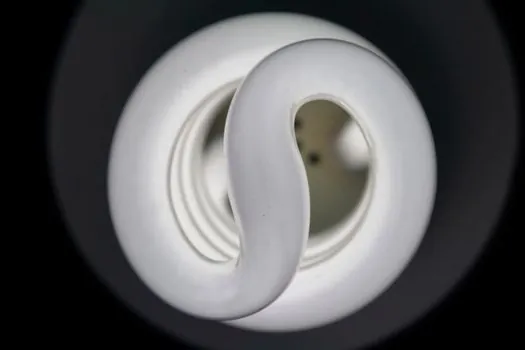
Light source is the one feature that hard-binds the meter to a method. ISO 7027 specifies a near-infrared LED typically centred near 860 nm, which removes colour bias from the reading and is the reason drinking-water plants in the EU, the UK, and most of Asia use IR instruments [S3]. The U.S. EPA 180.1 method specifies a tungsten lamp with a specific colour temperature and a defined spectral band; that is why EPA-reporting U.S. utilities historically use tungsten-filament meters like the LaMotte 2020T (tungsten version still listed in the 2026-08 catalog) [S2].
Cross-method reporting is not free. An ISO 7027 IR reading on a coloured sample can differ from a U.S. EPA tungsten reading on the same sample, and reporting one in a permit that requires the other is a compliance error. Buyers in dual-jurisdiction facilities (common in multinational food and beverage, or in pharma WFI loops) should pick one method per measurement point and document the conversion, or run two instruments. For comparison shopping, the spec line to scan is literally the light source: IR LED = ISO 7027, tungsten = EPA 180.1, broad-band LED = portable/general-purpose, often not regulatory-grade [S2][S3].
Form factor and use case: portable vs benchtop vs inline
Portable handheld meters (battery-powered, 0 to ~1000 NTU, often IP67) are field survey tools, used for spot checks at the riverbank, the wellhead, or the clarifier launder. Benchtop meters (mains-powered, larger optical bench, 0 to ~2000 NTU or more, better long-term stability) are lab tools for compliance reads on grab samples. Inline process sensors (submerged or in a flow cell, 4-20 mA or Modbus out, auto-cleaning options) are plant tools, online and tied into a SCADA tag, used for coagulation control, filter breakthrough detection, and final-water monitoring. Process Instruments markets the TurbSense line specifically into water, waste water, paper and pulp, and food and drink duty, which is the canonical split for online nephelometric sensors [S1].
Pick portable when the answer is a logged field value, benchtop when the answer is a compliance report, inline when the answer drives a process actuator. Drinking-water treatment plants in practice run all three: portable for source-water surveys, benchtop for the regulated grab sample, inline for coagulation dosing and individual filter monitoring. Trying to substitute one for all three is a common budget mistake; the optical bench, the detector linearity, and the data interface all differ.
Calibration, consumables, and lifecycle cost
Turbidity meters drift. Standards, vials, and silicone oil are not optional; they are operating cost. The 2026-08 Fisher Scientific accessories catalog lists 27 SKUs from Hach, 29 from Thermo Scientific, 11 from Tintometer, and 3 from HF Scientific, covering standards (formazin and StablCal), replacement vials, vial cleaning brushes, silicone oil for matching refractive index, and replacement light sources [S5]. A single set of matched vials for the Orion AQUAfast AQ3010 (catalog 13-644-503) lists at $213.50 per unit of 1, which is representative of the consumables line [S4].
Calibration frequency and consumable consumption scale with sample load. A portable used twice a week might be calibrated monthly; an inline drinking-water sensor running 24/7 against an EPA permit typically gets a 2- or 3-point calibration weekly, a primary-standard verification daily, and a vial or wiper replacement on a 6 to 12 month cycle. That is why the cheapest meter is rarely the cheapest instrument. Compute the 5-year cost as: meter + standards + vials + silicone oil + brush + service, then compare to the alternatives. For higher-temperature, higher-pressure, or fouling streams, also budget a sensor-cleaning head; many inline turbidity sensors use ultrasonic or mechanical wipers because biofilm and scale kill the optical surface within weeks.
Limitations and failure modes
Turbidity is not total suspended solids, despite the two often being reported together. Inline analyzers like the SoliSense suspended-solids monitor exist because the optical response to particles is non-linear with mass; a high-turbidity, low-mass sample (fine clay) and a low-turbidity, high-mass sample (coarse sand) can read the same on a turbidity meter and very differently on an energy meter or suspended-solids sensor. Where the process needs mass or solids loading, use a dedicated suspended-solids meter or correlate with a drying-balance lab method. [S1]
Other common failure modes: stray light from sunlight or room lighting leaking into a portable cuvette (the number-one cause of negative or unstable readings on field units); bubbles in the sample (degassing or letting the vial stand is mandatory before reading); condensation on cold inline windows (temperature-compensated housings or wiped windows fix this); and colour interference in tungsten-lamp units on coloured process water, which is the historical reason the industry moved to IR for ISO 7027 [S3]. For high-purity or low-range work (under 0.1 NTU), use a laser-based or ultra-low-range nephelometer in a flow-through cell with bubble-trap; a standard portable will not resolve it.
Selection shortlist: who each type is for
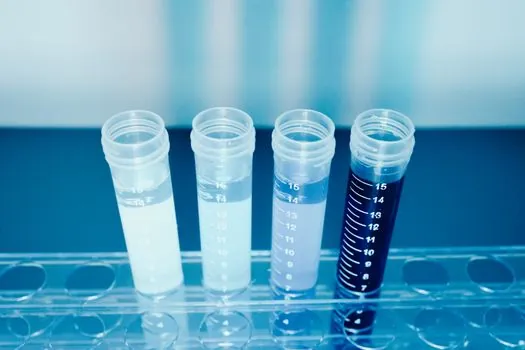
Pick a portable IR LED nephelometer (e.g., Hach 2100Q, HF Scientific MicroTPI) for source-water and field surveys, ISO 7027 method, 0 to 1000 NTU auto-range. Pick a benchtop tungsten nephelometer (LaMotte 2020T series, Thermo Orion AQ4500) for U.S. EPA 180.1 compliance reads on grab samples, 0 to 4000 NTU, with formazin standards and a matched vial set [S2][S3]. Pick a ratio nephelometer for very high NTU ranges (filter effluent, lime slurry, paper stock) where a 90 deg-only detector would saturate. Pick a surface-scatter or auto-intensity LED inline sensor (TurbSense, SoliSense, Hach surface scatter probes) for coagulation control, filter monitoring, and final-water compliance, with auto-cleaning and 4-20 mA or Modbus output [S1].
Buyers who should NOT pick the mainstream portable: anyone reporting under an EPA permit (you need a tungsten benchtop for the regulated read), anyone measuring a coloured industrial wastewater (IR LED is the right method, not the cheapest portable), and anyone trying to infer total suspended solids (use a conductivity meter-correlated solids sensor or a gravimetric lab method instead). For a fuller pass through the form-factor decision, the benchtop, portable, and inline comparison in the turbidity meter buying guide lines these up against the same four criteria used here. Comparable spec-first selection logic for adjacent water-quality instruments, such as thermal mass flowmeters for clean gas and inline TDR level meters, follows the same principle: lock the method and unit first, then the form factor, then the consumables budget.
For component-level specifications, see turbidity meter.