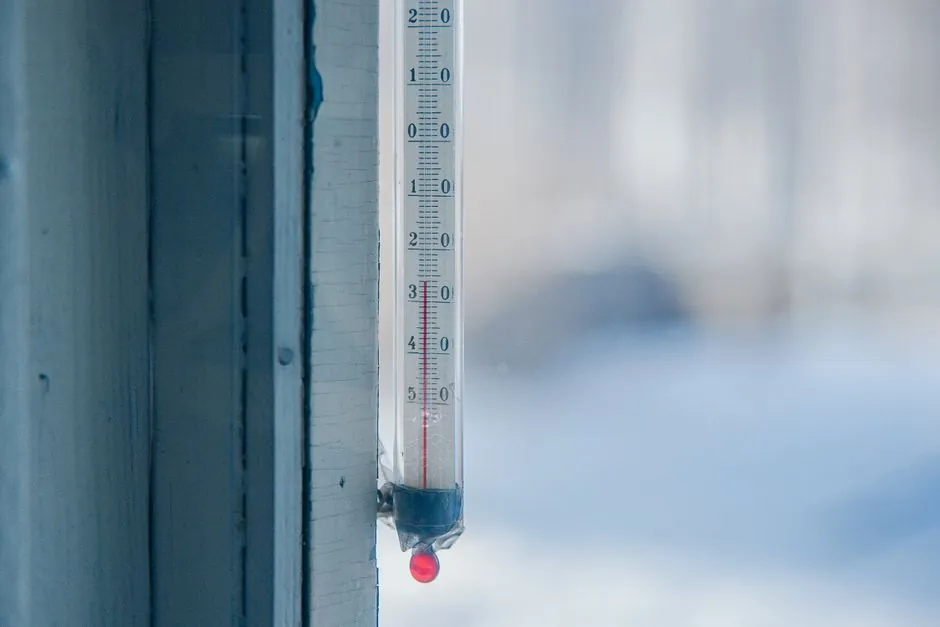
A variable-area flowmeter works on the float principle: medium flows vertically upward through a tapered tube, lifts a float whose equilibrium height reads directly on the scale [S2]. Current 2026 OEM catalogs show a usable envelope of roughly 0.4 l/h to 310,000 l/h, process temperature from -20 to 200 °C, and process pressure ratings from near-atmospheric (0 Pa) up to 40 bar, depending on tube material and float density [S3][S4][S6][S7].
Glass-tube, metal-tube, and plastic-body meters cover most plant and laboratory duties; the deciding factor is almost always fluid compatibility and required accuracy class, not brand. For a broader introduction to operating principles see the variable area flowmeter reference page.
Reading the 2026 Accuracy and Range Spread
Quoted full-scale accuracy for general-purpose rotameters runs from 1% to 10% of full scale, with high-end electronic units (e.g., inductive transmitters) typically around 4% [S1][S3]. Repeatability is tighter than accuracy across this category: the Brooks GT1600 datasheet specifies 0.5% repeatability against 1–10% accuracy, a roughly 10× ratio common to the technology [S1].
Low-flow gas metering is dominated by small-bore plastic or PTFE meters: the Bühler SM-6 covers 0.5–60 l/h of gas up to 400,000 Pa (about 4 bar) in a corrosion-resistant plastic body rated IP67 [S4]. At the opposite end, the KROHNE VA40 glass-tube unit reaches 310,000 l/h for industrial liquid and gas service with flanged in-line installation [S6]. The KROHNE DK series bridges the lab-to-process gap, listing 0.4–5,000 l/h at -5 to 100 °C with a SIL 2 safety classification [S7].
Tighter accuracy and a wider temperature window (0–200 °C) with 16 or 40 bar pressure ratings is delivered by the TECFLUID M21 inductive series, which integrates a 4-20 mA analog output for closed-loop control [S3].
Material, Fluid, and Installation Constraints
Tube and float material selection is governed by chemical compatibility rather than by the meter principle: borosilicate glass with stainless-steel fittings (316/316L dual-cert) is the workhorse for water, seal oil, and inert gas, as offered on the Brooks GT1600 [S1]. The Effast HDRFLU series uses PVC bodies with PVDF floats and is rated to 10 bar (145.04 psi) for water treatment, irrigation, and marine service, with DN25 to DN65 pipe diameters [S2].
For oxygen and medical breathing gas, dedicated plug-in flowmeters such as the Precision Medical Chrome series use a polycarbonate housing impervious to clinical disinfectants and span 0–70 l/min, with the medical-grade plastics explicitly chosen to prevent clouding and stress cracking [S10]. Plastic-bodied gas analysis meters (Bühler SM-6) target low-pressure, low-flow sampling lines rather than process piping, and the HSK 01023 air-only flowmeter is built specifically for extruder airflow balancing where the medium is clean, dry compressed air [S4][S5].
Installation orientation is fixed in most designs: vertical mounting with bottom-to-top flow is required for the float to read correctly, and meters that claim horizontal or panel mounting (Brooks GT1600) rely on rotated process connections rather than a true horizontal tube [S1][S2]. For more on competing flow measurement technologies, the flow meter encyclopedia entry covers orifice, Coriolis, ultrasonic, and magnetic alternatives.
Comparison: Four Real 2026 Variants Against Selection Criteria
Use this short table to shortlist by duty, not by brand. All data is taken from OEM datasheets published or refreshed in 2026 [S1][S3][S4][S6].
Brooks GT1600 (glass/316L, threaded or flanged, 0–4,900 l/h, 0–121 °C, 1–10% FS accuracy, 0.5% repeatability, optional alarms): best for general utility, lubrication, and seal-oil indication where 1% FS is acceptable and viewing the process matters [S1].
KROHNE VA40 (glass, flanged, up to 310,000 l/h, industrial, economical): best for high-flow water and gas lines where the budget is tight and accuracy above 5% FS is acceptable [S6].
TECFLUID M21 (inductive, 316L, in-line vertical, 0.4–1,000 l/h, -20 to 200 °C, 16 or 40 bar, 4-20 mA, ATEX option): best for steam, hot water, and explosive-atmosphere services that need an electronic output into a PLC or DCS [S3].
Bühler SM-6 (plastic, in metering tube, 0.5–60 l/h gas, -20 to 100 °C, IP67): best for gas analysis sample lines and conditioning cabinets where corrosion resistance and easy tube replacement outweigh accuracy, with the unit typically specified at multi-percent FS only [S4].
Who Should Not Pick a Plain Glass Rotameter
Plain glass-tube meters are wrong for steam above 121 °C, for any service over 10–16 bar in a metal fitting, for slurries or opaque fluids that hide the float, and for any loop that needs a digital output without adding a transmitter. In these cases the right answer is a metal-tube VA meter, a Coriolis mass flowmeter, or a variable-area meter with an integrated 4-20 mA transmitter such as the TECFLUID M21 [S3].
Glass meters are also wrong for hygienic pharmaceutical or food service where clean-in-place (CIP) and crevice-free surfaces are mandatory; the TECFLUID M21 with sanitary connections is the right call instead, and ATEX-rated variants of that series handle explosive atmospheres common in chemical and pharmaceutical plants [S3].
For oxygen and medical breathing gas, ordinary industrial rotameters are unsafe regardless of the brand: the wetted materials, ignition-cleanliness, and leak-tightness of a dedicated medical flowmeter such as the Precision Medical Chrome series are part of the regulatory compliance path, not a marketing line [S10].
Failure Modes, Sourcing, and Standards
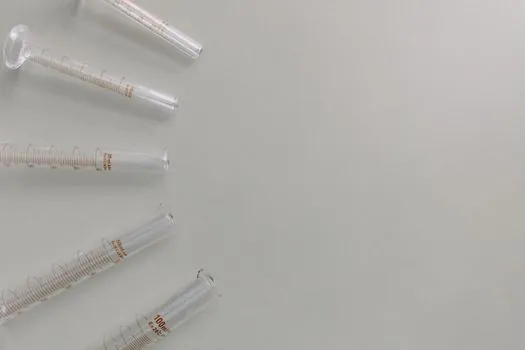
The dominant in-service failure modes for variable-area flowmeters are float sticking (caused by particulate or scale on the tube wall), float damage from water hammer, and tube breakage from overpressure or thermal shock on glass units. Specifying a fragment-shielded polycarbonate window (standard on the GT1600) and a meter that can be installed with the process connections rotated 360° reduces both risks [S1]. Plastic meters such as the Bühler SM-6 explicitly advertise "easy measuring tube replacement" because the tube is the most likely wear part in low-pressure gas analysis service [S4].
Accuracy in the field is sensitive to installation: at least 5 pipe diameters of straight run upstream and 3 downstream are typical to keep the float from hunting in disturbed flow. Factory calibration is performed on the actual process fluid or a documented substitute at reference temperature and pressure, and re-zeroing in the field is not standard for glass-tube meters with fixed scales. For duties where the comparison goes beyond VA into drives and motion, the variable speed drive and VFD entries cover pump and blower speed control that often pairs with flow measurement on the same line.
Sourcing: all eight OEM datasheets quoted in this guide (Brooks Instrument, Effast, TECFLUID, Bühler Technologies, HSK Kunststoff Schweißtechnik, KROHNE Messtechnik, ELETTROTEC, Precision Medical) were published or refreshed on DirectIndustry between February and July 2026, with the Bühler SM-6 last updated 2026-06-01 and the KROHNE VA40 updated 2026-04-14 [S1][S2][S3][S4][S5][S6][S7][S8]. Distribution lead times for Hedland-branded VA meters were listed at 5 to 6 weeks in mid-July 2026 on ITM.com, a useful sanity check on North American availability [S9].
Trackable signals: a shortlist decision can be locked in once three numbers are confirmed: required minimum and maximum flow in l/h, maximum process temperature in °C, and whether the loop needs a 4-20 mA output or alarm contacts. Suppliers worth asking for a written deviation list against these three numbers are Brooks Instrument, KROHNE, and TECFLUID, all of whom publish full datasheets and ATEX/IECEx coverage in 2026 [S1][S3][S6][S7]. For adjacent process instrumentation, the gas analyzer and online water quality analyzer buying guides use the same spec-first logic on nearby instrument families.