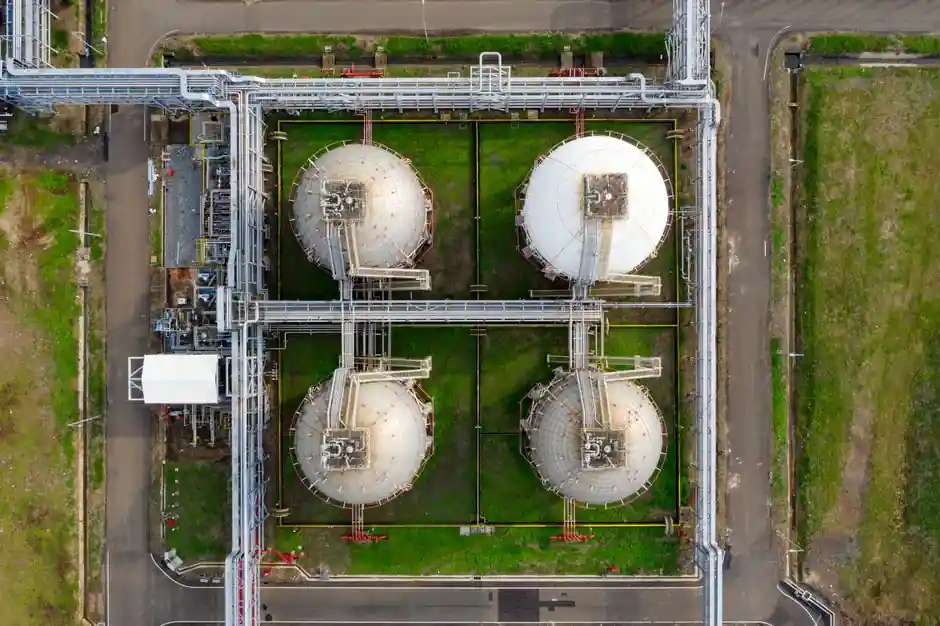
UHMWPE grades in oil and gas service must clear four spec gates: molecular weight of 3×10⁶ to 6×10⁶ g/mol, verified low-temperature toughness to -40°C (and down to -196°C for cryogenic LNG hardware), documented hydrocarbon swell behaviour, and, for line applications, classification-society approved rope certification [S2][S3].
Generic UHMWPE rope carries a 20–40% price discount versus branded equivalents, and offshore oil and gas operators typically anchor that decision to certification rather than to base polymer chemistry, since all UHMWPE fibre is chemically identical at the chain level [S2]. A more detailed match-up against construction duty appears in UHMWPE Selection for Construction, and the marine-engineering side is covered in UHMWPE Selection for Marine Engineering.
Molecular Weight, Density, and the Self-Lubricating Baseline
UHMWPE is a self-lubricating thermoplastic defined by chains of 1.5×10⁶ to >6×10⁶ g/mol, with crystallinity between 45% and 75% and a density of approximately 0.97 g/cm³, which is why finished parts float and ride well on water-cut mud returns [S1][S3]. The friction coefficient sits at 0.07–0.11, comparable to ice-on-ice, and remains in band across the polymer's stated -269°C to +80°C service window [S3]. For oil and gas, the practical selection floor is molecular weight above 3×10⁶ g/mol: below that threshold, chain entanglement drops and brittle-crack risk rises once hydrocarbons penetrate the amorphous fraction [S3].
Commercial stock shapes ship under trade names including Polystone M, Tivar, Lennite, Duravar, Gardur, Solidur, Polyslick, Polyfend, and Durasurf, with ITAR and RoHS compliance commonly available on rod and sheet [S1]. Material chemistry reference data for the wider polymer family is collected on the UHMWPE encyclopedia page.
Hydrocarbon Compatibility: Where Swell Becomes a Failure Mode
UHMWPE is chemically inert against most acids, alkalis, and organic solvents, but hydrocarbons such as gasoline, kerosene, oil, and grease can cause swelling, which forces design compensation in any seal, scraper, or wiper that runs in continuous hydrocarbon contact [S1]. In oil and gas this manifests as two failure paths: dimensional growth that changes clearances in bearing sleeves and conveyor flights, and extraction of low-molecular-weight fractions that long-term embrittle the part.
The countermeasure is to specify a higher molecular weight grade (3×10⁶ to 6×10⁶ g/mol rather than the 1.5–3×10⁶ g/mol commodity range) and to confirm, with the manufacturer, that the resin has been ram-extruded or compression-moulded rather than processed in a way that fractures chains and increases the extractables fraction [S3]. For wiper and seal interfaces that must stay dimensionally stable in oil-saturated service, a paired review against oil seal geometry and gland tolerances is worth doing before sign-off.
Low-Temperature Floors for Arctic and Cryogenic Service
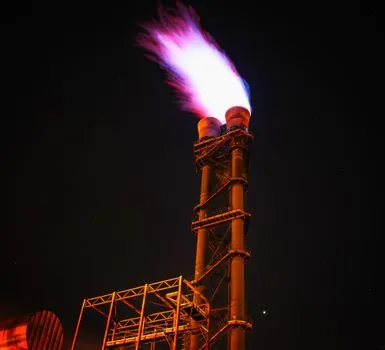
Arctic oil and gas extraction routinely runs at temperatures below -40°C, and UHMWPE components remain functional in that band because the glass transition temperature sits near -120°C, well below any normal process or ambient condition [S3]. At room temperature, impact strength reaches 130 kJ/m², the highest among commodity thermoplastics, and the polymer retains enough toughness at -196°C (liquid nitrogen) to resist brittle fracture, with select formulations rated to -269°C [S3].
Conventional HDPE and LDPE embrittle below -40°C, so any low-temperature-rated UHMWPE datasheet for arctic duty should be cross-checked for a documented notched Izod or Charpy value at the actual service temperature, not just a generic -40°C footnote. Tensile strength at room temperature lands near 32 MPa, and elastic modulus climbs as temperature drops, which is useful for dimensional stability but raises the consequence of any stress-concentration site in the machined part [S3].
UHMWPE Rope for Mooring, Towing, and Offshore Lifting
For offshore mooring and towing line, UHMWPE is specified for classification-society-approved applications, with tug operators also leveraging the higher bollard pull that a low-stretch, 0.97 g/cm³ floating line delivers versus wire [S2]. Generic UHMWPE rope is 20–40% cheaper than branded equivalents, and the differential is purely a function of manufacturing quality control and the brand's testing regime, not base chemistry [S2].
Strength-to-weight is the headline number: UHMWPE is roughly 15 times stronger than steel on a weight basis, with axial tensile strengths up to 3.6 GPa at the fibre level and abrasion resistance up to 15× that of carbon steel [S2]. UV exposure data shows 50–75% tensile strength retention after 5 years of continuous sun, which matters for any permanently moored or top-side-stored line [S2]. For lifting and life-safety applications the practical call is to require ISO 10325 certification on the rope certificate, not on the resin alone.
Comparison: Generic UHMWPE vs Branded UHMWPE Rope
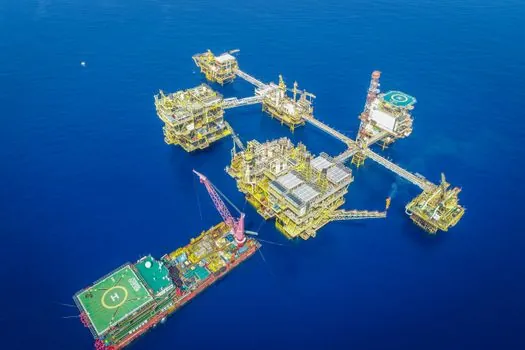
On rope specifically, the decision matrix reduces to three rows: cost (generic 20–40% lower), certification (branded typically ships with ISO 10325 documentation and tighter lot-to-lot tolerance), and application criticality (life-safety and high-stakes offshore lifts usually require the branded, fully-traceable product) [S2]. All Dyneema is UHMWPE, but not all UHMWPE is Dyneema, and the same logic applies to Spectra (Honeywell) versus other producers [S2].
For non-rope, in-plant wear parts (chute liners, scraper blades, conveyor flights, tank linings), the brand-vs-generic question matters less than the molecular-weight certificate, the hydrocarbon swell data, and the fabrication method [S1][S3].
Selection Criteria: Who UHMWPE Fits, and Who It Does Not
UHMWPE fits oil and gas buyers who need: a self-lubricating wear surface in hydrocarbon-wet service; low-temperature toughness to -40°C or below; and a floatable, high-strength-to-weight rope for offshore line. It does not fit buyers who need continuous service above 80°C, structural load-bearing members (UHMWPE creeps under sustained high stress), or any application where the chosen grade has not been swell-tested in the specific hydrocarbon blend it will see [S1][S3].
For sealing interfaces that bridge a moving shaft and a hydrocarbon-filled housing, the seal-side spec is covered in oil seal reference data, and UHMWPE is best treated as the back-up or wiper element, not the primary energised seal.
Track these signals before locking a grade: the manufacturer's molecular-weight certificate (must state the value, not a range), a swell datapoint in the process hydrocarbon at design temperature, a notched impact value at the minimum service temperature, and, for rope, classification-society and ISO 10325 documentation on the lot certificate. Any datasheet that ships without these four items is not yet a spec, it is a brochure.
The underlying component specifications are covered under lighting equipment and electric lamps.