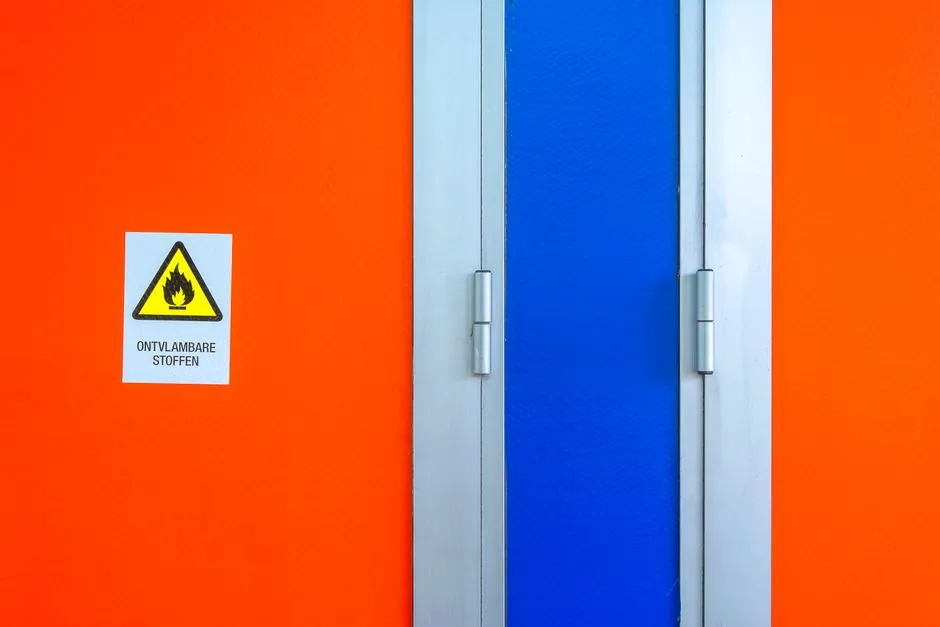
Choose UL 10C or NFPA 252 with the positive-pressure method for side-hinged and pivoted swinging fire doors required by IBC Section 716.2.1 [S5][S7].
The decision concerns the test basis, not whether a 20-, 45-, 60-, 90-, or 180-minute fire protection rating is acceptable; the required opening rating still depends on the wall or barrier served [S1][S2].
UL 10C and NFPA 252: What Each Test Establishes
UL 10C is the dedicated “Standard for Positive Pressure Fire Tests of Door Assemblies,” while NFPA 252 is the “Standard Methods of Fire Tests of Door Assemblies” and contains neutral-pressure and positive-pressure test provisions [S2][S5]. For the IBC application addressed here, NFPA 252 must be run using its positive-pressure method [S5][S7].
UL 10C is therefore the clearer specification when the drawing explicitly calls for UL 10C, while NFPA 252 is acceptable under IBC Section 716.2.1 when the test is positively pressured [S5][S7]. A neutral-pressure NFPA 252 result should not be treated as equivalent for that swinging-door requirement [S5].
The pressure condition matters because positive furnace pressure drives hot gases toward the unexposed side and exposes leakage paths around the door, frame, hinges, latch, and closing hardware. Intertek identifies negative furnace pressure as allowing ambient air from the unexposed side to enter the test furnace, which is a different boundary condition from the positive-pressure test [S8].
Decision Comparison for Door Assemblies
UL 10C and positive-pressure NFPA 252 both support the code path for side-hinged or pivoted swinging doors, but their specification language, applicable assemblies, and selection consequences differ [S5][S7].
Door Ratings, Wall Ratings, and Test Conditions
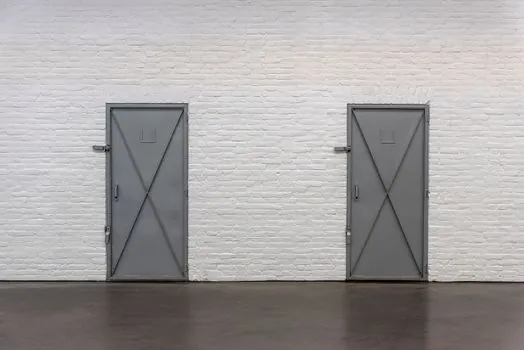
Common fire door assembly ratings include 20, 45, 60, 90, and 180 minutes, and the endurance test can expose the specimen to temperatures up to 1,925°F for the maximum 180-minute rating [S2][S3]. A passing assembly must remain in its frame without through openings and limit flame passage [S2].
The three-quarter rule is a useful relationship, not an absolute substitution rule. A 2-hour shaft enclosure can use a 90-minute door, a 1-hour shaft enclosure can use a 60-minute door, and 1-hour or 1/2-hour fire barriers or partitions can use 45-minute or 20-minute doors depending on location [S1]. Every component of the assembly must be listed for at least the required rating, but a higher-rated component is not prohibited solely because it exceeds the opening requirement [S1].
The endurance test is followed by a hose-stream test in which water is discharged at 30 psi from 20 feet away, although US building codes typically exempt 20-minute doors from that test [S2][S3]. UL 10C applies positive pressure after the first 5 minutes of testing and continues that condition for the rated duration [S4].
Fire Protection Is Not Always Fire Resistance
A fire-protection rating and a fire-resistance rating impose different acceptance criteria, so the required property must be established before selecting a test standard or listed assembly [S1]. Fire door assemblies are tested to NFPA 252, UL 10B, or UL 10C.
A fire door assembly consists of the door, frame, hardware, and glazing working together, with components normally tested separately and then listed, labeled, or classified for use in fire door assemblies.
Temperature-rise doors are a separate selection issue. Ratings of 250°F, 450°F, and 650°F denote the maximum rise above ambient on the non-fire side during the first 30 minutes of the fire endurance test, and 250°F is the most stringent of those three [S3]. Smoke and draft applications may additionally require air-leakage testing under UL 1784 [S3].
Where UL 10C and NFPA 252 Do Not Fit

These standards are for fire door assemblies, not complete life-safety design packages. Door selection still has to comply with NFPA 80, NFPA 101, the adopted IBC and IFC, and the applicable project requirements, including self-closing and positive-latching operation [S2].
UL 10C and NFPA 252 do not by themselves establish the required rating for every opening. The wall type, occupancy, building height, shaft construction, sprinkler conditions, and opening location can change the required duration [S1][S4].
The test standard also does not make every replacement part interchangeable. A fire door operates as an assembly of the leaf, frame, hardware, and glazing, and rated components normally need to remain the listed combination [S2]. This constraint matters when substituting hinges, strikes, closers, latches, or glazing during renovation.
Specification and Submittal Requirements
A defensible submittal identifies the required opening rating, exact test standard, pressure method, complete assembly configuration, and applicable code path rather than stating only “fire-rated.” For a swinging door under IBC Section 716.2.1, write “tested to UL 10C” or “tested to NFPA 252 using the positive-pressure method” [S5][S7].
Do not specify UL 10B for a project that requires positive pressure under the cited IBC provision. UL 10B is associated with neutral- or negative-pressure testing, while UL 10C was developed around positive-pressure conditions [S2][S3][S4]. NFPA 252 is not interchangeable with UL 10B merely because both appear in historical descriptions of door testing.
For field verification, inspect the door label, frame label, closing and latching operation, gaps, hardware identification, glazing marking, and any required smoke-leakage marking. The project submittal should preserve the listed assembly and document any field substitutions before installation. For a wider opening where paired leaves and meeting stiles affect coordination, double-leaf and single-leaf fire doors provides a separate format comparison.
Final selection should record the adopted code edition, opening rating, test standard, pressure method, assembly description, and approved substitutions. If UL 10C, positive-pressure NFPA 252, fire resistance, and smoke control are not distinguished on the submittal, the installer cannot reliably verify that the delivered assembly matches the intended fire-performance basis [S1][S2][S5].