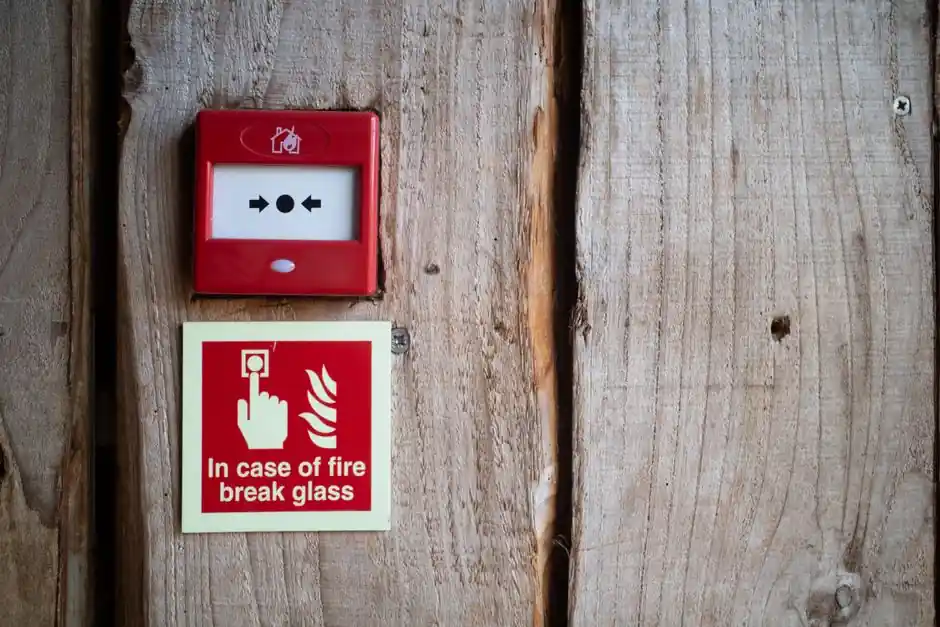
UL 217 covers single- or multiple-station smoke alarms, meaning the sensing element, power source, and audible notification appliance are integrated in one listed assembly, which is the form factor dropped into dwellings under NFPA 72 Chapter 29 [S1][S4][S6].
UL 268 covers smoke detectors intended for use as part of a fire alarm system; the device sends a signal back to a fire alarm control panel rather than sounding on its own, and the signalling path is why it lives in the system-detector category rather than the alarm category [S4][S6][S9].
Device class and where each product is installed
UL 217 product scope is the standalone alarm, including combination smoke/CO units, sold through retail and residential channels, with internal batteries or 120 V AC plus battery backup, and the standard explicitly addresses the sounder output levels required for occupant notification inside a dwelling unit [S1][S4][S8].
UL 268 product scope is the system detector, which is mounted on a supervised initiating-device circuit, identified by address or zone on a fire alarm control panel, and intended for commercial, industrial, and multi-family buildings where listed detection is required by NFPA 72 Chapter 17 [S4][S6][S9].
Field reality is that an installer pulling cable for a FACP must spec UL 268 detectors, while a residential remodel or dwelling-unit retrofit pulls UL 217 alarms, and mixing the two against code is a failed inspection, not a design preference [S4][S6].
Edition status, effective dates, and the 2024 transition
UL 217 8th Edition and UL 268 7th Edition became effective in June 2024, meaning that smoke alarms and smoke detectors manufactured after that month must meet the new edition to bear the UL listing mark [S2][S4].
Brooks Equipment's Q2 2024 distributor bulletin states that the change "has been in the works for at least eight years" and that many products already met the new criteria before the effective date, so the cutover was an inventory event more than a redesign event for compliant lines [S4].
Products manufactured under the prior edition do not lose their listing simply because a new edition is published; existing installed units remain code-compliant because the NFPA codes that the AHJ adopts reference the edition current at the time of manufacture [S4].
What the new fire tests actually require
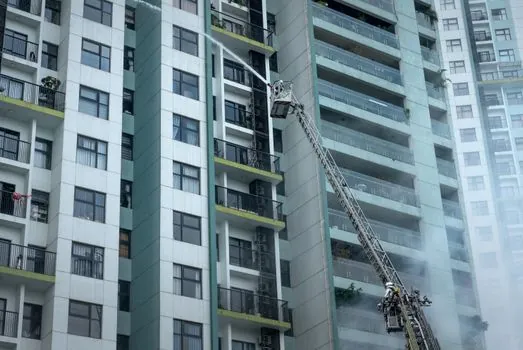
UL's Smoke Characterization Project for the National Fire Protection Research Foundation profiled flaming and smoldering polyurethane foam, paper, and wood, and showed that modern furnishings produce smoke particles, gas signatures, and aerosol colour profiles that the older test fires did not exercise, which drove the new test methods [S1][S3].
UL's own count of revisions to the two standards together exceeds 250 changes, with the most consequential being the addition of two polyurethane foam fire tests and one cooking-nuisance test, on top of the pre-existing smoldering and flaming wood and paper tests [S1][S3].
The cooking-nuisance test exposes the candidate alarm or detector to controlled cooking aerosols, and the unit must not alarm during that exposure while still meeting the polyurethane foam sensitivity thresholds, which is the mechanism intended to cut the dominant residential false-alarm source [S3].
Multi-criteria detection, algorithms, and nuisance suppression
Next-generation devices meeting the 8th and 7th editions are described by UL as likely to use advanced sensors or multi-criteria algorithms that look at smoke particle size, quantity, gas concentration, and colour to discriminate a smoldering or flaming polyurethane fire from a cooking aerosol [S1][S3].
Potter Signal's published technical summary of the transition notes "more than 400 technical changes" across the two standards combined, reflecting both the new fire tests and supporting updates to sensitivity, drift compensation, and chamber construction language [S5].
For the AHJ, the practical outcome is that a UL 217 8th Edition or UL 268 7th Edition listed product is expected to alert on a polyurethane foam fire faster than the prior edition while tolerating common cooking events, which is the dual goal the 2024 cutover was engineered around [S2][S3].
Selection criteria, comparison, and the mis-spec trap
Specifying the wrong standard is the most common failure mode and it is a listing failure, not a preference: a UL 268 detector wired as a standalone residential alarm lacks the sounder architecture and power-source language that UL 217 requires, and a UL 217 alarm tapped into a fire alarm control panel initiating circuit is not a listed initiating device for that loop [S4][S6][S9].
For a quick spec-side comparison: a UL 217 product carries its own 85 dB at 10 ft sounder and a residential hush feature, ships with integral power, and is identified by its test fire passing the four residential test scenarios; a UL 268 product is identified by supervised loop compatibility, base-style mounting, and a remote LED, and is tested against the same fire scenarios plus commercial nuisance sources [S1][S3][S4][S6].
Coverage in the field tracks occupancy: dwelling units per NFPA 72 Chapter 29 use UL 217 alarms, while Chapter 17 commercial detection uses UL 268 detectors, and combination smoke/CO units in dwellings are still anchored to UL 217 for the smoke half, with the CO half listed to UL 2034 [S1][S4][S8][S9].
Limits, failure modes, and what the standard does not do
UL 217 and UL 268 are component-level safety standards, not installation standards; spacing, mounting, and pathway survivability still come from NFPA 72 and the AHJ-adopted building or fire code, and a listed product installed in the wrong location still fails its purpose [S4][S9].
Multi-criteria algorithms reduce cooking nuisance alarms but do not eliminate them, and UL states openly that "it is difficult to eliminate all nuisance alarms" even with the new editions; installers and homeowners should still expect a residual false-alarm rate and rely on the hush feature for the verified-nuisance case [S1][S3].
End-of-life for the sensor, drift compensation, and replacement timing are not in the scope of either standard and are driven by the manufacturer's published service life, typically 10 years for ionization and photoelectric smoke sensors, and the AHJ cannot shorten that window by referencing the standard [S4][S8].
Standards to anchor a written spec
A spec should name the edition, not just the standard number: "smoke alarms shall be listed to ANSI/UL 217 8th Edition" and "smoke detectors shall be listed to ANSI/UL 268 7th Edition," because listing to a prior edition remains valid for existing product but is not acceptable for new construction in jurisdictions that have adopted the 2024 effective date [S2][S4].
The fire tests behind those editions are the polyurethane foam smoldering and flaming scenarios plus the cooking-nuisance scenario layered on top of the legacy wood and paper tests, and the candidate unit must pass all of them to bear the mark [S1][S3].
Worth tracking as a procurement signal: the June 2024 effective date triggered manufacturer discontinuations of legacy-edition product, and inventory of older UL listed devices continues to deplete through distribution channels, with replacement product priced higher because of the new sensor and algorithm content [S4]. For a related occupancy-class comparison, see the heat alarm vs heat detector breakdown on setpoints and where each fits, and for the supervised initiating-device context that a UL 268 detector lives in, the emergency stop reference on signal chain behaviour is a useful parallel.
For component-level specifications, see smoke detector, and perimeter alarm.