
Ultra-high-carbon steel (UHCS) is defined as a plain-carbon steel carrying roughly 1.25–2.0% carbon by weight, sitting above the AISI high-carbon range and at the upper boundary of what AISI still calls carbon steel before powder metallurgy is required [S4][S5].
The first modern UHCS compositions were 1.0–2.1% C with manganese as the only intentional alloying addition, corresponding to 15–32 vol.% iron carbide (Fe3C, cementite) in the final microstructure [S1]. That carbide volume is what makes the alloy behave like a metal-matrix composite of soft ferrite and hard cementite rather than a conventional structural steel.
Composition Range and Microstructure
UHCS sits in the hypereutectoid region of the Fe-Fe3C phase diagram, with carbon content above the eutectoid point of 0.76% C and below the practical castable limit near 2.0–2.1% C [S1][S3]. At 1.5% C, proeutectoid cementite forms a continuous network along prior austenite grain boundaries during slow cooling, and that brittle network is the root cause of most service failures [S4].
Above roughly 2.5% C, conventional casting breaks down and powder-metallurgy routes become necessary, which is why UHCS is typically capped at 2.0% C in commercial reference data [S5]. Manganese, silicon, phosphorus, and sulfur are still present at residual or specification-controlled levels, but AISI's carbon-steel definition forbids any deliberate addition of Cr, Ni, Mo, V, or W for alloying effect [S4].
Hardness, Strength, and the Ductility Trade-off
Room-temperature UTS for UHCS is reported at 1100 MPa with yield strength near 900 MPa, a strength level that approaches many alloy steels while using only plain Fe-C-Mn chemistry [S5]. Compared to mild steel (roughly 0.05–0.30% C, 7.85 g/cm³ density, 200 GPa Young's modulus), UHCS trades the ductility and formability of low-carbon grades for a step-change in hardness and wear resistance [S4][S2].
Hardness rises with carbon content as the volume fraction of hard iron carbide (cementite) increases, reaching 15–32 vol.% in plain carbon steels containing 1 to 2.1% C [S1]. The trade-off is severe: UHCS at the upper end of the range is brittle enough to shatter under a sharp impact rather than deform, which is why the material is rarely specified for dynamic or shock-loaded parts [S2][S6].
Heat Treatment: Spheroidizing vs Quench-and-Temper
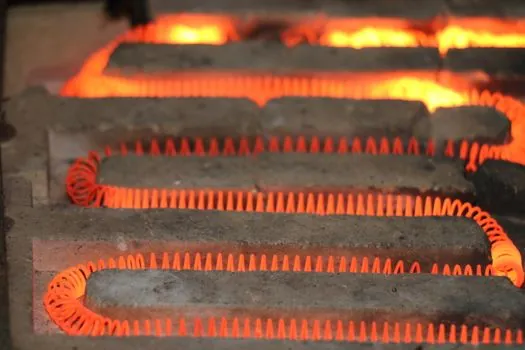
Two heat-treat paths dominate UHCS processing. The first is spheroidizing annealing, which breaks the brittle cementite network into discrete globules and is the only condition in which UHCS can be machined, cold-worked, or warm-worked without cracking [S2][S5].
The second is austenitizing followed by quench and temper, which produces a tempered martensite plus dispersed carbide structure with peak hardness and the wear resistance needed for cutting edges. Compared to other carbon-steel categories, UHCS reaches the highest hardness and toughness combination on heat-treating but also the lowest ductility, so tempering temperature and austenitizing soak time are tightly controlled in practice [S2][S3][S6]. For deeper material context, see the carbon steel reference and the alloy steel contrast page, since alloying with chromium, nickel, or molybdenum is what pushes a steel out of the AISI carbon-steel envelope [S4].
Weldability, Machinability, and Failure Modes
Weldability collapses as carbon content rises, and UHCS is effectively considered non-weldable by standard arc processes without aggressive preheat (often 200–300 °C) and strict post-weld tempering to diffuse carbon away from the heat-affected zone [S2][S3]. Rapid cooling after welding leaves untempered martensite in the HAZ, and the high carbon drives that martensite to be glass-hard and crack-prone, so most UHCS fabrications are joined mechanically rather than welded.
Machinability is acceptable only in the spheroidized condition; in the as-quenched condition the carbides and hardness destroy tooling life. Three failure modes recur in service: (1) brittle fracture from the cementite network, (2) quench-cracking from improper cooling, and (3) decarburization at the surface during high-temperature processing, which leaves a soft skin that wears prematurely [S1][S2].
Comparison: UHCS vs High-Carbon vs Alloy Steel
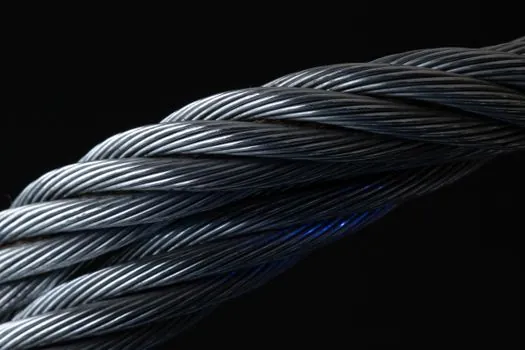
On a criteria-based comparison, the three families line up as follows. Carbon content is 0.6–1.0% C for high-carbon steel, 1.25–2.0% C for UHCS, and 0.3–0.6% C plus deliberate Cr/Ni/Mo/V additions for typical alloy steels [S3][S4][S7].
Hardness peaks with UHCS after quench-and-temper, while alloy steel trades peak hardness for better toughness and impact resistance. Weldability is good for alloy steel (with grade-specific procedures), marginal for high-carbon steel, and effectively absent for UHCS without special procedures [S2][S3][S7]. Cost is lowest for UHCS per unit hardness, because the only alloying element is manganese, whereas alloy steels pay for Cr, Ni, or Mo content. For many wear applications, a stainless steel or a chromium-bearing alloy is a better fit when corrosion is also a driver, but it will not match UHCS on raw abrasion resistance per dollar [S4].
Where UHCS Is Used, and Where It Is Not
UHCS fits applications that need extreme wear resistance or edge retention with no welding and minimal impact: coil and leaf springs, punches, dies, shear blades, agricultural and woodcutting tools, and pattern-welded cutlery in the Damascus and Japanese sword traditions (both hypereutectoid steels) [S2][S5]. Truck and rail springs historically used UHCS for its high yield and elastic memory, which is why it remains in the spring-steel specification family.
It is the wrong choice for structural framing, pressure vessels, pipelines, and any welded assembly, and for any service that combines impact loading with low temperature. The same brittleness that makes UHCS wear-resistant makes it unforgiving in crash or shock events, and its lack of corrosion resistance means it is also wrong for wet, marine, or chemical exposures without a coating system. If a project needs springs or wear plates in a corrosive environment, the silicon steel or stainless route is usually a better trade than trying to coat UHCS.
Standards, Specification Codes, and Sourcing
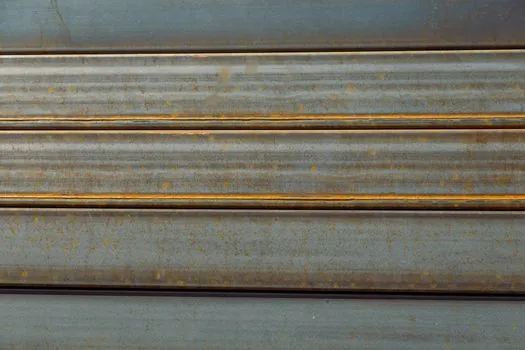
UHCS falls under the AISI carbon-steel definition when no deliberate alloying elements beyond Mn are added, with the AISI ceilings of 1.65% Mn, 0.60% Si, and 0.60% Cu as the upper bounds for residual content [S4]. For procurement, UHCS is typically ordered to AISI 1095 (0.90–1.03% C, near UHCS edge) or 1086/1084 for spring and knife grades, with tighter carbide-control clauses for cutlery and tool applications.
Heat-treat specifications normally reference AMS 6440/6442 for chrome-bearing alternatives rather than UHCS itself, so buyers should treat UHCS as a custom-processed plain-carbon grade rather than an off-the-shelf line item [S1][S4]. Beyond UHCS, buyers weighing high-carbon grades against composite alternatives can also review the carbon fiber reference when stiffness-to-weight, not hardness, drives the decision.
Two trackable signals for the next buying cycle: confirmation that the mill's UHCS billet stock is spheroidized-annealed on delivery (the only condition in which downstream forging or machining is safe), and a request for the actual carbide morphology and network rating, since cementite network rating is the single biggest predictor of in-service cracking and is not captured by hardness alone [S1][S5].
Related analysis: NBR Oil Seal Continuous Service Temperature: Spec, Limits, and Compound Variables.