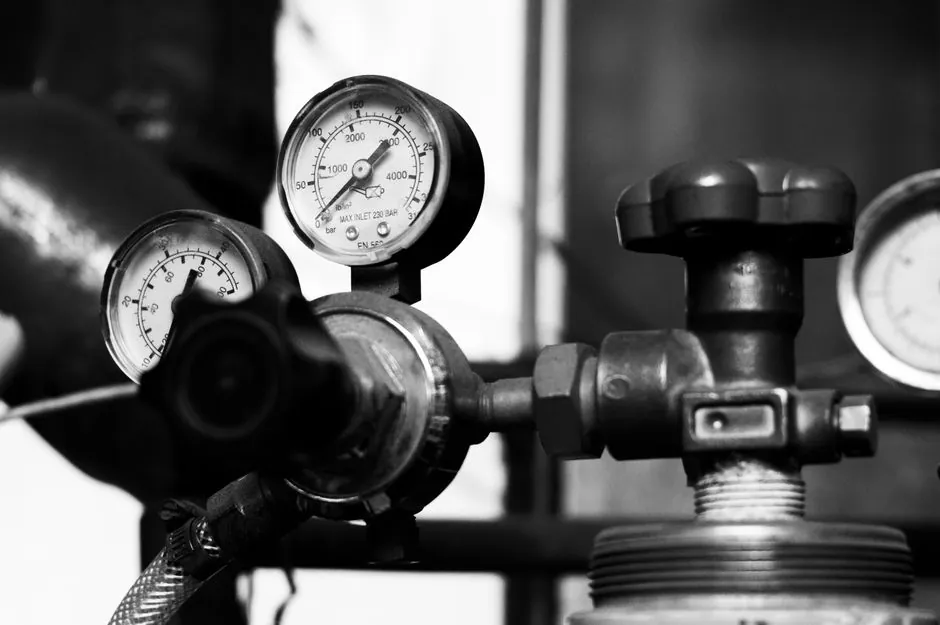
On Made-in-China listings dated 2026-05-19, 316L submersible hydrostatic level sensors are offered at FOB US$20-60 per piece with a 1-piece minimum order, while the same Atech catalog lists portable 100 m water-level meters at US$229-399 per piece and non-contact ultrasonic units at US$80-199 per piece [S1]. At the die-level, ROHM pressure-sensor ICs like the BM1383AGLV carry a stated relative accuracy of ±0.12 hPa over 300-1100 hPa with a 1.7-3.6 V supply, a price band that sits an order of magnitude below the industrial transmitter [S2].
Industrial pressure-sensor price therefore spans roughly three decades, from sub-dollar MEMS dies for consumer/IoT, to US$20-400 industrial probes, to US$1,000+ HART/Foundation Fieldbus units with full ATEX/IECEx certification. For a process engineer, the right question is not "what does a pressure sensor cost" but "what cost driver is moving the quote this week."
What the bill of materials actually pays for
A pressure sensor is a transducer that converts an input mechanical pressure in gases or liquids into an electrical output signal, and the dominant sensing element in industrial parts is a metal-foil strain gauge bonded to a metal flexure, with the body typically in aluminum or 17-4PH / 316 stainless steel for corrosion resistance [S3]. That choice, plus the diaphragm thickness that sets proof and burst pressure, is the single largest material cost in any industrial unit.
Cost is layered, not flat.
Selection criteria that move the price 3-10x
Buyers comparing two otherwise identical ranges will see 3-10x price spread once any of these criteria are pinned. Wetted material is the biggest lever: upgrading from 316L to Hastelloy C-276 for hot H2S or hydrochloric acid service can lift the quote 2-4x. Accuracy class is the second lever: 0.5% of span (industrial grade) versus 0.075% of span (high-accuracy / flow run) is a 2-3x multiplier on the same body size. [S1]
Output protocol is the third lever. A 4-20 mA loop-powered unit is the cheapest way to ship a process signal; the same body with HART 7 adds roughly 30-60% to the price, Foundation Fieldbus or PROFIBUS PA sits a tier above HART, and a wireless HART or IO-Link variant tracks the HART band on small parts but climbs on long-range gateways. For comparison, a HART device is an FSK signal layered onto a conventional 4-20 mA analog loop, so any plant already wired for 4-20 mA can accept HART without re-pull; Foundation Fieldbus and PROFIBUS PA are different digital fieldbuses and are not directly interchangeable with HART.
Ingress and mechanical protection matter more than most spec sheets admit. IP68 submersible 19 mm hydrostatic probes priced at US$20-60 per piece [S1] are built for tank-bottom duty; move to a NEMA 4X or IP69K hygienic stainless housing for food/pharma and the same sensing element typically retags 2-3x higher. Cable jacket (PVC vs PUR vs FEP), strain-relief potting, and lightning / surge protection on outdoor installations each add line items. For a deeper dive on the protocol mapping logic used in adjacent instrumentation, see the level transmitter vs capacitance level transmitter dielectric-constant guide.
Comparison of the four main sensing technologies
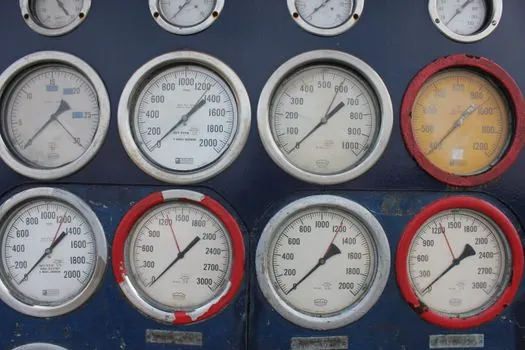
Four sensing technologies dominate the market, and they line up cleanly against cost, accuracy, range, and stability. Piezoresistive silicon dies (MEMS) are the cheapest, smallest, and lowest-power option, typified by parts like the ROHM BM1383AGLV at 300-1100 hPa and ±0.12 hPa relative accuracy [S2]; they suit low-pressure gas and barometric / IoT use and are the right pick when unit cost is the binding constraint. Metal-foil strain gauge on a stainless flexure is the industrial default: 0.1-0.25% accuracy, proven stability over years, and the broadest media compatibility [S3].
Ceramic capacitive sensors sit between the two: thicker diaphragm, higher overrange tolerance, and a price that often beats metal-foil at sub-100 mbar ranges where silicon is fragile. Resonant (quartz or silicon) and piezoelectric (dynamic-only) sensors round out the catalog for special duty: resonant for ultra-high stability reference standards, piezoelectric for dynamic pressure / combustion knock where static accuracy is irrelevant.
What the certification label adds to the price
Hazardous-area approvals are a non-negotiable line item in oil and gas, chemical, and pharmaceutical plants, and they are also a hidden multiplier in quotes. ATEX Category 1 (zone 0, Ex ia) and IECEx equivalents for the same body typically add 40-80% over the non-IS version, and that delta widens when NACE MR0175 / ISO 15156 sour-service compliance is layered on for upstream oilfield duty. SIL 2 / SIL 3 functional-safety certification to IEC 61508 adds another 30-60% on top, because of the FMEDA documentation, third-party audit, and proof-test interval validation behind the certificate. [S3]
For a working engineer this means a "pressure transmitter" with Ex d flameproof enclosure, HART 7, 0.075% accuracy, Hastelloy wetted parts, and SIL 2 can land 5-8x the price of a 0.5% 316L 4-20 mA unit with no approvals. For cost engineers validating the procurement math, the same kind of price-driver logic used on adjacent process instrumentation, such as the breakdown in thermocouple probe pricing for 2026, applies one-to-one: material, accuracy, certification, protocol, and lead time dominate the line.
Total cost of ownership beyond the unit price

Unit FOB price is the smallest line in a ten-year cost-of-ownership calculation. Installation cost scales with conduit runs, cable type, and the labor to mount, calibrate, and loop-check each instrument; a 4-20 mA point with HART handheld pre-commissioning is the cheapest to install, while FOUNDATION Fieldbus or PROFIBUS PA segments need a segment designer, terminators, and power conditioning. Calibration cost recurs annually or per proof-test interval and is the main reason SIL-rated transmitters carry a hidden lifetime bill: shorter proof-test intervals mean more trips, more downtime windows, and more technician hours. [S1]
Energy draw is small for individual sensors but compounds across thousands of I/O. Loop-powered 4-20 mA HART at 24 V and ~3.5 mA minimum is roughly 0.1 W per point; wireless-HART battery-powered units can stretch 5-10 years on a primary cell, but at the cost of gateway hardware and a slow update rate unsuitable for fast control loops. Mean time between failure for industrial pressure transmitters is widely quoted in the 100-200 year range for the sensing element under rated conditions, but electronics, seals, and surge protection typically fail first, which is why spare-parts stocking and the repair-versus-replace threshold belong in any TCO model.
A short list of questions that move a quote: what is the wetted material and what media are present; what accuracy class is the loop actually using; what is the required proof pressure and burst pressure relative to span; what protocol does the DCS / PLC natively support; what hazardous area classification applies; and what is the annual calibration / proof-test budget, not just the purchase order.
When a low-cost sensor is the right answer, and when it is not
A US$20-60 IP68 316L hydrostatic probe is the right pick for clean water tank level, irrigation, diesel day-tank level, and similar low-corrosion duty where 0.5% accuracy is acceptable [S1]. The same price point is the wrong pick for hot crude with H2S, superheated steam, hygienic CIP loops, or any service with a published MTBF that the safety case depends on. A MEMS die at 1.7-3.6 V supply and ±0.12 hPa relative accuracy is the right pick for wearables, barometric compensation in drones, and weather stations [S2]; it is the wrong pick for hydraulic press control, where overrange and media compatibility will kill it.
Standards and sourcing notes for 2026

For procurement, the relevant standards to confirm on the datasheet before signing the PO are: ASME B16.34 for valve-and-instrument pressure-temperature ratings; IEC 61298 for process measurement test procedures; IEC 61508 / IEC 61511 for SIL-rated loops; ATEX 2014/34/EU and IECEx for hazardous-area; NACE MR0175 / ISO 15156 for sour-service; and 3-A / EHEDG for hygienic and pharmaceutical service. Pressure-unit convention on the datasheet should be confirmed in psi, bar, kPa, or MPa; many industrial vendors dual-rate, but a mismatch with the DCS tag database is a frequent commissioning error. [S3]
Sourcing channel also matters. Made-in-China-style portals publish FOB factory-gate unit prices with low MOQ, useful for spot-buying 316L submersible units in the US$20-60 per piece band [S1]; franchised distributors such as BDTIC carry MEMS pressure-sensor ICs at die-level pricing with traceability and traceability documentation [S2]; MPL-style custom OEM shops, accepting form, approvals, set point, proof/burst pressure, and estimated volume as quote inputs, are the right channel when a stock catalog does not match the application [S4]. For related application logic on the sensor side, the displacement sensor vs laser displacement sensor protocol map covers similar protocol-stack trade-offs in adjacent measurement domains. For NDT-side cross-sensitivity that may matter on hydraulic test stands paired with pressure sensors, see the PAUT vs eddy current cross-sensitivity decision map.
Trackable signals to watch over the next buying cycle: ATEX and IECEx certificate database updates for the most-quoted transmitter families, RoHS / REACH revision lists that may force last-time-buy notices on legacy part numbers, and a quiet move by several industrial vendors toward Ethernet-APL (IEEE 802.3cg, 10 Mbit/s over single twisted pair) for new greenfield installs, which will reset the protocol-premium ladder that HART and Foundation Fieldbus have sat on for two decades.
The underlying component specifications are covered under lighting equipment and electric lamps, linear guide, and crossed roller guide.