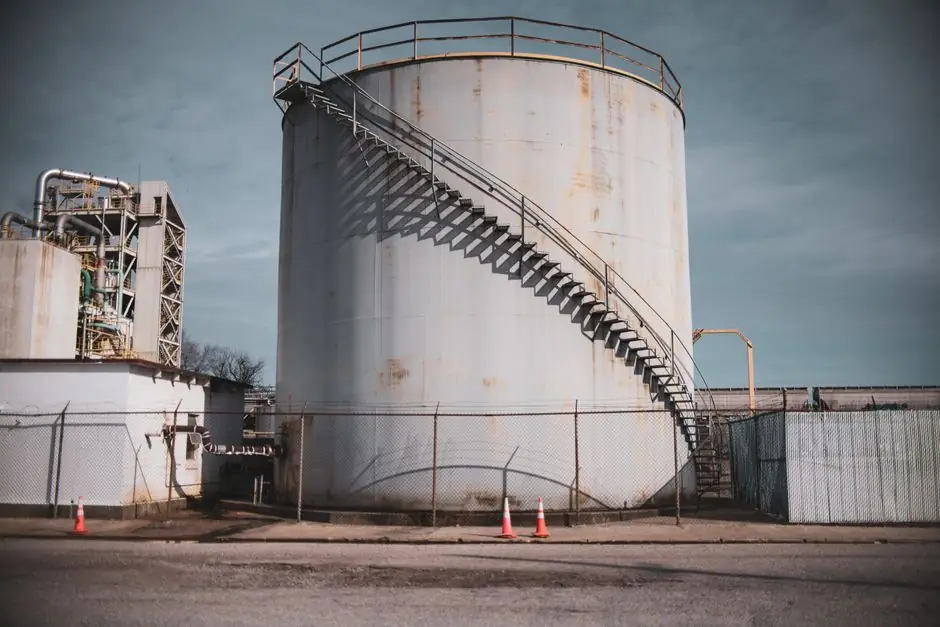
An ultrasonic level meter sized by the Time-of-Flight principle covers 4-30 m spans with 3 mm or 0.1% resolution and 0.5-1.0% full-scale accuracy, with a 4-20 mA loop (250-510 Ω load) and optional RS485/ModBUS output as the default 2026 product spec [S3][S4][S5].
Selection hinges on five gates: range vs tank height, dead band (0.25-0.6 m), beam angle (4-6° full angle), process temperature (-20 to +60 °C ambient, with high-temp probes to 70 m range), and enclosure rating (IP66 standard, IP68 for probe immersion) [S3][S5].
Working Principle and Measurement Bands
Time-of-Flight ultrasonic level sensing fires a pulse from the sensor, times the echo from the media surface, and converts the round-trip interval to a level via the known tank geometry [S2][S4].
Q&T Instrument's 2026 catalog lists discrete range bins at 4, 6, 8, 10, 12, 15, 20, and 30 m, each with 0.5-1.0% full-scale accuracy and 3 mm or 0.1% resolution (whichever is greater) on a 2-wire 4-20 mA/250 Ω output [S4]. ZINACA Instruments extends the integrated version to 60 m and the separate (remote) probe version to 70 m, the longest published 2026 ultrasonic level band, with 4-line 4-20 mA load up to 510 Ω and 2-line limited to 250 Ω [S5]. LMTECH splits its offering into 0-6, 0-10, 0-15, and 0-30 m bins, with a 1 mm branch rate (internal resolution) and 0.25-0.5% accuracy on the higher-tier models [S3].
Dead band (also called blocking distance) sits between 0.25 m and 0.6 m depending on the transducer, so the sensor face must be mounted at least that distance above the maximum expected liquid surface [S3]. Beam angle is a hard spec: 4-6° full angle for general-purpose 30-40 kHz transducers, meaning a 10 m range requires a free beam cone roughly 1.4 m in diameter at the far surface [S3].
Selection Criteria: Duty, Media, and Environment
Non-contact ultrasonic level meters suit open-vessel liquids, slurries below 3% solids by volume, and bulk solids with a flat or gently sloped surface; they fail on foaming, heavy vapor, boiling surfaces, and stirred tanks with vortices deeper than the beam cone [S5][S6].
Five spec gates filter the 2026 shortlist: (1) measuring range options (4m to 30m per GW1, up to 30m per LMTECH, up to 70m per ZINACA) versus tank height; (2) blind zone of 0.25m to 0.6m (LMTECH) versus nozzle height; (3) process temperature, with high-temperature customizable probes available (ZINACA); (4) output and protocol, including 4-20mA analog output, dry contact or relay alarm output, and optional RS485/RS232 communication [S1][S3][S5].
Material compatibility is handled by transducer housing: PP and PVDF for acids and alkalis, aluminum-alloy die-cast main body (IP66, Ex d IIB T5 or Ex d IICT5 explosion-proof rating) for hazardous-area chemical tanks, and resin-bodied compact probes like Yamaden YU-01/05/03 for corrosive sumps [S3][S6]. Customizable probes address high-pressure, high-temperature, small-diameter, and reduced blind-zone applications, with separate-type cable runs up to 50 m between sensor and transmitter [S3][S5].
Comparison of Main 2026 Product Variants
The 2026 ultrasonic level meter market splits into three variants with different cost-vs-capability tradeoffs. [S1]
Entry-level compact 2-wire (Q&T 4-30 m series, Yamaden YU-01/05/03 resin body): 4-30 m range, 0.5-1.0% accuracy, 3 mm resolution, 4-20 mA/250 Ω, IP66 or IP67 resin housing, no explosion-proof rating, RS232 or RS485 optional. Best for water/wastewater sumps and OEM skids where price dominates [S1][S4][S6].
Mid-range industrial 4-wire (LMTECH integrated 0-30 m, ZINACA 5-60 m): 0-30 to 0-60 m range, 0.25-0.5% accuracy, 1 mm branch rate (LMTECH), die-cast aluminum Ex d IICT5 housing, IP66 body with IP68 probe option, RS485/ModBUS plus 4-channel AC 220 V/3 A relay outputs, 24 VDC at 120 mA. Best for chemical and petrochemical tanks needing hazardous-area certification [S3][S5].
Long-range separate-type (ZINACA 5-70 m, GW1 4-30 m with advanced signal processing): up to 70 m range, 50 m separation cable, 0.5-1.0% accuracy, 3 mm resolution, 4-20 mA/510 Ω on 4-wire. Best for deep silos, large reservoirs, and bulk-solid bins where the transmitter must mount away from the probe [S5][S7].
Who Should and Should Not Use Ultrasonic Level Meters
Buyers with open-top water reservoirs, wastewater sumps, chemical storage tanks at less than 4 atm, bulk-solid silos with calm surfaces, and food/beverage hygienic vessels gain low-maintenance non-contact measurement at the lowest cost-per-point of any continuous level technology [S5].
Buyers should reject ultrasonic and pick radar or guided-wave radar when the service hits one of four failure modes: heavy foam, strong vapor or steam, pressurized vessels above the 4 atm body rating, or agitated/reacting surfaces where vortex depth exceeds the 4-6° beam cone [S3][S5]. For a deeper cross-technology comparison on level sizing, see the 2026 level transmitter spec map. For semiconductor wet process and UPW loops where ultrapure water chemistry rules out most wetted plastics, the UPW ultrasonic selection note outlines the small but real fit window.
Installation, Sizing Math, and Failure Modes
Correct sizing starts with three numbers: tank height, maximum fill level, and beam footprint. The sensor face must sit at maximum fill plus the dead band (0.25-0.6 m) plus the beam diameter at the far surface, calculated as 2 × range × tan(half-angle). At 10 m range with a 5° full-angle (2.5° half-angle) transducer, the beam diameter is roughly 0.87 m, so nozzle inner diameter must exceed that or use a waveguide tube [S3][S6].
Mount options in 2026 catalogs split between bracket, flange, and screw-in thread, with Yamaden YU-01/05/03 offering all three plus a tube-with-waveguide variant for narrow stilling wells [S6]. LMTECH ships a die-cast aluminum bracket/flange body with industrial isolated power supply, lightning protection, and overvoltage/overcurrent protection on all I/O lines, a worthwhile checklist item for outdoor chemical-plant installs [S3].
The most common 2026 failure modes are: false echoes from tank internal structures (ladder rungs, agitator shafts, heating coils) suppressed by patented signal processing and echo-profile learning; temperature drift across the 0-60 °C ambient band corrected by built-in temperature compensation; and condensation on the transducer face, handled by IP66/IP68 probe ratings and periodic cleaning cycles [S3][S5][S7]. Resolution at 3 mm or 0.1% (whichever is greater) means a 30 m tank resolves to about 300 mm steps at the floor of the spec, fine for trend logging but coarse for batch dosing, where a guided-wave radar or capacitance probe is the better match [S5].
Standards, Sourcing, and Communication Protocols
No single IEC standard governs ultrasonic level meter performance; compliance is usually declared against the generic explosion-proof standard (Ex d IICT5 in the LMTECH datasheet, equivalent to IEC 60079-1 flameproof enclosures) and the IP66/IP68 ingress code from IEC 60529 [S3][S5]. RS485 implementations in 2026 typically use ModBUS RTU at 9600-19200 baud for daisy-chained sub-host networks, with 8 sub-hosts per bus master per the ECVV two-limit calibration spec [S1].
For buyers cross-shopping radar, ultrasonic, and contact level technologies on the same tank, the 2026 radar level meter spec map gives the foam-and-vapor comparison directly. Buyers building complete plant rooms around an ultrasonic purchase should also factor in signal-tower light sizing for pump-run feedback, since the optional 4-channel AC 220 V/3 A relay output on industrial models typically drives both the level alarm and a stack-light repeater [S3].
Track the next two 2026 signals: (1) ultrasonic vendors extending 80 m range via lower-frequency 20 kHz transducers for deep reservoir and tailings dam duty; (2) wider adoption of HART 7 or IO-Link on the 2-wire 4-20 mA loop, which would let compact units participate in modern asset-management systems without forcing the 4-wire RS485 jump.
Component reference pages worth checking: ultrasonic level meter, ultrasonic flowmeter, and linear guide.