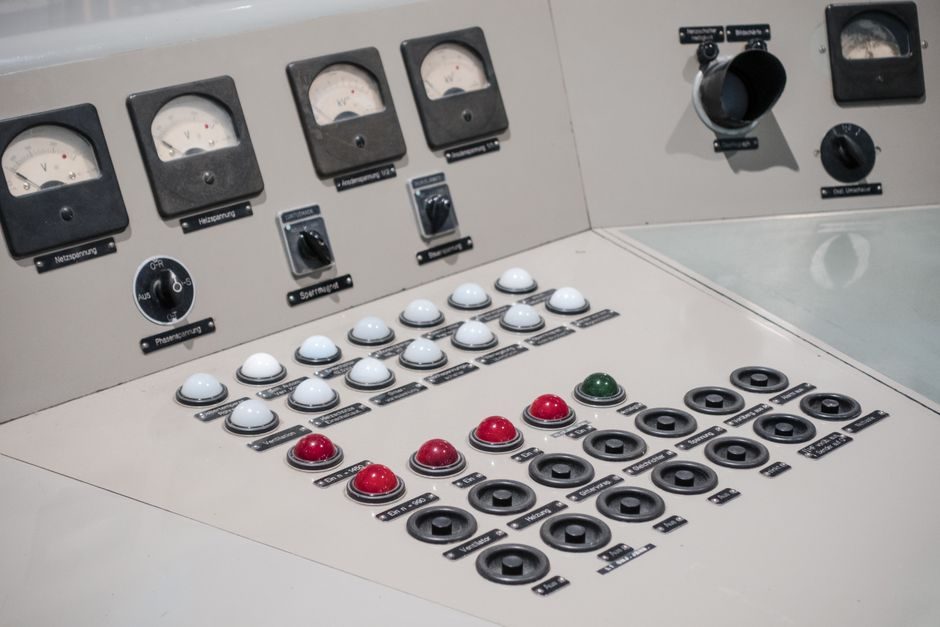
Continuous ultrasonic level meter products on the 2026 industrial market output a 4-20 mA or digital level signal proportional to the distance from the transducer face to the material surface, while level switches based on the same acoustic principle produce a binary relay or PNP/NPN output at one or two user-set points [S1][S2]. The DirectIndustry index of ultrasonic point-level devices lists 28 products from 16 manufacturers, including offerings from ABB Measurement & Analytics and Flowline [S1].
Both device classes share the same non-contact, acoustic time-of-flight principle, but they differ sharply in transducer design, electronics, output stack, and price. Picking between them — or using both in parallel — depends on whether the application needs a continuous level reading, a pump/valve trip, or both, and on the physical conditions of foam, vapor, and turbulence in the vessel [S1][S4].
Working Principle and Measurement Range
Ultrasonic level meters and ultrasonic level switches both rely on a piezoelectric transducer firing a pulse and listening for the echo from the liquid or bulk-solid surface, with the time-of-flight converted to distance via the speed of sound in the process medium [S5][S7]. Continuous meters such as the CX-ULM-GA and CX-ULM-DS series expose this distance as a 4-20 mA loop, HART, or RS-485 output updated several times per second [S5][S7].
Ultrasonic point-level switches, in contrast, are tuned to detect echo presence/absence at a fixed acoustic window and drive a discrete SPDT relay, PNP, or NPN output [S2][S4]. Flowline's EchoSwitch LU74-78 family is specified for liquid, tank, and plastic-pipe mounting, and is listed as an ultrasonic switch with discrete-output characteristics [S2]. Range capability also differs: a typical general-purpose ultrasonic level meter is specified for 0.3-15 m of liquid or solid bulk level, while compact ultrasonic switches are commonly used at sub-6 m tank heights and on small-chemistry feed pots [S5][S9].
Output Type, Signal Stack, and Integration
Continuous ultrasonic level meters expose analog (4-20 mA), HART, Modbus RTU/TCP, and PROFIBUS-PA-style digital frames depending on the model; the CX-ULM-GA is documented as an "import industry monolithic integrated circuit" device with digital temperature compensation [S7]. This makes them drop-in for DCS, PLC, and SCADA loops that need a real engineering-unit reading for trending, inventory, and control [S5][S7].
Ultrasonic level switches expose a dry-contact relay, PNP/NPN transistor, or in some cases a 4-20 mA "echo confidence" analog channel for diagnostics [S2][S4][S9]. They are wired straight into pump starters, alarm horns, and interlock relays without an analog input card. A process line that needs both trending and high-high trip typically pairs one meter and one or two switches rather than chasing a single multi-function device [S1][S4].
Selection Criteria: Meters vs Switches
The decision between a meter and a switch is governed by what the loop needs as an output, what the vessel looks like acoustically, and what budget the job allows. [S1]
A useful rule of thumb used by specifiers is: if the question is "how full is the tank?" use a meter; if the question is "is the tank too full or too empty?" use a switch [S1][S2]. Foam, heavy vapor, dust, and turbulence shorten the working range of both devices, but meters are more sensitive to those conditions because their accuracy depends on a clean echo profile, while switches only need a qualitative "echo present / lost" decision and can be retuned with a gain trim pot or push-button teach [S2][S4][S9].
Compared side by side on the four criteria most engineers weigh first — continuous level vs point level, output type, install position, and typical price tier — the two classes look like this:
Output — meter: 4-20 mA / HART / digital, proportional to distance; switch: relay or PNP/NPN, on/off [S2][S5][S7].
Mounting — meter: top of vessel, flanged or threaded, downward-facing; switch: side-of-vessel or top, in a fixed acoustic window [S2][S4][S9].
Best for — meter: inventory, batching, custody, level trending; switch: pump control, high-high cutout, dry-run protection [S1][S4].
Cost and complexity — meter: transducer, MCU, display, HART modem; switch: smaller transducer, simple threshold circuit, lower unit cost [S1][S5][S7].
Who It Is For, and Who It Is Not For
Engineers specifying a continuous level read for batching, tank-farm inventory, open-channel flow computation, or custody transfer should default to an ultrasonic level meter such as the CX-ULM-ES or CX-ULM-GA, which are CE-marked under ISO 9001:2008 quality systems and expose the analog/digital output the DCS expects [S5][S7]. The same product class also feeds open-channel flow primaries, where the measured head is squared or converted against a flume/weir equation — for that workflow, the open channel flowmeter selection criteria article on this site covers the primary-device and signal-stack choices.
Engineers specifying pump dry-run protection, sump high-level alarms, or chemical-feed pot overfill interlocks are better served by an ultrasonic point-level switch such as the EchoSwitch LU74-78 series, which is designed for liquid tanks and plastic-pipe mounting with a discrete output [S2][S4]. Users who need continuous trend data for mass balance or for tight level control loops should not specify a switch and expect an engineering-unit reading back — the switch only confirms "wet / dry" or "echo / no echo" at its teach point [S1][S9].
Both technologies are also a poor fit where the process gas blanket or foam layer is heavy and acoustically opaque; in those services a radar level meter, a guided-wave / TDR level meter, or an RF admittance level switch is the more reliable choice, since electromagnetic waves are far less affected by vapor and foam than acoustic pulses.
Failure Modes and Field Limitations
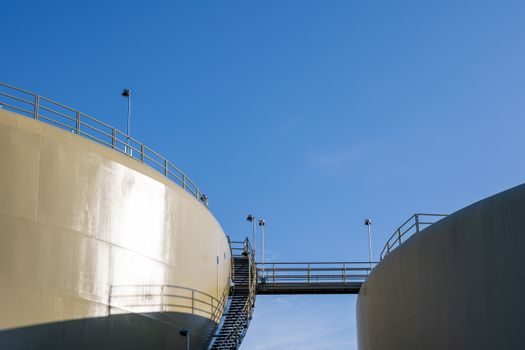
Both meter and switch share an acoustic blind zone close to the transducer face where the transmit pulse swamps the receiver; ultrasonic switches in particular must be mounted with a clear standoff below the process connection so the initial ring-down has decayed before the echo window opens [S2][S9]. The "ideal solution" framing used by OMEGA Engineering for its ultrasonic point-level line explicitly lists "varying sizes, materials, styles, and limits" as the variables to fit the application, which is a polite way of saying that mounting geometry, gasket material, and acoustic window length all have to be matched to the vessel [S9].
Other documented failure modes include: foam attenuating the echo, heavy vapor shifting the effective speed of sound, turbulence scattering the return, and condensate or buildup on the transducer face damping the transmit energy [S1][S4][S7]. Meters address this with digital temperature compensation across the sound-speed calculation and with echo-loss diagnostics; switches address it with a teach routine and a margin/gain setting that lets the user reject low-confidence returns [S7][S9]. In both cases the practical mitigation is physical — keep the transducer out of the fill stream, away from agitator shafts, and clear of the suction vortex.
Standards, Sourcing, and Supplier Landscape
Ultrasonic level devices used in hazardous areas are typically designed against the IEC 60079 family of explosion-protection standards and the ATEX 2014/34/EU directive for European sites, with IECEx schemes used in the rest of the world — the DirectIndustry index groups its manufacturer entries by these certifications where applicable [S1]. China-based vendors also publish CE marking plus ISO 9001:2008 quality-system statements on their public datasheets for the CX-ULM and EchoSwitch-style lines, which is a useful baseline for buyer audits [S5][S7][S2].
The supplier landscape in 2026 is broad: 16 manufacturers with 28 ultrasonic-switch products are tracked on DirectIndustry, including ABB Measurement & Analytics, Flowline (with the EchoSwitch LU74-78 line), OMEGA Engineering, and FEEJOY on the level-sensor side, plus a longer tail of Chinese exporters such as Jaycee Technologies and Shanghai Cixi Instrument [S1][S2][S3][S8][S9]. Pricing on the customs-tariff reference for HS-code 9026 (ultrasonic level meters) is updated through 2026 and remains a useful sanity check for landed-cost calculations on imported units [S6].
Real Use Cases on the Plant Floor
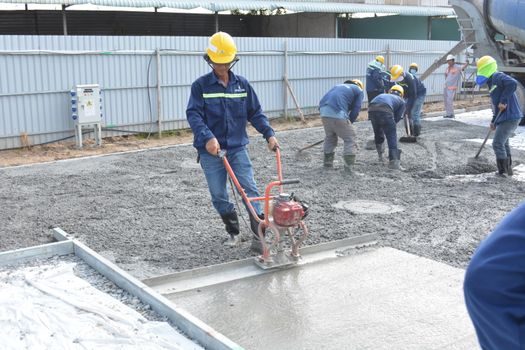
A typical water and wastewater use case is open-channel flow measurement, where an ultrasonic level meter sits above a Parshall flume or V-notch weir, the level signal is linearized against the primary-device curve, and the resulting flow is totalized for effluent billing [S5][S7]. In the same plant, ultrasonic point-level switches ride on the wet-well and the digester cover as high-level alarms feeding the pump-station PLC [S1][S4].
In chemical and OEM skid builds, the typical pattern is: one continuous level meter for the day-tank reading into the DCS, plus one or two ultrasonic switches as independent high-high cutout and pump dry-run protection on the same vessel — the redundancy is intentional, since the regulatory trip loop and the control loop are kept on different hardware [S1][S2][S4]. For applications where the level signal feeds a flow calculation against a different primary device, the variable area flowmeter vs Coriolis 2026 selection comparison on this site is a useful cross-reference for the mass-flow side of the same measurement chain.
Two verifiable signals to track next: any 2026-06-21 or later DirectIndustry refresh of the 16-vendor / 28-product ultrasonic-switch index [S1], and any new China-customs tariff page update under HS 9026 for ultrasonic level meters [S6]. Either change would re-rank landed cost or shift the supplier list used above.