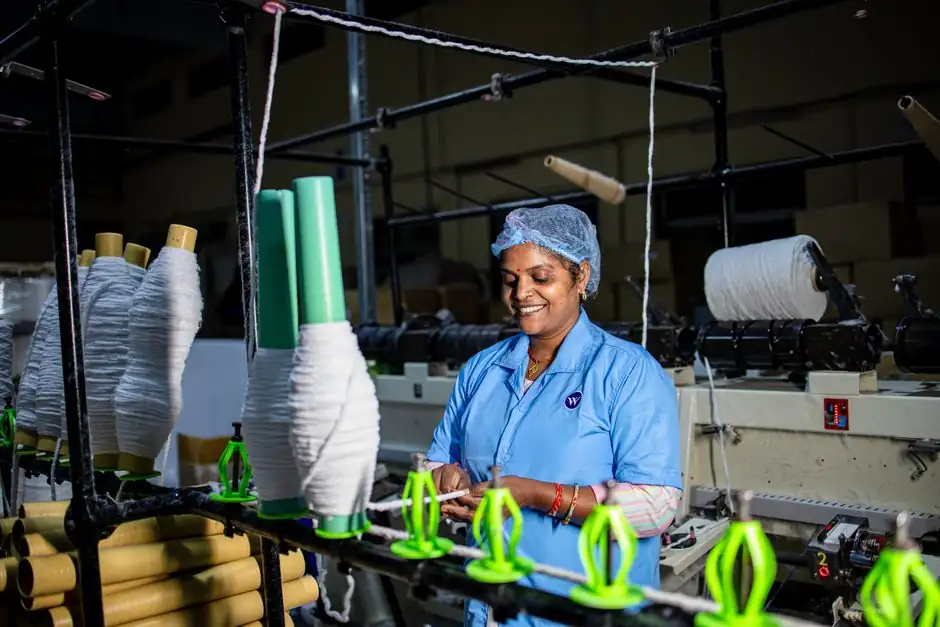
Universal joints for textile-mill service are specified first by transmitted torque and continuous operating angle, then by rpm, bore size, and ambient contamination from fiber lint plus humidity [S2][S5].
For carding, drawing, roving, ring spinning, and weaving drives, the dominant configuration is a needle-bearing single or double Cardan joint, with double (constant-velocity) joints preferred where the angle exceeds roughly 15° or where tension uniformity on the yarn/web matters [S4][S5].
Operating Envelope: Torque, Angle, Rpm
Universal joints can transmit torque between misaligned shafts at fixed or varying angles, and are commonly rated for angular misalignment of 15° or greater, well above the roughly 6° typical of gear couplings and spindles [S2]. A single Hooke joint can compensate for angular misalignments up to 45°, while double joints and drive shafts handle up to 90° (about 45° per joint) and can also absorb parallel misalignment [S5].
Durability of any universal joint is governed by the transmitted torque, the operating angle, and the rotational speed: higher angles and higher rpm shorten bearing life non-linearly, and textile frames with frequent start-stop patterns add shock load that must be added to the steady-state torque figure when sizing [S5]. Bore sizes for general industrial u-joints typically span 3/16" to 2" (5 mm to 35 mm), with machinable bores available for non-standard shaft diameters [S4].
Cardan Single vs Double (CV) Joints
A single Cardan joint produces non-uniform angular velocity when the angle between driving and driven shafts is greater than 0°, with the driven shaft speeding up and slowing down through each revolution; the average ratio remains unity [S2]. Two single joints in tandem, with proper phasing, cancel the velocity fluctuation of the first joint in the second and give constant output speed [S2].
For textile lines, that distinction matters on ring-spinning and winding drives, where any cyclic speed variation at the spindle is amplified into yarn count variation. Double Cardan joints are also the practical choice when the drive must absorb both angular and parallel offset between motor and frame-mounted input shafts [S4]. Bearing technology inside the joint cross is typically either friction (sliding) or needle-roller, with needle-roller units specified for higher rpm and longer life on continuous-running lines [S5].
Material, Sealing, and Lubrication in a Lint-Laden Plant
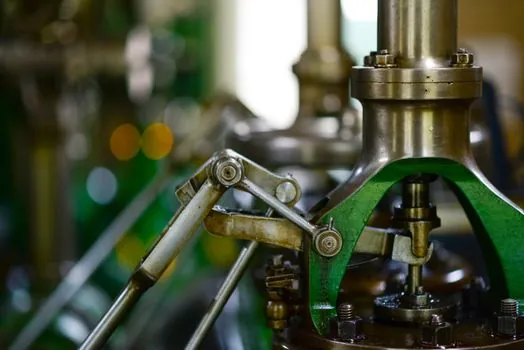
Standard industrial u-joints are made from heat-treated alloy steel for high strength, with stainless variants available for corrosive zones; needle-bearing crosses and yokes are precision-machined, heat-treated, and selectively ground for tighter tolerances than low-cost cast units [S4]. For textile halls, the binding constraint is usually contamination, not bulk strength: airborne fiber lint, fly, and humid air enter unsealed crosses, mix with grease, and grind the needle rollers.
Sealed or booted u-joints, with elastomer or felt covers, are the default in carding and weaving rooms; greasable designs allow relubrication on a defined interval, while permanently lubricated, non-greasable types fit tight-envelope locations where a grease nipple is inaccessible [S3]. Where washdown is routine, stainless yokes with sealed bearings are specified to prevent corrosion-driven loss of preload [S4].
Size Series, Sourcing, and Common Catalog Footprints
Procurement teams usually standardize on a small set of cross-bearing size series, with the 1310, 1330, 1350, and 1410 series being the most common general-purpose footprints in industrial supply [S3]. Sticking to a few series reduces spare-parts inventory and lets a mill keep a single replacement procedure across card, draw frame, roving, ring, and winder drives.
For a textile-mill maintenance buyer, the practical sourcing check is: forged alloy-steel yokes, documented heat treatment, available bore-and-keyway options across the 1310–1410 family, both greasable and sealed versions, and a manufacturer that publishes torque and rpm ratings per series rather than only a generic catalog page [S3][S4]. The broader manufacturer landscape spans premium OE names, mid-tier industrial suppliers, and aftermarket brands; comparing them on catalog breadth, sealing options, and total cost of ownership is more useful than comparing sticker price alone [S3][S7].
Selection Criteria and Common Pitfalls

The first selection step is to list operating speed, continuous angle, peak/shock torque, bore diameters on both shafts, axial travel, ambient contamination, and any washdown or chemical exposure, then send that data sheet to the joint supplier rather than picking from a generic table [S6]. Textile drives tend to be modest in torque but high in continuous hours, so thermal rating and grease life often matter more than peak torque capacity.
Pitfalls specific to textile service include: specifying a single Hooke joint where the angle exceeds roughly 15° on a speed-sensitive drive, ignoring the velocity fluctuation that shows up as count variation at the spindle; using a non-sealed joint in a carding or weaving room where lint migrates into the needle rollers; and selecting a joint on peak stall torque only, without derating for the continuous angle and the start-stop duty of the line [S2][S5]. On the standards side, cross-reference points worth checking during a retrofit are the bearing-life rating published by the manufacturer (commonly expressed in hours at a given angle and rpm) and the lubricant specification, rather than any single external universal-joint standard [S5].
Comparison: Single vs Double vs Drive Shaft for Textile Frames
On the four decision criteria that drive most textile-mill retrofits, the practical ranking is as follows. Single Hooke joint: lowest cost, simplest, handles angular misalignment up to 45°, but produces non-uniform output velocity above 0° and offers no parallel-misalignment compensation [S2][S4][S5]. Double Cardan joint: gives constant-velocity output and absorbs both angular (up to 90° total) and parallel misalignment, at higher cost and longer installed length [S2][S4][S5]. Telescoping drive shaft: built from two joints plus a sliding center section, adds large axial travel and parallel-misalignment capability for long runs between motor and frame, at the highest cost and longest envelope [S4][S5].
For most card-to-spinning-to-winder sections, the default specification is a sealed, needle-bearing double Cardan joint in heat-treated alloy steel, 1310 or 1330 series, with boot-protected greasable crosses sized to the motor nameplate torque derated for the worst-case continuous angle. Related driveline decisions on the same line, including taper bush selection for textile mills and steel mill coupling selection, follow the same torque-angle-rpm logic, and a coupling upgrade on the same drive train should be reviewed in the same engineering pass. One trackable signal to watch in the next sourcing cycle is whether the supplier publishes a per-series L10 bearing-life figure at a stated angle and rpm, which is now the most useful differentiator between sealed, lint-rated u-joints in the 1310–1410 family [S3][S4][S5].
The underlying component specifications are covered under expansion joint, and pressure transmitter.