
A 4-second die casting dry cycle supports a theoretical rate of 15 castings per minute, 900 per hour and 7,200 per 8-hour shift before allowances for cooling, downtime and defects [S5].
Dry cycle time is the interval between successive injection cycles, not a production promise: actual output depends on casting mass, configuration, cooling, availability, performance and quality losses [S1][S3][S4][S5].
Separate Dry Cycle Capacity From Real Output
Dry cycle time identifies the interval from the beginning of one injection cycle to the beginning of the next [S1]. The calculation is straightforward: divide 60 seconds by the cycle in seconds to obtain theoretical castings per minute, then multiply by 60 minutes per hour and by scheduled operating hours per shift.
For a 4-second dry cycle, the sequence is 60 divided by 4 equals 15 castings per minute, 15 multiplied by 60 equals 900 castings per hour, and 900 multiplied by 8 hours equals 7,200 castings per day [S5]. This is a dry-cycle capacity figure. It excludes cooling time, which depends on the total mass and configuration of the cast part [S5].
The term “dry cycle” also needs operational discipline. Reducing spray time or drying time can damage process stability even when the machine display shows a lower cycle. Premature drying can cause porosity, while reduced blow-off of excess water can leave conditions that increase soldering and downtime [S3].
Build the Estimate From the Production Cycle
A die casting cycle contains die closing, injection, cooling and ejection, and every phase must remain coordinated to preserve part quality [S3]. The useful starting point is therefore the shortest cycle that the complete production process can sustain without increasing scrap, soldering, misalignment, die damage or stoppages [S3].
Typical adjustment areas include melt temperature, injection speed and pressure, extraction and mould lubrication [S2]. Robots for part extraction, ingot feeding and electric lubricators can improve speed and consistency, while thermoregulated moulds can improve solidification and cycle control [S2]. These measures affect the complete production system rather than a single timer value.
For a cold chamber die casting machine, the shot sleeve, hydraulic performance, fill behavior and extraction sequence all contribute to the repeatable interval between shots. For a hot chamber die casting machine, melting and metal delivery conditions form part of the same constraint. Dry cycle time is useful only when it represents the complete machine sequence, including the required wait before the next injection.
Apply Availability, Performance and Quality
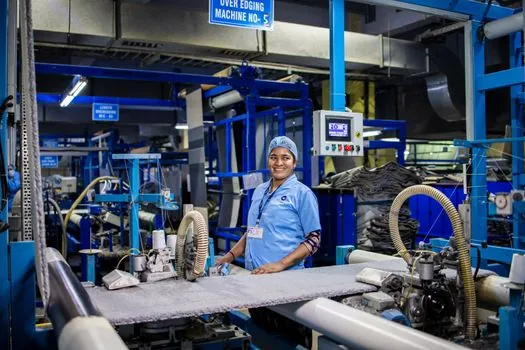
The most defensible productivity estimate combines theoretical dry-cycle capacity with OEE categories: availability, performance and quality [S4]. An OEE study of a die-casting department using 17 machines evaluated machine performance with OEE and six Big Losses. That result demonstrates why a 4-second theoretical cycle cannot be treated as sustained production.
A practical calculation is:
Estimated good output per hour = 60 divided by dry cycle seconds, multiplied by availability, multiplied by performance, multiplied by quality.
For the 4-second example, theoretical capacity is 900 shots per hour [S5]. Multiplying theoretical hourly output by an OEE effectiveness factor gives estimated good castings per hour before accounting for shift length. Multiplying estimated good castings per hour by an 8-hour shift gives estimated good castings per shift. This is an estimate, not a capacity guarantee, because the cited OEE result belongs to one machine and one production study [S4].
Compare Estimation Methods Against Their Limits
Three methods provide different levels of confidence. Dry-cycle arithmetic is fastest and uses only seconds per cycle, but it excludes cooling and operating losses. OEE-adjusted estimation adds availability, performance and quality factors, yet the results depend on measured shifts and defect data. Direct production records are the strongest validation because they capture actual stops, cycle interruptions, setup time and finished-part yield. [S3]
The comparison should therefore use four criteria: calculation speed, inclusion of cooling, inclusion of downtime and suitability for investment planning. Dry-cycle arithmetic wins on speed and simplicity but is weak on the other three criteria. OEE adjustment is suitable for shop-level monitoring when availability, performance and quality data exist. Production records require more administration but provide the most defensible basis for a committed output rate.
For a die casting machine, dry-cycle time also supports comparisons between candidate machines. Equal clamping force, shot capacity or automation level is insufficient if the sustainable cycles differ. The comparison should use the same part, die configuration, quality criteria and operating schedule so that a faster theoretical cycle is not purchased at the expense of scrap or downtime.
Match Machine Type to Production Economics
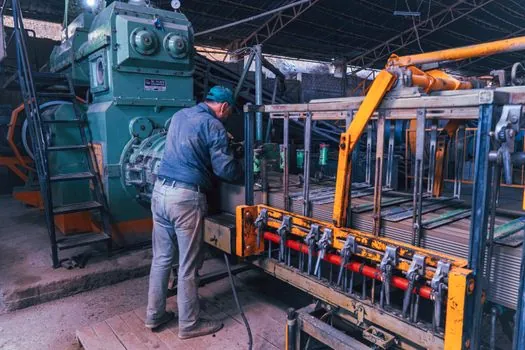
Machine selection should begin with the part rather than the headline cycle rate. Aluminum, magnesium, zinc, vacuum and squeeze-casting systems have different thermal and tooling requirements, so a common dry-cycle figure cannot be transferred directly between processes. The applicable machine class and die casting die design must support the casting mass, geometry, wall distribution and required quality. [S5]
Squeeze casting can have production cycles shorter by as much as 66% than comparable die castings because of high heat-transfer coefficients [S7]. That comparison concerns cycle-time potential, not a universal planning rate, and the part, tooling and process remain decisive. A squeeze casting machine should be evaluated where controlled pressure and solidification are central to the product, while an aluminum die casting machine must be checked against the actual alloy, part mass, injection requirement and expected cycle.
Control the Failure Modes That Invalidate the Estimate
Cycle reduction fails when local savings create a larger downstream cost. Shortening spray or drying can increase porosity and scrap; shortening die-close time can cause misalignment or die damage; and saving 1 second in spray time can be outweighed by an hour of downtime per shift if soldering increases [S3].
Real-time monitoring can expose abnormal cycle conditions, while historical cycle and downtime records reveal whether a parameter change improved output [S2]. Segment-level machine displays are more useful for this work than a single cycle average because they show where time is actually spent [S3]. The engineering check is therefore not simply “shorter or faster,” but whether the complete sequence remains capable, repeatable and quality-compliant.
Source the Estimate From Production Data
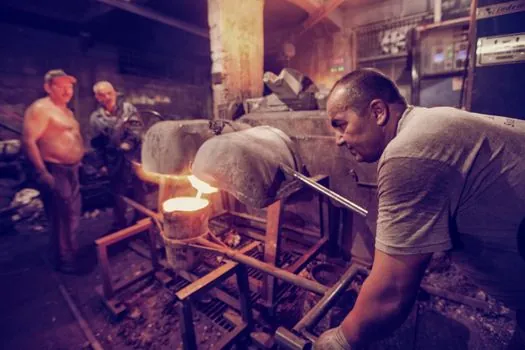
A defensible productivity file should identify the part and die, distinguish single-cavity from multi-cavity production, record dry cycle seconds, list scheduled hours, and identify all planned or recorded stops. The published 7,200-part estimate uses a single cavity, a 4-second dry cycle and an 8-hour day, but warns that actual quantity must include all production elements [S5].
No single standard or source in the research establishes a universal dry cycle time for all die casting machines. The practical sourcing chain is machine and die data, segment-level cycle records, shift downtime, production counts and quality rejects. OEE then converts those inputs into an effectiveness measure using availability, performance and quality [S4].
The next trackable signal is the difference between the 900 shots per hour theoretical basis for a 4-second cycle and the measured good-part count over at least one full shift. Track the gap by cause, especially breakdown, speed and quality loss, before revising the production estimate or approving additional capacity.