Die casting ejector ratings cover 85–125 mm of stroke and 108–180 kN of force across five listed machine models, giving buyers a concrete scale for actuator sizing.
The ejector system removes solidified castings after the die opens, so its force must overcome part adhesion and core resistance while its stroke must clear the casting from the die cavity.
Ejector Ratings on Published Machine Tables
A published specification table lists ejector force of 108 kN for DCC500, DCC630, and DCC700 machines, followed by 150 kN for DCC800 and 180 kN for the next larger model [S6]. This progression ties greater ejector capacity to increasing machine scale rather than treating force and stroke as interchangeable ratings.
The same table lists ejector stroke of 85 mm for DCC500 and DCC630, 100 mm for DCC700, 105 mm for DCC800, and 125 mm for the next model [S6]. The usable comparison is therefore 85–125 mm for stroke and 108–180 kN for force, but the paired values should be taken from the same machine model.
What the Two Ratings Represent
Stroke is the axial travel available to move ejector pins through the die, while force is the mechanical push applied during that movement. Ejector pins physically push the casting out of the ejector die, and the shot may contain several castings that must clear the tool during ejection [S7].
Force alone cannot establish whether a system will eject a part successfully. A cylinder with ample force can still fail to remove a tall casting if its usable stroke is too short. Conversely, long stroke does not guarantee separation if the force is insufficient for adhesion to the die wall or resistance from side cores.
Hydraulic valve performance directly determines die-casting machine speed, clamping force, and injection stability [S3]. On a cold chamber die casting machine, this motion must also fit the machine’s clamping, injection, and opening sequence without creating impact or mold damage.
Selection Criteria for Ejector Capacity
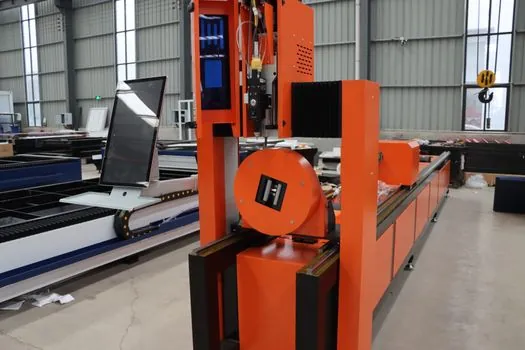
The first criterion is the required pull force, which must cover the combined resistance of the casting, sprue runner, and any cores. The second is usable stroke, which must move the casting clear of the die cavity. The third is machine geometry: the ejector plate, cylinder mounting space, and die design determine how force and travel are delivered. [S6]
Part size is a useful screening variable because die casting is especially suited to producing large quantities of small- to medium-sized castings [S2]. The machine model still controls the actual ejector package, and a large casting does not automatically require the largest stroke or force if its geometry provides a direct release path.
The fourth criterion is operating sequence, with the basic steps in a traditional high-pressure die casting process being die preparation, filling, ejection, and shakeout [S4]. Slower or adjustable ejection can protect delicate castings, but excessive cycle time reduces output. Ejector performance must therefore be evaluated against both part quality and cycle requirements.
Force, Stroke, and Die Open Travel Compared
Ejector stroke should not be confused with die opening distance. Die opening separates the die halves and exposes the casting; ejector stroke advances the ejector pins relative to the die to release the part. Both motions contribute to clearance, but they act on different members of the tooling. [S4]
This distinction matters for tool designers specifying die casting dies. A die can have adequate ejector-plate travel but insufficient pin strength or an unsuitable geometry, while a larger machine can still be selected with an ejector package that does not match the casting.
Application Fit and Machine-Type Constraints
Cold chamber machines suit higher-melting-point alloys such as aluminum, while hot chamber machines suit lower-melting-point metals such as zinc [S1][S4]. This alloy distinction affects die and casting behavior, but ejector selection still depends on part geometry and the actual release load rather than alloy name alone.
For aluminum applications, machine selection must also account for thin-wall sections and dimensional consistency. Aluminum die casting machine selection for thin-wall electronics enclosures covers machine-level requirements that interact with ejection, while the ejector specification must remain a matched subsystem rating rather than an isolated maximum-force figure.
Hot chamber systems have a different injection arrangement, with the gooseneck and plunger exposing the filling hole during refill, but their ejector pins still have to release the casting from the die [S7]. Neither a hot chamber machine nor a cold chamber machine should be selected by ejector rating alone: clamping capacity, shot size, die dimensions, and alloy determine whether the complete machine is suitable.
Common Failure Modes and Commissioning Checks
Commissioning should verify cylinder pressure, actual stroke at the ejector plate, response through the machine controls, and clean separation of every cavity. Die preparation, lubrication, filling, ejection, and shakeout form the operating sequence, and lubrication assists part removal as well as die temperature control [S4]. A machine meeting 108 kN and 85 mm on paper still requires a functional test with the production die and representative castings.
For repeatability, check force and stroke under operating conditions rather than relying only on catalog values. Hydraulic valves govern movement sequence and pressure stability, while directional, pressure, speed, and timing controls affect whether the ejector returns consistently for the next cycle [S3].
How to Specify an Ejector System

A defensible specification begins with the casting mass, projected area, geometry, number of cavities, side-core action, and expected adhesion or drag. Next, identify the ejector pin layout and the force concentration at each pin. Then match the required travel and loading to a published machine rating such as 108 kN at 85 mm, rather than treating 180 kN and 125 mm as an interchangeable maximum pair [S6].
The final review covers cylinder mounting, hydraulic supply, controls, ejection speed, return position, and the space required for the casting to clear the die. Ejector pins must push the casting from the ejector die, and the shot can contain multiple parts [S7], so a production decision must account for the complete shot rather than one isolated casting.
The next procurement checkpoint is the machine builder’s model-specific ejector data sheet, verified with the production die dimensions and measured ejection resistance, then followed by a witnessed cycle test.