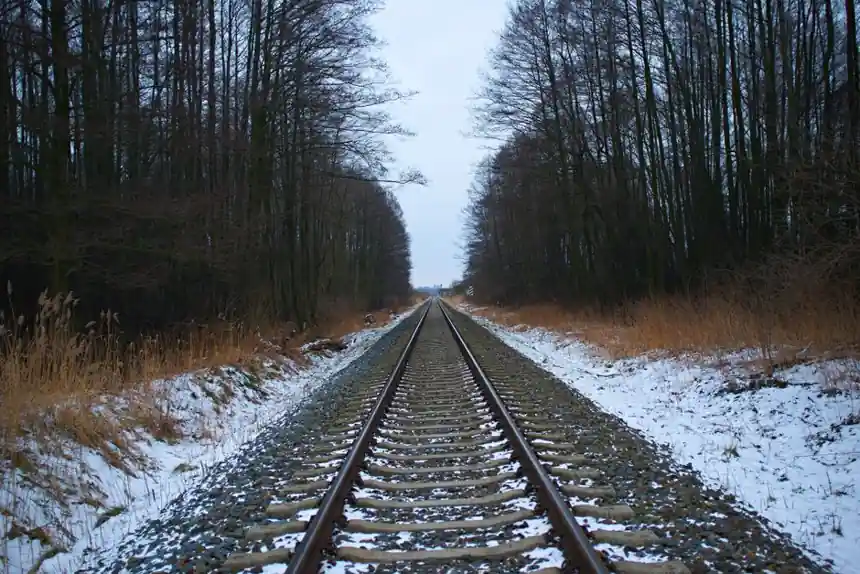
XPS boards can be installed beneath road and railway embankments to reduce frost penetration, limit ice-lens formation and control seasonal thaw weakening in susceptible soils [S2][S5].
The system is viable only when the board grade, thickness, placement, lateral extension and minimum cover are engineered for the soil, climate, traffic loading and drainage conditions [S1][S2][S5].
Where XPS Fits in an Embankment
XPS insulation is used within the upper soil mass of seasonal frost zones to retain subgrade heat during winter, reducing frost penetration, ice-lens growth, frost heave and spring break-up [S2]. Since 1962, Styrofoam Brand Highload Insulation has been used for applications including highways, railways, building foundations, and buried utilities.
In frost-susceptible soils, placing a layer of Styrofoam Brand Highload Insulation in the upper level of the soil can help prevent harmful sub-soil frost action affecting railways. RAVATHERM documentation also identifies roads, railway tracks and airport runways as established XPS applications, with reported use in Scandinavian countries and Russia [S5].
The material belongs in the XPS board family of closed-cell extruded polystyrene boards, but generic FPSF guidance should not be substituted for pavement or track design. XPS is also used below footings of unheated buildings with frost-protected shallow foundations, where it addresses the thermal bridge beneath the foundation [S3][S6].
Minimum Cover Changes the Risk Profile
A 1964 Minnesota highway installation used 50 mm XPS boards above a sanitary sewer, with the boards 610 mm wide and placed above the pipe, while thermocouples monitored temperatures above and below the insulation [S1]. No below-freezing temperature was recorded beneath the board along the installation centerline, and only one measurement 610 mm from the edge registered below freezing [S1].
That trial led to a recommendation of 50 mm XPS boards under at least 610 mm of cover, extending at least 610 mm on both sides of the protected pipe and positioned 150 mm above it [S1]. The same installation exposed a pavement hazard: trapped ground heat kept the pavement surface cooler than adjacent uninsulated pavement, and that temperature difference promoted surface ice during humid, rainy or snowy periods [S1].
Suppliers identified minimum covers of 460 mm in dry climates and 610 mm in wet climates as conditions under which they would accept liability for icing associated with the insulation [S1]. Mn/DOT did not recommend insulation beneath state roadways and discontinued its use after the ice-hazard dispute, although several Minnesota cities continued insulating utilities below local streets [S1].
Placement Details Control Thermal Continuity
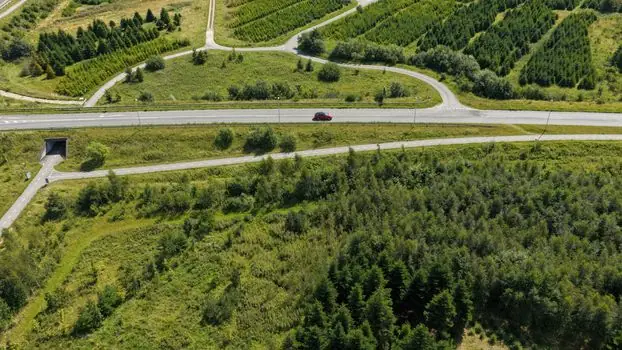
RAVATHERM XPS has been applied to the thermal insulation of railway tracks.
The insulation should extend sufficiently into the embankment flanks rather than stopping at the nominal centerline width [S2]. A board layout that leaves uninsulated gaps at joints or abrupt edges can create localized heat paths, while incomplete coverage near slopes can leave frost-susceptible wedges outside the protected thermal envelope [S2].
Cover also serves a structural role. The board must be positioned below the granular base and protected from concentrated wheel or axle loads, construction traffic, sharp aggregate and drainage intrusion. The Mn/DOT report describes the use of styrofoam boards to insulate a sewer installed beneath an urban roadway. These examples are not interchangeable design values.
Comparison of XPS and Conventional Alternatives
Against deep foundations or wholesale replacement of frost-susceptible soil, a properly designed XPS layer can reduce excavation and imported fill while retaining useful strength and low moisture sensitivity [S2][S5]. Its weak points are thermal continuity, cover adequacy, joint detailing and the consequences of placing insulation where pavement or track geometry cannot tolerate altered surface temperatures [S1].
XPS is therefore strongest where the alignment cannot readily accept deep foundations or extensive replacement, and where granular cover can maintain track or pavement geometry. It is not a universal substitute for geotechnical investigation or drainage design.
Application Limits and Failure Modes
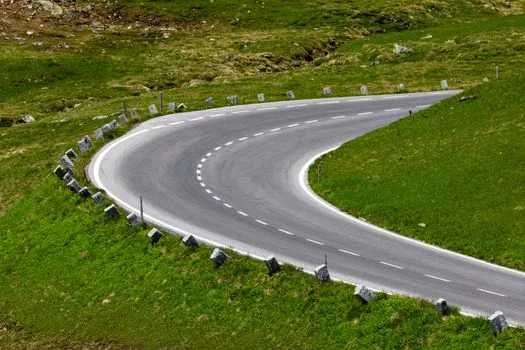
Surface icing is a demonstrated failure mode: an insulated subgrade can transfer heat differently from an adjacent uninsulated section, creating a temperature differential that promotes ice on the pavement [S1]. The Minnesota case also shows why an isolated insulation layer below a roadway cannot be judged only by whether the soil beneath it remains above freezing.
Drainage remains part of the thermal design. Spring melt can supersaturate upper soil and reduce bearing capacity, while frozen soil can impede drainage and contribute to spring break-up [S2]. Where load-bearing capacity is critical, the embankment needs drainage ditches, and an insulated area in a permafrost region must prevent summer thaw that would weaken the frozen subgrade [S2].
Railway embankments face two linked seasonal hazards: localized frost heave during winter and track softening during the spring thaw [S8]. XPS addresses heat transfer, not drainage, settlement, poor compaction or an unsuitable subgrade. Those failures require separate geotechnical treatment.
Specify and Verify the Installation
One XPS application is identified as CAN/ULC S701 Type 4, a designation tied to the cited high-load product rather than to every board sold as XPS [S2]. Designers should verify compressive resistance, long-term water absorption, dimensional stability and the required thickness for the imposed overburden from the project data sheet [S2].
The high-load XPS used for geotechnical work has been applied to roads, railways, airport pavements, culverts, foundations, drainage works and in-ground utilities since 1962, while the railway application has used XPS anti-freeze insulation since 1975 [S2][S5]. Those dates describe documented application history, not a blanket service life.
Acceptance should include board product designation and thickness, documented placement, joint treatment, lateral extension, granular cover and drainage provisions. Temperature monitoring is also a defensible verification method: the Minnesota trial used thermocouples above and below the boards to establish whether the protected ground remained above freezing [S1].