Insulation-grade rock wool can serve as a temporary hydroponic medium, but only after its formulation, cleanliness, and root-zone performance have been checked.
Manufactured rock wool exists in both insulation and cultivation grades; the latter provides a more defensible basis for food production because its physical properties and contact suitability are controlled.
What distinguishes insulation rock wool from cultivation media
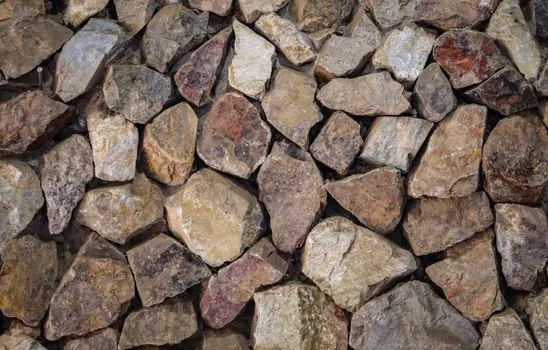
Insulation-grade rock wool is made by spinning molten basalt into fibres and forming the material into a lightweight, aerated structure. The same mineral family can also be manufactured into hydroponic plugs, cubes, blocks, slabs, loose fibres, and granulated products [S2][S3].
The distinction is not simply the word “rock wool.” Insulation material is engineered for thermal and acoustic performance, while horticultural media are produced for moisture retention, aeration, drainage, root development, and controlled cultivation. Grodan identifies basalt-derived stone wool as pH-neutral and notes that its air-filled pores allow water and oxygen to coexist in the root zone [S2].
A practical test is product documentation. Insulation-grade material should not be assumed to have the same formulation, surface treatment, dimensional consistency, or contaminant controls as horticultural stone wool.
Preparation required before contact with roots
Insulation-grade rock wool requires preparation before use because its suitability cannot be established from colour or fibre appearance alone. The material should be checked for product identity, additives, binders, coatings, dust, and any declared horticultural or food-contact status [S1][S4].
Cleaning should remove loose fibres and surface contamination, while conditioning should establish a predictable root-zone pH before sowing or transplanting. Hydroponic stone wool is described as pH-neutral, but pH-neutral manufacture does not prove that an unidentified building product has identical buffering or chemical behaviour [S2][S3].
After conditioning, the material should be checked for drainage, air-filled porosity, and moisture retention. Horticultural stone wool is designed to drain freely after irrigation while retaining both moisture and oxygen.
Comparing the three practical material options

The main options are horticultural stone wool, prepared insulation-grade rock wool, and untreated offcuts from building projects. On contaminant control, documented horticultural grade is the clear choice; on root-zone behaviour, engineered stone wool is more predictable; on cost and availability, insulation offcuts may win but require more verification and preparation [S1][S2][S4].
Horticultural stone wool offers the strongest combination of consistent manufacture, pH neutrality, controlled pore structure, and documented cultivation formats. It is available as plugs for sowing, blocks for transplanting, and slabs for crops grown to maturity [S2][S5].
Prepared insulation-grade rock wool may be reasonable for a small, temporary, non-food trial because insulation material can function when properly prepared, but the burden of proof sits with the user [S1]. It may also be bulky to handle, and its bulk does not compensate for uncertain additives or inconsistent root-zone performance [S3].
Untreated building offcuts are the least suitable option. The material may support rooting, but observed growth alone does not resolve whether the product is food grade or whether unwanted chemicals could make the crop unsafe to consume [S4]. For edible production, use cultivation-grade material unless the insulation product has verified contact suitability.
Water and air behave differently by product design
These figures describe the behaviour of engineered growing media, not an insulation batt or building slab.
Stone wool supports simultaneous water and oxygen delivery because its air pockets allow plants to obtain both moisture and oxygen in the root zone. That feature supports root respiration and reduces the root oxygen deficit associated with continuously saturated potting media [S5].
Insulation rock wool does not provide the same assurance merely because it is porous. Fibre arrangement, product density, binder distribution, and dimensions determine moisture holding capacity, air-filled porosity, and the moisture gradient. Those variables can vary substantially between an insulation roll, board, loose fill, and horticultural cube [S3].
Which crops and systems fit the material
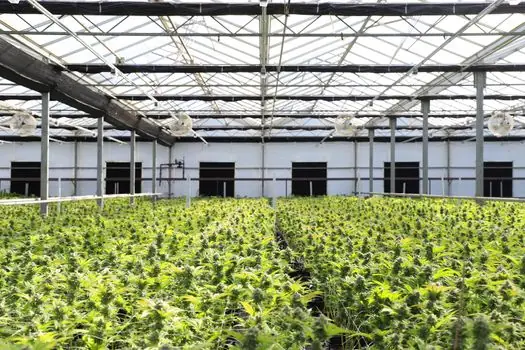
Rock wool growing media are used for vegetable propagation and production, including tomato, cucumber, sweet pepper, eggplant, leafy greens, and culinary herbs, as well as floriculture and medicinal crops [S2]. Commercial horticulture also uses it for melons, strawberries, herbs, and cut flowers [S3].
The strongest use case for insulation-grade material is a small-scale or temporary trial in a controlled hydroponic system where the operator can inspect the root zone, adjust irrigation, and discard the medium after the crop cycle [S1]. It is less suitable for a long-term commercial crop where consistent drainage, pH response, and sanitation across every block are required.
Propagation is the practical entry point because small volumes limit exposure while root establishment can be observed. A crop can be transferred to a documented horticultural block after rooting, rather than remaining in an unverified insulation product throughout production. This staged approach reduces the consequence of an unsuitable material [S2].
Failure modes that appearance will not reveal
Poor air porosity can deprive roots of oxygen even when the medium appears wet. Uneven moisture distribution can leave the crown drier than the base, while excessive irrigation can reduce the air-filled porosity that makes horticultural rock wool useful [S2][S3].
Contamination is a separate failure mode. The high temperatures used in rock wool manufacture can prevent fungal-gnat eggs and pathogens from surviving in horticultural material, but that manufacturing history cannot be assumed for an insulation product taken from a building site [S5].
Mould appeared in one reported trial using rock wool alongside acoustic treatment material, and the grower washed the material and used hydrogen peroxide to address it [S4]. This case demonstrates that wetting and containment can create biological problems even when roots initially establish. It is not evidence that all stone wool causes mould.
Another limitation is handling and disposal. Rock wool is lightweight but bulky, and fibrous offcuts can shed material during cutting [S3]. It should also be kept out of recirculating systems until its chemistry and root-zone behaviour are understood, because dissolved additives can make a batch unsuitable for the intended feed solution [S4].
Procurement and handling checklist
For a temporary non-food trial, use a small quantity, record the manufacturer and product designation, verify whether the product contains binders or coatings, wash and condition it, and test irrigation and drainage before sowing. The process supports the conclusion that insulation-grade material can be prepared for limited use, but not that every product on the market is interchangeable with horticultural media [S1].
For edible crops, choose a product sold for horticultural or hydroponic cultivation and retain its technical data. Relevant checks include pH status, nominal dimensions, fibre or density specification, drainage behaviour, and the manufacturer’s cultivation instructions [S2][S3].
Cut with a controlled method to limit loose fibres, keep the material from prolonged light exposure where degradation or surface heating is possible, and avoid using unidentified building material around drainage channels. If a trial succeeds, treat that result as validation of one prepared batch, not automatic approval of the same insulation grade for another crop or site [S4][S5].
The next verification node is a small side-by-side test using prepared insulation-grade rock wool and a documented horticultural block, with the same crop, nutrient feed, irrigation schedule, and drainage collection, followed by root-mass, pH, and leachate checks before deciding whether to expand.