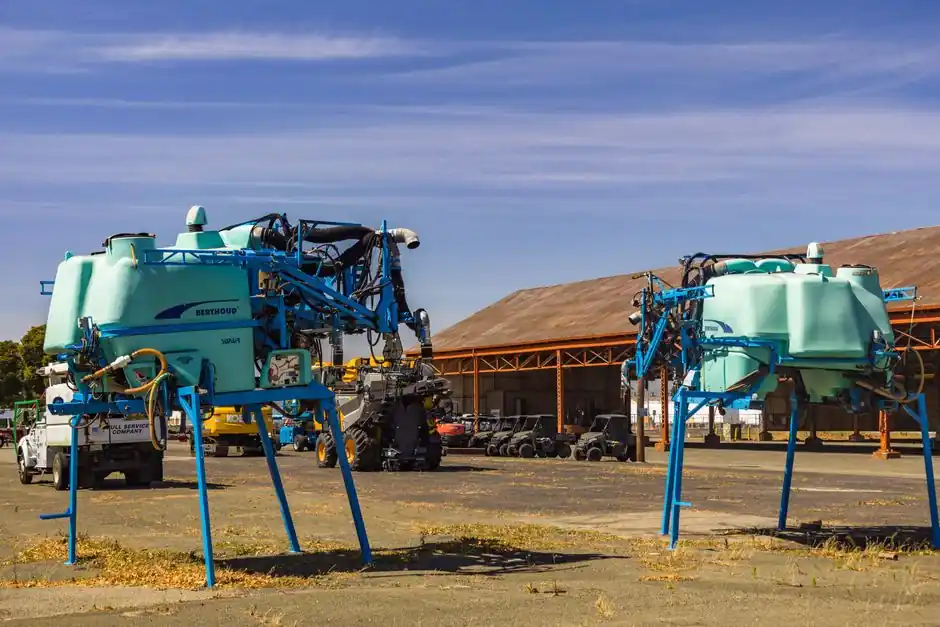
Used heavy equipment can remain reliable during a new-equipment shortage, provided that buyers verify operating hours, maintenance records, physical condition, repair history, and parts availability rather than relying on age alone [S3].
The decision applies to crawler excavators, dozers, wheel loaders, trucks, tractors, and other machinery, with utilization, application, cash flow, warranty exposure, and acceptable downtime determining whether used or new equipment is the stronger fit [S3][S5].
What Reliability Means for a Used Machine
Reliability begins with zero accumulated wear on a new machine, a manufacturer warranty, and a service history that starts with the purchaser [S3]. New equipment also has fewer breakdowns during its early years of use, while used equipment carries exposure to prior maintenance, operating hours, and previous repairs [S6].
This makes utilization the first reliability test: a machine selected for intermittent site work may offer adequate economic capacity, while a unit expected to support high production carries a greater cost from unscheduled downtime.
The age of a machine is not itself a defect category. Sandhills tracks used-market inventory by age group, including late-model equipment from 0 to 5 years old, but its inventory data measures market supply rather than individual machine condition [S1]. Reliability must therefore be established at the individual-machine level through hour-meter review, maintenance records, inspection, and operating data.
Shortages Increase Pressure and Scarcity Risk
Protracted supply-chain issues have affected used-equipment inventory across all age groups in Sandhills Global marketplaces, with the effect most pronounced in the 0-to-5-year age group [S1].
The same shortage mechanism can reduce the number of late-model machines entering the used market because fewer new units are produced to replace aging equipment [S1].
Scarcity changes the purchasing risk. Orders for new equipment from several companies were taking months to fill amid high demand and supply-chain challenges, while demand for used equipment increased, including demand at Steffes Group for low-hour, well-maintained equipment [S4]. In that environment, a buyer may accept a higher purchase price while also facing more competition, reduced inspection time, and narrower model selection.
New Versus Used on Four Decision Criteria
On reliability certainty, new equipment leads with zero accumulated wear, a complete service history, manufacturer coverage, and fewer early-life breakdowns [S3][S6]. On acquisition cost, used equipment leads because its purchase price is below the new-machine price and it avoids the steepest depreciation incurred during the first years of ownership [S2][S3][S7].
Utilization, application, cash flow, and risk tolerance should be weighed when deciding between new and used heavy equipment [S3]. Used equipment can carry maintenance and condition risks, while new equipment still requires servicing [S5].
The comparison is not uniform across the fleet. New equipment typically receives more favorable manufacturer financing, including lower interest rates and longer repayment periods, while used equipment provides the immediate cash-flow benefit [S3]. Newer construction-equipment models tend to be more technologically advanced and can offer engineering improvements and greater fuel efficiency [S5].
Inspection Tests for Reliability and Hidden Defects
Start with the hour meter and compare it with the machine age, service intervals, and expected annual utilization. A low reading is useful only when supported by records, because hours, ownership, storage, and maintenance history determine actual wear more accurately than model year [S3][S4].
Next, reconcile invoices, logs, and work orders for engines, hydraulics, undercarriage, tires, electrical systems, and safety devices. A complete service history is a tangible advantage of new equipment [S3], while used-machine inspection must compensate for incomplete or fragmented records.
Operating checks should then cover cold start, hydraulic response, transmission behavior, steering, braking, track or tire condition, leaks, and warning systems. The inspection should be matched to the planned work because a machine suited to periodic use is judged differently from one expected to sustain continuous heavy-duty operation [S3]. Parts support completes the technical screen, including whether replacement components can be obtained for the exact model and year during a constrained market.
Financial Reliability Requires a Full-Cost Test
Compare the used machine's acquisition price with its expected repair allowance, financing cost, operating-hour consumption, resale exposure, and the production value of its availability. Lower upfront cost can improve cash flow, reduce financing pressure, and shorten the time required to earn back the purchase price [S3].
Depreciation also differs by purchase point. New heavy equipment depreciates most rapidly during the first few years of ownership, a cost avoided by buying used because the original owner has already absorbed more of that decline [S3][S7]. That accounting advantage does not replace an inspection, because a lower price may reflect accumulated wear rather than an intact machine at an attractive rate.
For a shortage-driven purchase, add an option-cost calculation for replacing the unit if critical failure occurs. If no supported alternative, rental arrangement, or repair path is available, the apparent saving may be outweighed by extended downtime. For critical fleet additions, a structured method for setting spare-parts availability guarantees can make that exposure explicit before ownership transfers.
Who Should Buy Used and Who Should Buy New
Used equipment is appropriate for operators with intermittent utilization, limited acquisition capital, a fleet expansion requirement, and access to credible maintenance support. These buyers value the lower entry price and reduced early depreciation while accepting more condition uncertainty [S2][S3][S7].
New equipment is the stronger choice for high-production operations, sites where machine failure stops revenue-critical work, and buyers that place a high value on warranty coverage, predictable early-life performance, current technology, and favorable manufacturer financing [S3][S5][S6].
Neither choice is automatically reliable. A new machine still requires scheduled maintenance and trained operators, while a used machine may be dependable if its records are complete and its condition matches the application [S3][S5]. The correct question is whether the machine's documented condition and remaining service life fit the buyer's utilization, repair capability, and downtime tolerance.
Traceable Purchase Terms for Shortage Markets
Make the hour reading, model year, serial number, major-component condition, service records, warranty expiration, and inspection results part of the purchase record. A written representation of known repairs or defects is more valuable during a shortage than verbal assurances, because late-model inventory is already constrained [S1][S4].
Secure confirmation of replacement-part lead times before accepting delivery, and include the date and condition of the machine in the transaction record. New equipment normally carries manufacturer warranty coverage, while a used machine may provide only limited or expired protection [S3][S6]. For a 0-to-5-year used unit, compare its condition and hours with the late-model inventory band used in market analysis [S1].
The closing checkpoint is operational readiness: fuel-system service, hydraulic inspection, undercarriage or tire condition, safety-system checks, and operator familiarization should be completed before the machine enters production. A shortage makes substitution valuable, but it does not reduce the engineering requirement to verify reliability.
Track used-equipment inventory by age group, advertised hour readings, and the share of listings with documented service histories, then compare those signals with the lead time for equivalent new units and the availability of critical spare parts.