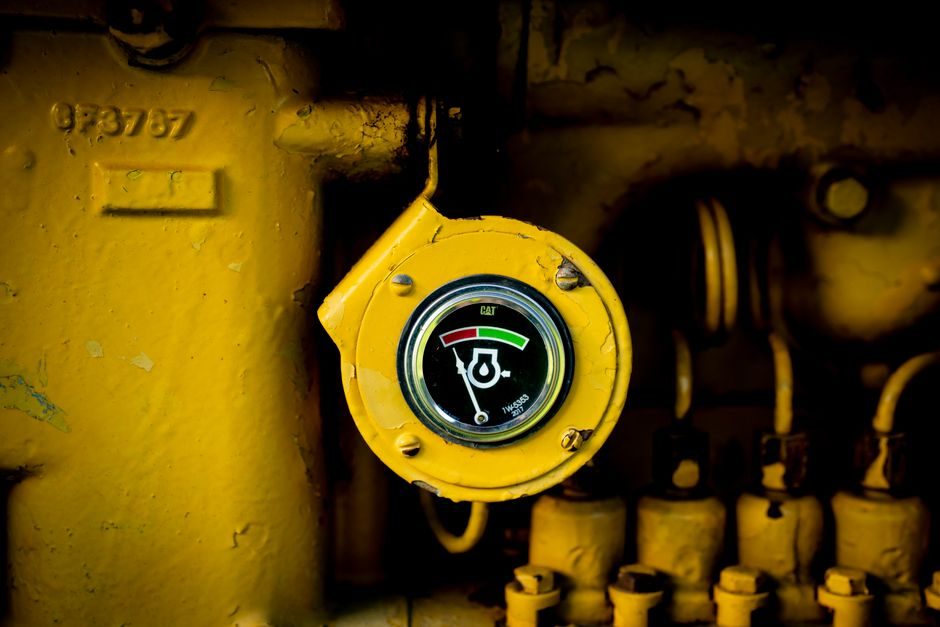
A vacuum gauge is defined as "a device for measuring pressures below atmospheric pressure," per the American Heritage Dictionary of the English Language as republished on The Free Dictionary [S1]. A manometer is the broader class of pressure-comparison instrument — it can read positive, differential, or sub-atmospheric pressure depending on the reference leg, which is why Chinese-English technical glossaries list "vacuum manometer" as a direct synonym for vacuum gauge [S3][S4][S5].
In engineering practice the two terms are used interchangeably for sub-atmospheric work, but the certification, sensor type, and resolution differ sharply once you drop below 1 mbar. Industrial buyers on Made-in-China priced entry-level digital vacuum/manometer combos between US$ 25.99 and US$ 49.99 per piece at 5-piece MOQ as of May 2026, while micropressure digital electric-contact gauges with data export (MD-S280c) listed at US$ 150.00–210.00 per piece [S2]. That order-of-magnitude spread is driven by sensing technology, not brand.
Definition, scope and reference-side mechanics
A manometer works by balancing the unknown pressure against a known column of fluid (mercury, water, oil) or a precision reference; the "vacuum gauge" label is applied when the unknown side is below atmosphere, and the readout is conventionally expressed as negative gauge pressure [S1][S3]. This is why classical McLeod, U-tube, and capacitance diaphragm manometers all appear in vacuum catalogues alongside Pirani and cold-cathond ionization gauges [S5][S7][S8].
Chengdu Navigators Vacuum, a Sichuan-based OEM, lists its main products as "Vacuum Gauge, Vacuum Transmitter, Ionization Complex Vacuum Gauge, Multiple Vacuum Gauge" — explicitly treating the gauge and the transmitter as a single product family, with the transmitter being the 4-20 mA / digital-output industrial variant [S8]. HTC Vacuum (Riyang Technology) sells a separate "Vacuum Gauge Controller" SKU as part of its vacuum-components catalog, which is the head-end electronics that powers and reads one or more vacuum transducers — a different layer of the stack [S9].
Vacuum gauge types and the pressure ranges each covers
Chinese-English chemical-engineering glossaries explicitly enumerate the technology synonyms that the English-speaking vacuum industry uses: "vacuum gage / vacuum gauge / vacuum manometer / vacuum meter / vacuumometer" all map to the same instrument class, and "ion gage / ionization vacuum gage" is the dedicated subgroup for high-vacuum [S5][S7].
Manufacturer listings confirm the segment split. The "Hongqi transparent plastic case vacuum pressure measuring gauge" on Made-in-China is the entry-level Bourdon/dial type for HVAC and laboratory rough vacuum [S6]; the "Y-60 black vacuum pressure gauge" sits in the same low-resolution mechanical segment [S6]. At the other end, Chengdu Navigators' "Ionization Complex Vacuum Gauge" is the high-vacuum BAYARD-ALPERT-class transducer designed to mate with a controller [S8]. A process engineer picking the wrong class — e.g. a Pirani on a freeze-dryer chamber that needs 0.05 mbar control, or a Bourdon dial on a turbomolecular pump foreline — is the single most common procurement mistake in this category.
Manometer-specific use cases: positive, differential and field calibration
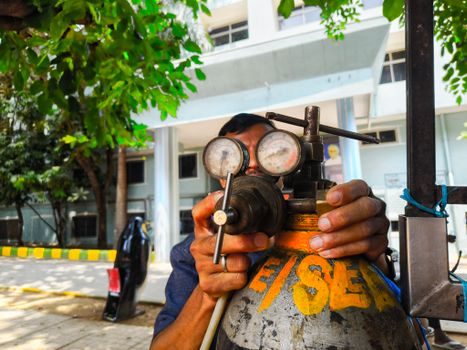
Where the manometer label dominates is in the positive and differential-pressure world. The Meokon MD-S280c digital electric-contact vacuum gauge with data export is functionally a manometer with switching outputs, listed 0–60 bar micropressure range [S2] — that 0-60 bar span cannot be served by any single vacuum-only gauge, so Meokon is selling a manometer platform that can also display negative gauge. A typical HVAC field engineer will carry a digital manometer, not a dedicated vacuum gauge, because the same instrument is used to verify filter ΔP, duct static, and combustion draft on the same site visit.
Field calibration is the other space where the manometer is the primary reference, not a vacuum gauge. A NIST-traceable capacitance manometer (10 Torr, 100 Torr, 1000 Torr full-scale heads) is used to check the offset of every Pirani, cold-cathode, and hot-cathode gauge on a vacuum system; a dedicated vacuum gauge is almost never self-calibrating. This is the [vacuum gauge vs pressure gauge] decision in a different shape: the pressure gauge is for the process side, the manometer is for the metrology side, and the vacuum gauge is the application-specific readout.
Selection criteria: which one to specify for a 2026 project
The decision rule an experienced engineer actually uses: specify a manometer (capacitance or digital) when the application needs bidirectional or differential readout, when the instrument will be re-zeroed in field, or when a NIST-traceable calibration certificate is on the BOM; specify a dedicated vacuum gauge when the pressure is always sub-atmospheric, the sensor technology must match the regime (Pirani for 10⁻³–1 mbar, ionization for ultra-high vacuum), and the process will trip on absolute pressure setpoints [S1][S7][S8].
Three concrete selection criteria from the 2026 vendor and dictionary evidence: (1) range — if the working pressure crosses atmospheric, the instrument is a manometer with vacuum capability, not a vacuum gauge; (2) output — if the spec lists 4-20 mA + HART or RS-485, you are buying a vacuum transmitter, which is a gauge with electronics [S8]; (3) media — if the process is steam, corrosive gas, or particulate-laden, a sealed diaphragm manometer is the only honest answer, because a Pirani or ionization sensor will be destroyed. The [pressure gauge] buying guide on SourceBySpec walks through the same logic on the positive-pressure side and is the right companion reading for hygienic and process segments.
Comparison: vacuum gauge vs manometer across 4 decision criteria
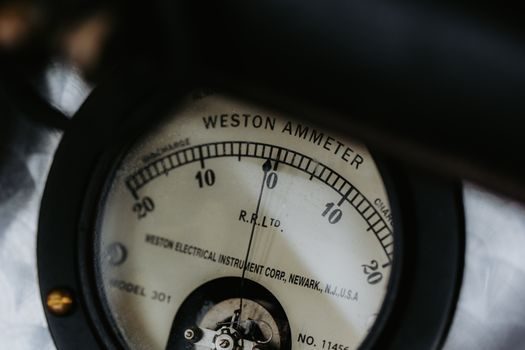
Range: mechanical vacuum gauge covers -1 to 0 bar gauge; manometer covers -1 bar to +60 bar (Meokon MD-S280c spans 0–60 bar micropressure) [S2]. Sensing element: vacuum gauge uses Pirani, hot-cathode, cold-cathode, or ionization sensors; manometer uses U-tube, well, diaphragm, or capacitance [S3][S4][S5]. Typical price: entry-level dial vacuum gauges list at US$ 1–7 per piece on Made-in-China (Y-60, Hongqi plastic-case) [S6]; mid-range digital vacuum/manometer combos list at US$ 25.99–49.99 [S2]; OEM-grade ionization complex gauges sit several tiers higher [S8]. Output: a vacuum gauge can be local-indication only or 4-20 mA via a transmitter [S8]; a manometer is most often local-indication or electric-contact switch, with data-export on premium SKUs [S2].
Traceability: manometers in 10 Torr to 1000 Torr full-scale are the de facto laboratory reference for calibrating vacuum gauges; vacuum gauges are the working instrument that gets calibrated against that manometer. The two product categories are not competitors at the metrology layer — they are stacked: manometer on top as the reference, vacuum gauge below as the field sensor. The [pressure transmitter] buying guide 2026 maps the same stack on the positive-pressure side and is the most useful cross-reference for instrumentation engineers specifying the two together.
Failure modes, constraints and when NOT to use either
Vacuum gauges fail in well-known ways: Pirani sensors drift with contamination from oil backstreaming, hot-cathode gauges burn out if exposed to atmosphere, cold-cathode magnets age. None of these are visible on the manometer side. A manometer, conversely, fails at high-vacuum end because the capacitance or piezoresistive diaphragm cannot resolve below 10⁻³ mbar, and a U-tube manometer physically cannot read a pressure at which the mercury column would need to be many meters tall. The limit-of-form rule: do not use a manometer to control a turbomolecular pump inlet, and do not use a Pirani to verify a leak-test pass on a refrigerant system at 10⁻⁶ mbar·L/s. [S1]
Specifying engineers should also note that "vacuum gauge" and "vacuum transmitter" are not synonyms even though manufacturers list them as one product family [S8]. A vacuum gauge is a passive sensor or local-indicator; a vacuum transmitter adds the 4-20 mA / HART / Modbus output that a DCS or PLC can read. If the control system needs a real-time signal, order the transmitter; if a technician needs a local readout for a foreline check, order the gauge. The [manometer] entry in the SourceBySpec encyclopedia covers the positive-pressure and differential variants, and the [vacuum gauge] entry covers the sub-atmospheric subtypes.
Sourcing, standards and the 2026 supply picture

The 2026 industrial supply picture for these two categories is dominated by Chinese OEM and ODM capacity at the entry-level (Meokon, Hongqi, Y-60 suppliers on Made-in-China) [S2][S6] and a smaller set of specialist high-vacuum suppliers (Chengdu Navigators, HTC Vacuum) for the ionization and controller tier [S8][S9]. Buyers should verify RoHS, CE, and any process-side certification (e.g. ATEX for flammable-gas service) at the SKU level rather than assuming it from the product family label, because the same vendor often lists both certified and non-certified variants under one catalog page.
Trackable next signals: (1) whether Meokon and similar mid-range Chinese suppliers add IECEx variants of their MD-S280c line in the second half of 2026 — this would materially expand the addressable chemical and pharmaceutical market; (2) whether Chengdu Navigators or HTC Vacuum release a combined Pirani + cold-cathonde combo gauge under one controller, which would simplify foreline-to-high-vacuum readout on semiconductor and accelerator tools. Engineers specifying a 2026 build should pull the latest SKU data from the [pressure gauge] price/cost guide and the [manometer] encyclopedia entry before locking the BOM.
Related: vacuum gauge, manometer, force gauge.