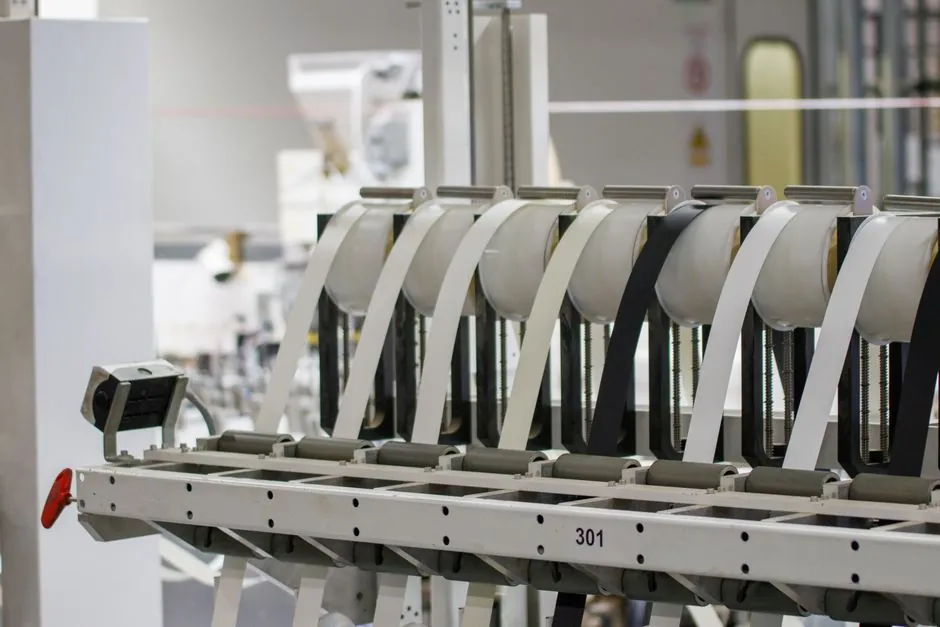
Vacuum gripper EOAT is suited to smooth, sealed cartons and flexible packs, while pneumatic or servo mechanical clamps are generally stronger choices for heavy, mixed-size cases [S1][S5].
The decision depends on case mass, surface condition, allowable marking, changeover range, cycle rate and the need for one or several cases per pick, rather than on gripper category alone [S1][S5].
Selection Criteria for Case Gripper EOAT
Case porosity is the first screening criterion because corrugated board, paper sacks and porous packaging can leak air and defeat a suction seal that worked on a clean test sample [S1]. Surface condition has the same effect: smooth, clean surfaces suit vacuum cups, while oil, dust, texture, labels and damaged seams reduce sealing reliability [S1].
Mechanical clamps depend less on surface porosity but introduce compression, local contact pressure and a risk of carton deformation or glass breakage unless force control or compliant pads are used [S1]. Mass and geometry must then be checked against the robot payload and the gripper itself, including cups, frame, vacuum generator, valves, sensors, fittings and tubing for a vacuum assembly [S2].
For a complete case packing machine, treat EOAT selection as a four-stage gate: reject porous or contaminated surfaces for vacuum, establish the maximum case mass, select the required number of cases per lift, then verify that grip, acceleration, reach and release fit the required cycle time [S1][S5].
Vacuum Gripper Performance and Limits
Vacuum tooling can pick flat, smooth objects from above and can avoid mechanical clamping marks, making it appropriate for sealed cartons, trays, panels, sheets, bags and sacks when the gripping area remains airtight [S1][S2]. A vacuum EOAT can integrate suction cups or foam, a vacuum generator, valves, sensors, manifolds, fittings, tubing and the robot mounting structure [S2].
Vacuum EOAT is one of three load-bearing families used for robotic palletizing, alongside clamp and fork EOAT, with each family setting its own ceiling on case weight, cycle speed, and pack-pattern complexity. Dense arrays can handle several rows per cycle through a zoned cup matrix, while simpler heads are generally limited to one or two cases per lift [S5].
Vacuum grip strength can weaken under high acceleration, increasing the risk of dropped or shifted cases [S5]. Failure modes also include leakage, longer recovery time, clogged vacuum lines and seal contamination [S1]. One listed compact vacuum gripping system measures 38 x 22 to 76 x 22 mm and uses sealing foam, illustrating a small-area option for packaging work [S6].
Mechanical Clamp Performance and Limits
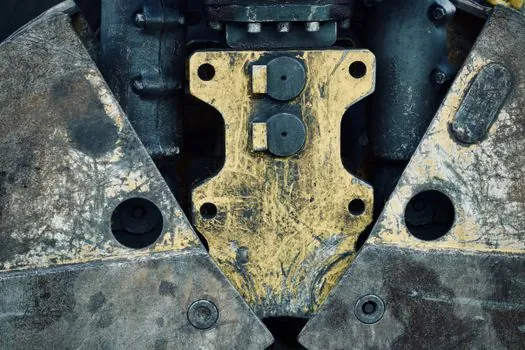
Mechanical grippers use two to four actuated fingers in common designs, with adjustable stroke and gripping force, and can be tailored with replaceable fingers for different workpiece sizes [S3]. Their principal advantage is positive mechanical contact, which remains useful on dusty, textured, oily or porous cases where a vacuum seal is unreliable [S1].
Pneumatic clamps are suited to heavy, uniform-size cases and are slower to open and close than servo clamps [S5]. Servo clamps can accelerate faster than vacuum EOAT and are programmable for mixed case sizes, but they carry a higher acquisition cost than pneumatic clamps [S5]. Fork EOAT is a third load-bearing option for the heaviest bottom-supported loads, but it changes the handling concept rather than gripping the carton sides [S5].
The clamp tradeoff is product damage. Excessive closing force can crush packaging or crack glass, while compliant fingers reduce damage at the cost of speed and payload; force control, jaw profiles and replaceable elastomer pads therefore belong in the specification [S1][S4].
Vacuum Against Clamp by Decision Criteria
On gripping force and acceleration, mechanical clamps lead for rigid cases because they do not lose holding performance as acceleration rises, while vacuum grip strength can deteriorate under the same movement [S5]. On surface adaptability, clamps are more tolerant of porous, dusty, oily and textured cases, whereas vacuum requires a smooth, clean, sealed gripping zone [S1].
On product protection, vacuum distributes contact through cups or foam without squeezing the case, while clamp tooling can mark or deform packaging unless contact force is controlled [S1][S2]. On changeover, vacuum cup layouts and foam interfaces can cover several dimensions, but mixed heavy cases generally favor programmable servo clamping [S2][S5].
On compactness and tooling complexity, vacuum heads are described as the smallest and lowest-cost family, while pneumatic clamps have a moderate footprint and lower cost than servo clamps [S5]. Those general tendencies do not replace a cell trial with the actual case geometry, because a large vacuum array can cost more than a small pneumatic clamp [S5].
Application-Level Recommendations

Specify vacuum EOAT for lightweight to medium, sealed and relatively uniform cartons presented top-up, provided the packaging surface is clean and the calculated vacuum load exceeds the robot’s acceleration demand [S1][S5]. Use multiple suction cups or a foam sealing interface when the available gripping area changes between case sizes, and verify the assembly with the same bags or cartons used in production [S2][S6].
Specify a mechanical clamp for rigid cases weighing toward the upper end of the application range, mixed case sizes, or applications where dust, labels, seams and leakage make vacuum sealing inconsistent [S1][S5]. Pneumatic clamping is appropriate where cycle motion can accommodate slower opening and closing, while servo clamping is the stronger option for frequent changeovers and fast mixed-size handling [S5].
For heavy loads and payloads approaching the robot’s limit, evaluate fork EOAT or a larger palletizing architecture rather than increasing clamp force without calculation [S5]. Payload sizing for such installations also requires a separate review of the robot arm, as detailed in Heavy Payload Robotic Case Packers: Sizing the Arm.
Validation, Maintenance and Sourcing
Validate the selected EOAT with production-representative cases at minimum, maximum and intermediate mass, including the worst sealing surface, conveyor presentation and programmed acceleration. Confirm retention during lift, transfer and placement, not merely at pickup, and record release behavior with vacuum blow-off or mechanical opening as applicable [S1][S5].
A complete vacuum specification should identify the gripper dimensions, sealing element, cup or foam layout, generator type, sensing method, frame material and plumbing arrangement. The cited vacuum range includes both venturi, pump and blower supplies, so generator choice should follow required holding performance rather than convenience [S2][S6].
Mechanical specifications should state pneumatic or servo actuation, jaw count, adjustable stroke, force control, finger material, pad material and replacement strategy. Standard gripper bodies may be suitable for standard cases, while contoured fingers, compliant pockets and custom clearances are normally engineered for the actual workpiece [S3][S4].
Use three acceptance checks before release: no visible case marking, no loss of grip at rated mass and acceleration, and no cycle-time penalty that pushes the case packing machine beyond its target rate. Record vacuum recovery time, leak sensitivity, finger-pad wear and cleaning intervals, then update the specification when case material or dimensions change [S1][S4].