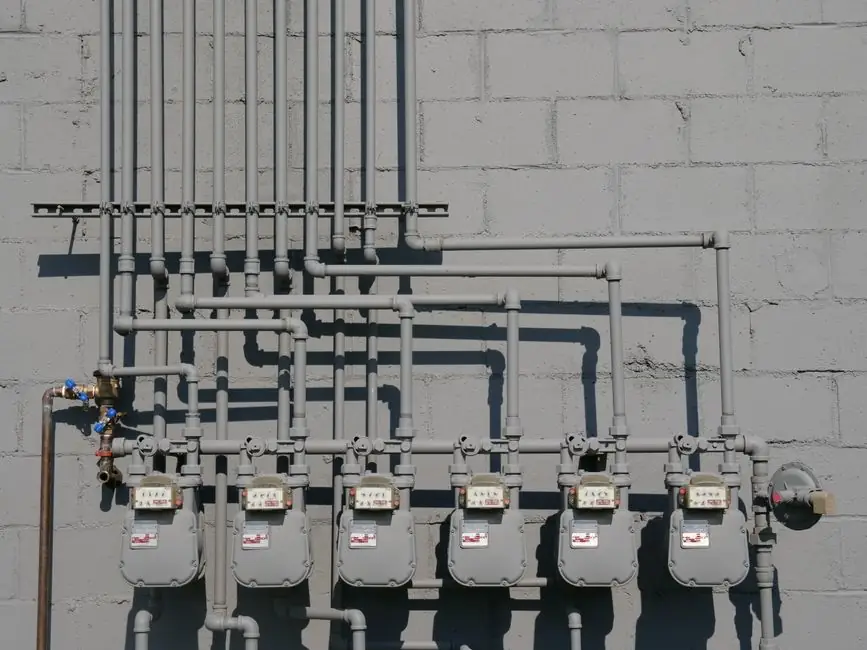
Variable area (rotameter) flow meters cover clean liquid and low-pressure gas service from roughly 0.1 gph water to 100,000 l/h water, with metal-tube metal-tube VA meters reaching 750 scfm on air and temperatures from -198°C to 420°C per Brooks MT3809 specifications [S5]. Selection pivots on fluid phase, viscosity, dirty/clean nature, hazardous area class, and output protocol (4-20 mA analog, HART 7, or FOUNDATION Fieldbus).
For a more general view of how VA meters fit alongside other flow technologies (magnetic, vortex, Coriolis), see the flow meter overview and the dedicated variable area flowmeter reference page.
Operating envelope and accuracy class
Standard metal-tube VA meters are rated -198°C to 420°C with standard pressure up to 6,000 psi (41.4 MPa) and custom builds to 20,000 psi (137.9 MPa), and accuracy classes of ±1% FS (Class 1.6 per VDI/VDE 3513), ±2% FS (Class 2.5), ±3% FS, and ±5% FS depending on calibration option [S5]. Repeatability is 0.25% FS on standard floats and 1% FS on the ELF (Extremely Low Flow) option [S5].
Acrylic and borosilicate-glass tube rotameters, by contrast, are typically limited to about 0-100 psig and 100-150°C, making them suitable for bench, lab, and low-pressure water or air service rather than refinery or steam-header duty [S6].
Float damping systems for gas service on industrial rotameters can be specified for operation at pressure maxima up to 40 bar absolute (580 psig) and are retrofittable to existing meters without float replacement [S3].
Wetted materials and corrosion coverage
Standard wetted construction on industrial rotameters is 316 stainless steel, with optional Titanium, Hastelloy, Monel, and PTFE coating for the metering tube and float to handle aggressive chemicals, chlorides, and acid service [S3]. Indicator housings ship in stainless steel or aluminum; flanged process connections from 1/2" through 6" maintain a constant 250 mm (9.8 in) face-to-face length through 3", then step to 260 mm at 6" [S3].
Threaded (NPT) connections are offered in 1/2" through 3" with face-to-face lengths 295-325 mm, but no NPT option is offered above 3" because flange ratings beyond that class generally require welded fabrication [S3].
Hazardous area, SIL, and protocol options
Electronic VA transmitters are commonly offered with HART 5 or HART 7 on 4-20 mA loops, with FOUNDATION Fieldbus as an alternative for DeltaV-native plants; high/low-flow alarm functions on industrial VA meters meet SIL 2 requirements per IEC 61508 [S3][S5]. HART is FSK overlaid on a 4-20 mA analog loop and is therefore not a drop-in for FOUNDATION Fieldbus or PROFIBUS PA digital segments.
Common hazardous-area approvals on industrial VA meters include ATEX (gas group IIC, for zone 1), IECEx, FM, Class I Div 1, and equivalent regional schemes; the 316SS flameproof housing on metal-tube models is the certified enclosure, not a separate option [S3][S5]. Adjustable limit switches, where offered, can be specified to achieve SIL 2 rating on the alarm path [S3].
Selection criteria: VA meter vs. alternative technologies
For a duty like flare-gas measurement, steam headers, or chemical injection skids, a metal-tube VA meter is the practical answer because it has no moving electronics in the wetted path, can be calibrated to ±1% FS, and survives 420°C at 6,000 psi; for highly corrosive acids, a magnetic flowmeter with PTFE or ceramic liner handles the chemistry but loses accuracy on hydrocarbons and non-conductive fluids. For an introduction to other flow technologies, the flow meter overview and variable area flowmeter entry lay out the cross-technology map. [S3]
For gas-duty pricing and configuration options, see the vortex flowmeter cost breakdown; for sensor-type trade-offs on clean dry gases, the thermal mass flow meter selection guide is a useful complement.
When NOT to pick a variable area meter
VA meters fail on three common service conditions: dirty or fibrous fluids (the float and annular gap clog within hours), two-phase mixtures (steam quality below 95% or gas with entrained liquid destroys the calibration curve), and very large line sizes above 6" (face-to-face dimension grows and the float weight becomes impractical). For pulp slurries, sewage, or raw wellhead multiphase, a magnetic or Coriolis meter is the correct tool [S1][S3].
Glass-tube VA meters should not be specified where ASME B31.3 traceability, SIL 2 alarm functions, or hazardous-area certification are required; the borosilicate envelope cannot meet industrial enclosure ratings [S5].
Side-by-side comparison of common VA options
Three VA variants cover most plant needs, lined up against the decision gates that drive specification: [S5]
Glass-tube rotameter (e.g. RAKD, RAGN): suitable for clean water and air at 0-100 psig and up to 100°C, with local visual indication only, accuracy typically ±2-5% FS, and no electronic output. Best for lab, OEM skids, and operator-trend visual duty [S2][S6].
Metal-tube industrial VA (Brooks MT3809/Yokogawa RAMC): -198°C to 420°C, up to 6,000 psi standard, 316SS/Hastelloy/Titanium/PTFE wetted options, HART 7 or FOUNDATION Fieldbus, ATEX/IECEx/FM Class I Div 1, SIL 2 alarms, ±1% FS accuracy with VDI/VDE 3513 Class 1.6 calibration. The default choice for refinery, chemical, and offshore [S3][S5].
Metal-tube with analog output only (Omega VA series): low-cost panel-mount and process-duty meters with built-in or optional 4-20 mA analog output, suitable for water, air, and gas service where HART diagnostics are not required [S6].
Standards and sourcing checklist

Industrial VA meters used in process plants are typically specified to ASME B31.3 for process piping, IEC 61508 SIL 2 for alarm loops, and ATEX 2014/34/EU or IECEx for hazardous-area use; gasket sealing surfaces meet ASME B16.5 flange requirements, so no special gaskets are required [S5]. Material traceability (EN 10204 3.1) and calibration certificates (ISO/IEC 17025) are available on request from manufacturers such as Brooks and Yokogawa [S2][S5].
Shortlist logic for buyers: pick metal-tube industrial VA when service temperature exceeds 150°C or pressure exceeds 150 psig, when the fluid is aggressive, or when ATEX/IECEx is mandatory; pick glass-tube only for ambient water/air indicator service; specify HART 7 only if the DCS host supports HART 5/7, otherwise leave the meter mechanical and add a separate 4-20 mA transmitter with a switchable alarm. Track the EPC material-traceability package and the VDI/VDE 3513 accuracy class as binding PO line items [S3][S5].
Spec-level background on the components involved: linear guide.