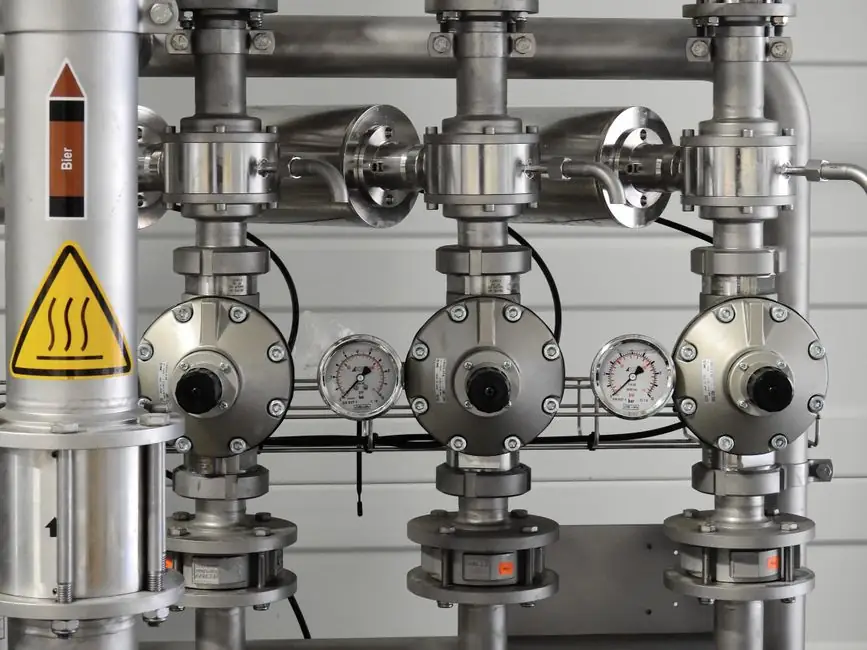
Variable area flowmeters span from 0.01 cc/min laboratory glass tubes to 4,000 GPM industrial metal-tube designs, a range few single-technology flow families can match [S4]. Selection comes down to four gates: tube material vs. media compatibility, pressure/temperature envelope, accuracy class, and mounting orientation, with sizing as a separate conversion step.
This guide walks through configuration selection, sizing math, output integration, and common pitfalls, drawing on April 2026 selection write-ups and current OEM datasheets. For a deeper look at adjacent flow technologies, see the thermal mass flowmeter sizing guide.
Operating Principle and Configuration Matrix
A variable area flowmeter holds differential pressure across a float essentially constant and varies the annular flow area, which is the inverse of ISO 5167 orifice behavior [S4]. A float rises in a tapered tube until drag and buoyancy equal its weight; position read against a calibrated scale gives direct volumetric flow without auxiliary power [S2][S5].
Configuration choice is driven by pressure, temperature, and media. Glass tube rotameters cap near 500 psig and 60 GPM water; metal tube rotameters reach 750 psig and 540°C (1,000°F) at 4,000 GPM water or 1,300 SCFM air; plastic tube (polycarbonate, acrylic, polysulfone) units sit at roughly 100 psig and 65°C (150°F) for corrosive or deionized service [S4]. A typical mid-range metal-tube spec from Junyuan lists DN15-150 bore, 304/316 SS body, PTFE-lined option, -30°C to +250°C media temperature (cryogenic variant -80°C to +100°C), and turndown of 10:1 or 20:1 [S2].
Media Compatibility and Material Selection
Wetted material is the first hard gate, because float, tube, and seals all contact the process fluid. Polysulfone-bodied meters are specifically called out for resistance to acidic and alkaline solutions, a common need in plating and chemical dosing [S1][S9]. For aggressive chemistry, PTFE-lined SS measuring tubes are the standard move; KOBOLD's BGF armored series offers 316 SS and PTFE-lined SS wetted parts with line sizes to 3 inches [S8].
Stainless 304/316 bodies cover most water, air, and mild chemical service; exotic alloys (Hastelloy, Monel) are reserved for HCl, HF, sour service, or sea-water chloride stress-cracking risk [S4][S7]. For hygienic or pharmaceutical lines, sanitary clamp connections and 316L polished wetted parts are typical, with food-grade rotameters often supplied with tri-clamp ends rather than flanges [S2]. Confirm NACE MR0175 compliance if the line is sour-service (H₂S partial pressure above 0.0003 MPa per NACE MR0175), since standard 316 floats can crack; the standard itself, not a guess, governs that decision.
Output, Communication, and Hazardous-Area Integration
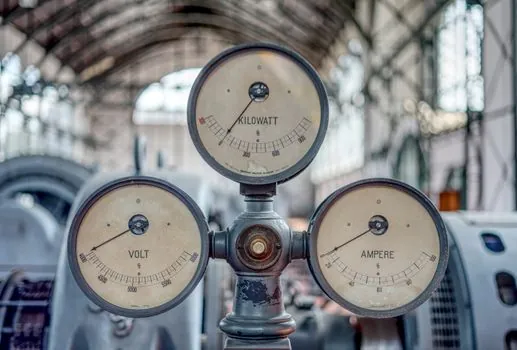
Plain VA meters need no power and read on a scale, but most plant installations require electronic output. Available options across the OEM set include 4-20 mA analog, HART, Foundation Fieldbus, PROFIBUS-PA, reed-switch and transistor switch contacts, and pulse or totalizer outputs [S2][S5][S8][S9]. ProFlowUSA's modular VA product line lists limit switches, 2-wire 4-20 mA, totalizer with LCD and pulse output as field-replaceable modules [S5].
For hazardous areas, the dominant protection modes are intrinsically safe (Ex ia) and flameproof (Ex d). Junyuan's spec sheet rates its metal-tube rotameter at Exia II CT6 Ga (intrinsically safe) and Exd II CT6 Gb (flameproof) [S2]. ATEX and IECEx certifications, plus SIL rating for safety instrumented functions, are standard on the higher-end all-metal armored lines such as KOBOLD BGF for process temperatures up to 200°C (390°F) [S8]. When the meter drops onto a digital bus, remember that HART rides FSK on a 4-20 mA loop, while FOUNDATION Fieldbus and PROFIBUS-PA are fully digital and not HART-compatible; choose the transmitter card that matches the host DCS, not a "HART or FF" hybrid [S8]. For a broader view of process transmitter network choices, see the VFD and field-device network primer.
Sizing Math: Converting Process Flow to Calibration Reference
VA meters are calibrated against a reference fluid (water for liquids, air at standard conditions for gases) at a reference temperature and pressure; your real process flow must be converted before you pick a float [S4][S10]. The conversion is rooted in the force balance on the float: at equilibrium, drag and buoyancy equal float weight, so fluid density and viscosity drive the float position, not just volumetric flow.
For liquids the working equation reduces to a density ratio: Q_process = Q_cal × √(ρ_cal / ρ_process) at matched viscosity. For gases the conversion is more sensitive: Q_process = Q_cal × √((ρ_cal / ρ_process) × (T_process / T_cal) × (P_cal / P_process)), with compressibility considered above ~5 bar for non-ideal gases [S10]. Junyuan publishes a full DN-by-DN sizing table that ties each meter size to a water and air flow range plus pressure loss in kPa; for example, a DN25 meter covers 100-1,000 L/h water with ~7.0 kPa drop, and a DN100 covers 6,300-63,000 L/h water with ~11.0 kPa drop [S2]. Always size so the normal operating point lands at 50-75% of full scale: 10:1 turndown is standard, 20:1 is available on special floats [S2][S4].
Mounting, Orientation, and Installation Pitfalls
Standard gravity-type VA meters must mount vertically with upward flow, a hard constraint tied to the force balance, since the float weight sets the differential pressure [S4][S10]. If the line runs horizontal, spec a spring-loaded VA design; this relaxes mounting to horizontal or angled runs but costs the no-power advantage, because the spring assist requires a transmitter or at least a position sensor [S10].
Other installation traps that show up in field service reports: insufficient straight-pipe run (most rotameters tolerate short upstream piping but a throttling valve immediately upstream can bias the float), oversizing that parks the float near the bottom of the tube and destroys accuracy, and ignoring the meter's orientation when reading the scale [S2][S10]. Direct-reading meters also need a sight path; backlit or reflex indicators help in low-light cabinets. For control-panel layout decisions that sit alongside flow-loop hardware, the wiring duct sizing guide covers a related physical-layout problem.
When NOT to Pick a VA Meter
VA meters are the wrong tool for several common applications. Slurry, pulp stock at more than ~0.5% solids, and fibrous fluids will clog the float-to-tube annulus and stall the float; pick a magnetic or Coriolis meter instead [S4]. Steam service above ~10 bar is marginal because density shifts compress the workable range and high-temperature metal tubes with magnetic coupling are required, which raises cost past a Vortex meter [S7]. Pulsating flow from reciprocating pumps will oscillate the float; install a dampener or pulse-straightener upstream, or use a different technology. Custody-transfer measurement is off-limits for standard VA meters; ISO 5167 orifice or Coriolis is required for fiscal accounting. Finally, if you need ±0.5% accuracy, walk away, since typical VA accuracy is ±1-2.5% FS, and the best metal-tube designs rarely beat ±1% [S2][S4].
Shortlist Logic and Procurement Signals
Build the shortlist in three layers. Layer 1, low-cost visual indication, no power, water or air at modest pressure/temperature: glass tube or plastic tube rotameter, brands such as Blue-White F-series (F-300 acrylic, 1-8 inch pipe, 2-1,900 GPM) [S1], Omega FL3600-FL3800 (±2% FS, easy tube replacement, from $250) [S3], or KOBOLD KSK all-plastic [S9]. Layer 2, industrial chemical/petrochemical, requires 4-20 mA + HART or bus, ATEX/IECEx: metal tube rotameter with 316 SS or PTFE-lined wetted parts, Junyuan DN15-150 metal-tube line or KOBOLD BGF (316 SS/PTFE-lined, ATEX, IECEx, SIL, bus outputs, 200°C) [S2][S8]. Layer 3, hazardous-area purge-gas or analyzer feed, requires Ex ia IIC, low flow, high accuracy: spring-loaded armored VA with HART or FF output, brands such as ProFlowUSA modular VA [S5] or ZINACA metal-tube rotameter for petrochemical, steel, power, and pharmaceutical service [S7].
Trackable signals: KOBOLD's BGF datasheet still lists ATEX, IECEx, and SIL together with HART, Foundation Fieldbus, and PROFIBUS-PA outputs as a single spec bundle [S8]; Omega's FL3600-FL3800 keeps a 4.0/5 review average and in-stock status with special lock-nut tube replacement, a field-serviceability differentiator [S3]; Blue-White's F-300/F-400 series anchors the 1-8 inch, 2-1,900 GPM municipal water and chemical-feed bracket [S1].
The underlying component specifications are covered under variable area flowmeter, and linear guide.