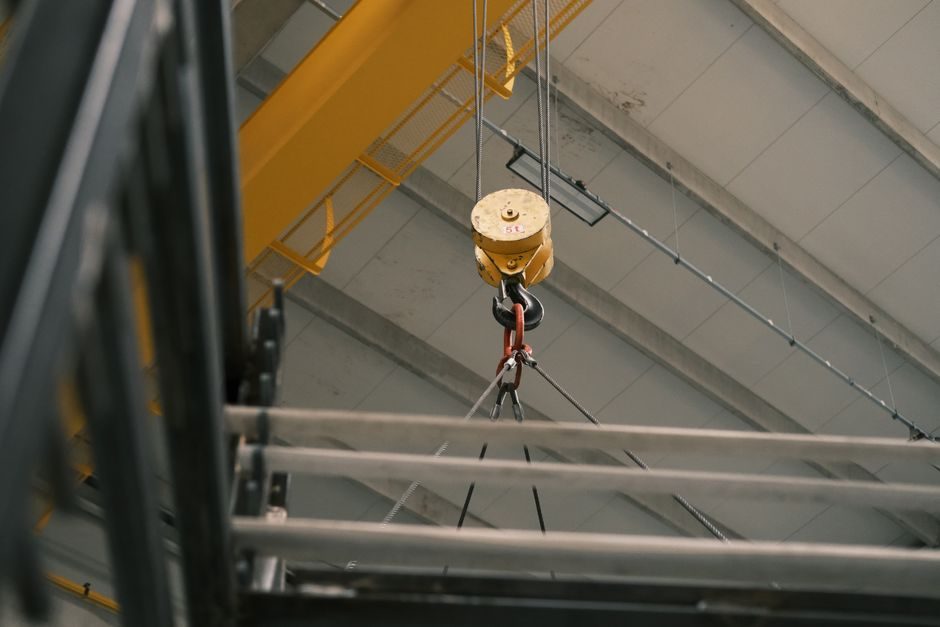
A VLM installation is not a one-day drop-in: it is a six-stage workflow — site survey, floor/ceiling verification, unit rigging, mechanical alignment, controls integration, and pick-validation — typically spanning 3 to 10 working days depending on unit height and tray count.
The driver behind the rush to install is documented: the global VLM market is projected to climb from US$950.19 million in 2024 to US$1,766.08 million by 2031, a 9.7% CAGR over 2025–2031 [S5]. That growth pressure is why integrators now publish stricter site-readiness checklists than they did five years ago.
Stage 1 — Site Survey and Floor Load Verification
The single most common VLM installation failure is unverified floor flatness: a VLM base must sit on a slab within ±3 mm/m tolerance because the internal lift carriage runs on a single vertical mast, and any twist propagates into tray-mis-pick faults [S7]. Before mobilization, confirm slab compressive strength — typical industrial ratings of 25–30 N/mm² (≈ 2,500–3,000 kPa) are sufficient for standard units, but heavy-payload configurations above 990 kg per tray may require localized pad thickening or a steel spreader plate.
Ceiling clearance is the second hard gate. A vertical lift module is a closed-front cabinet with an internal extractor that rides between two columns of trays; the extractor travel requires roughly 200–300 mm of overhead clearance above the tallest stored SKU plus full unit height. Measure the rough opening with the access door swing arc included — operators routinely forget that the service door needs a 90° clear arc, which can steal 600–800 mm of aisle space.
Power and network drops are next. Standard VLMs ship with a 400 V three-phase feed (or 208–240 V in North American installs) on a dedicated circuit, plus an Ethernet run back to the WMS/server room. Do not share the VLM circuit with welders or HVAC compressors — soft-start inrush on the extractor motor is high, and a shared breaker nuisance-trips on day one.
Stage 2 — Unit Selection and Tray-Payload Matching
VLM selection is driven by three numbers: tray footprint, single-tray payload, and throughput. Modula Lift specifies up to 990 kg per tray and 120 trays per hour throughput in its production datasheet [S7]. Kardex Shuttle, in the same VLM product family, operates on a goods-to-person principle and is designed for modular expansion [S4]. Use those numbers, not brochure adjectives, when sizing a unit.
For low-throughput spare-parts storage under 30 trays/hour, a single-bay unit is sufficient. Above that, integrators typically spec dual-extractor configurations or pair the VLM with an autonomous mobile robot (AMR) handover — Modula documents this integration with the MiR AMR for end-of-arm tote delivery [S1]. When comparing options, the spec table below lines up the three decisions that drive capital cost:
Selection criteria at a glance: (1) Tray payload — 250 kg for general parts, 500–990 kg for tooling or heavier components. (2) Throughput — 60 trays/hour for batch picking, 100–120 trays/hour for e-commerce split-case. (3) Unit height — 4 m for low-bay retrofits, 7–12 m for greenfield sites with adequate slab. (4) Software stack — WMS-native (WAMAS Lift & Store from SSI SCHAEFER handles single or multi-VLM orchestration [S6]) vs. vendor-proprietary.
Stage 3 — Mechanical Rigging and Alignment
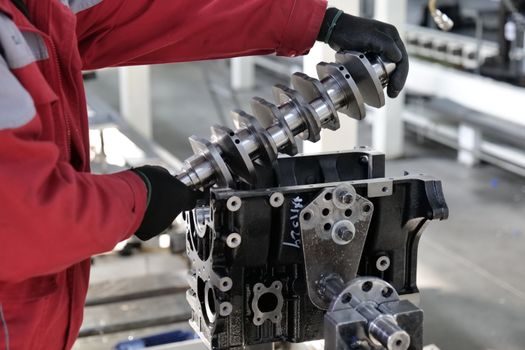
Rigging a VLM is structurally closer to rigging a server rack than a conveyor: the unit ships in sections on standard pallets, and the integrator assembles the two columns, the ceiling cross-member, and the extractor carriage on site. Craning the assembled unit is almost never done because the cabinet is too tall to clear most facility doorways in one piece — a common field mistake is assuming the unit ships fully assembled, which it does not [S7].
Alignment procedure: shim the base frame until a 2 m level reads zero on both axes, then torque the column anchor bolts to manufacturer spec (typically M16 chemical anchors at 80–110 Nm). After mechanical assembly, manually cycle the extractor through full travel three times before energizing the drive — this confirms mast lubrication is evenly distributed and surfaces any shipping damage to the linear guide rails before the warranty clock starts.
Acceptance criterion: a full-height extractor round-trip with a maximum-load tray must complete without audible rack-rattle or skip-detection faults on the positioning encoder. If the carriage binds or the encoder reports EPOS overtravel, stop and re-shim — do not adjust the software limits to mask a mechanical problem.
Stage 4 — Controls, WMS, and Safety Integration
Controls integration is where installs slip schedule. A modern VLM exposes a REST or OPC-UA interface to the WMS; older units ship with vendor-proprietary protocols that need a middleware translator. SSI SCHAEFER's WAMAS Lift & Store is documented as supporting orchestration of one or more VLMs from a single software layer [S6], and Thomson publishes a VLM application note covering linear motion sizing for material-handling integrators [S8].
Safety integration is non-negotiable. Light curtains at the access window, a category-1 safety stop on the access door interlock, and an emergency-stop loop wired to the facility safety relay are baseline. EN ISO 3691-4 governs driverless industrial truck safety and is the relevant standard for AMR-tethered VLM cells; ATEX zone classification only applies if the VLM is sited in a flammable atmosphere, which is uncommon. Where it does apply, ATEX 2014/34/EU governs the equipment, and the installer must verify the unit's Ex rating matches the zone — do not assume a standard VLM is ATEX-rated.
Network commissioning sequence: (1) Static-IP the VLM controller on the facility OT VLAN. (2) Validate WMS handshake with a test pick/put cycle. (3) Validate the pick-to-light or pick-by-voice overlay if installed. (4) Capture baseline cycle-time logs for the warranty record.
Stage 5 — Pick Validation and Operator Training
Pick validation is the user-acceptance test that catches what factory FAT misses. Cycle 50 real SKUs through the unit at the production target rate and confirm tray-present-sensor accuracy, extraction-mis-pick rate, and WMS transaction latency.
Operator training runs 2–4 hours per shift and covers three failure modes: (1) tray not returned to correct slot — manual re-home procedure; (2) access-door interlock open mid-cycle — controlled restart sequence; (3) power-loss recovery — how to manually lower the extractor using the hand-crank (every VLM ships with one, and most operators do not know it exists until the first outage). Replace the onboard UPS batteries on a 3-year cycle regardless of alarm state; this is the single most common unplanned-downtime cause in units older than five years.
Stage 6 — When NOT to Install a VLM
A VLM is the wrong storage technology when floor area is not the binding constraint — if ceiling height is below 4 m, if the SKU count is below 200, or if single-line pick rates exceed 200 trays/hour (above which a horizontal crossed-roller guide carousel or a mini-load ASRS becomes more cost-effective). For high-density pallet flow at the bay above, a pallet shuttle system is the right comparator, and a side-by-side spec walk is worth the integrator's time before signing. [S1]
Do not retrofit a VLM into a facility with undersized slab, shared power, or a legacy WMS that cannot expose an API. The capital cost of a VLM cell (typically US$150,000–US$500,000 installed, depending on height and tray count) is wasted if the surrounding material-flow chain cannot match its throughput. In those cases, escalate to a broader warehouse re-engineering study rather than forcing a VLM into an incompatible site.
Trackable signals for the next planning window: the 9.7% CAGR through 2031 [S5] implies continued vendor consolidation — watch for software-stack acquisitions between WMS vendors and VLM OEMs in the second half of 2026, since those deals determine whether multi-VLM orchestration stays open-protocol or locks into a single vendor stack.