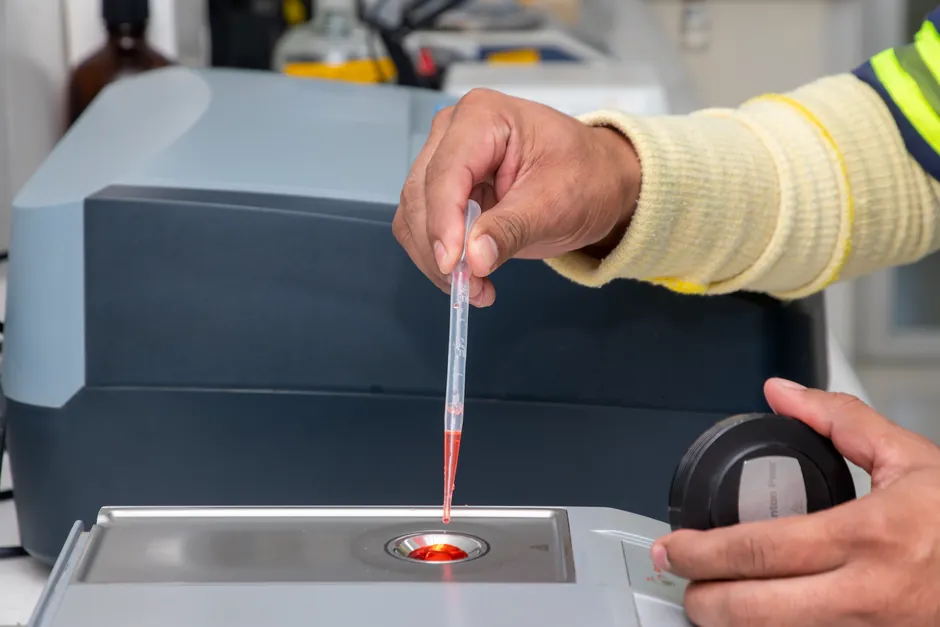
A new Rosemount 2120 vibrating fork liquid level switch (model code 2120D1AK1I1AA0000) was listed on eBay at US$900.00 in February 2025, while Made-in-China.com fluid-level-switch listings for 2026 cluster entry-tier offerings well below that figure [S10][S4].
Pricing is governed less by the piezo excitation circuit than by wetted material, process connection, Ex/ATEX rating, and insertion length, with bulk-solid variants using suspension cables priced in a separate band from short-fork liquid units [S1][S2][S6].
What a vibrating fork switch actually costs in 2026
The published 2026 Made-in-China.com index for fluid level switches lists dozens of suppliers with no single dominant SKU, indicating a fragmented, price-competitive market for entry-tier forks [S4]. VEGA's VEGASWING 63 liquid-density fork (tube extension version) is specified for liquids in the 0.5-2.5 g/cm³ density band, the canonical operating envelope for a short-fork piezo-resonant liquid switch [S6]. The VEGAWAVE 62 powder/bulk-solid variant is sold via TransmitterShop with a suspension-cable switching-point location, a geometry that drives a different cost structure than a short liquid fork [S1][S2]. Used or new-open-box Rosemount 2120 retail listings appeared at US$900.00 in February 2025, a useful upper anchor for a single mid-range liquid fork from a Western OEM [S10]. Across these three reference points, single-unit 2026 street prices sit in a roughly US$200-US$1,000+ band, with a buyer paying the delta for certification, housing, and process-connection options [S4][S10].
Cost drivers that move the quote the most
Stainless wetted parts (typically 316L) versus alloy C or higher-nickel upgrades move the BOM by a step per material tier, and forks specified for sanitary/dairy or NACE MR0175 sour service sit above commodity 316L builds [S1][S6]. Hazardous-area approvals (ATEX/IECEx zones, plus the relevant IEC 60079 Part 11 intrinsic-safety construction for the electronics) add a fixed surcharge per instrument because each variant needs a separate certified nameplate, with the VEGA VEGAWAVE 62 cable variant explicitly positioned for adhesive, abrasive, and very-low-density bulk solids where mechanical robustness, not electronics, is the cost driver [S2]. Process connection size and type (1", 2" tri-clamp, flanged ANSI/DIN) changes the price step noticeably because the housing and gasket set scale with the line, and insertion length for tube-extension builds such as the VEGASWING 63 is a linear-cost item paid per 100 mm of extension [S6]. Finally, OEM brand premium: a Rosemount, VEGA, or Endress+Hauser badge adds 2-3x the equivalent Asian-OEM SKU at the same functional spec, with the US$900 Rosemount 2120 listing sitting at the top of typical short-fork pricing [S10][S4].
Selection criteria: short-fork liquid vs. cable-extension bulk-solid

Short-fork piezo units (Rosemount 2120, VEGASWING 63 standard build) are the right pick for clean liquids in the 0.5-2.5 g/cm³ density band, with viscosity penalties kicking in above ~10,000 cP and build-up media (slurries, crystallising fluids) usually requiring a coated fork or a different technology such as RF admittance [S6][S8]. Cable-extension bulk-solid forks (VEGAWAVE 62, KOBOLD NSV) are specified for powders and fine-grained bulk solids with switching point set by suspension-cable length, with the KOBOLD NSV rated for bulk solids and electrode lengths up to 3 m, a geometry that directly drives cost through cable and weight hardware [S1][S2][S9]. A real engineering rule: if the application is high-temperature (>250°C) or high-pressure (>100 bar), the fork-style switch is usually replaced by a guided-wave radar or a different switch family, not just retuned. A buyer should also weigh vibrating fork technology reference material (which discusses piezo-driven resonance principles) against the equivalent level switch technology page when comparing to RF admittance and capacitance alternatives.
Who this is for, and where it fails
Vibrating fork switches fit point-level detection on small-to-mid vessels, pump dry-run protection, and high/low alarms in atmospheric or low-pressure tanks, with the Rosemount 2120 explicitly documented as suitable for virtually all liquid applications when a short-fork geometry is acceptable [S8]. They are the wrong tool for very low density (<0.3 g/cm³) powders, where the damping signal is too weak to detect reliably, and for aggressive build-up media where a coating-tolerant technology such as RF admittance is preferred; the RF admittance level switch reference documents that alternative. They are also a poor fit where continuous level, not point-level, is required; for that, hydrostatic or radar transmitters are the right call, and buyers evaluating continuous level on open tanks can compare spec gates in hydrostatic level transmitter selection. Failure modes in the field are predictable: piezo-element fatigue after ~10⁷ cycles, fork fouling under crystallising media, and cable kinking on the bulk-solid variants when the cable is shorter than the engineered drop distance.
Price comparison across the main options
Across the 2026 supplier landscape, three reference points set the comparison: an entry-tier Asian OEM fluid-level switch from Made-in-China.com (sub-US$300 typical, exact list requires supplier RFQ) [S4]; a mid-tier Indian OEM such as Jaycee Technologies offering vibrating-fork and tuning-fork point level switches for solids and liquids as a configurable build [S3]; and a Western OEM short-fork unit such as the Rosemount 2120 at US$900.00 retail [S10]. The deciding axes are Ex/ATEX certification (often the single largest surcharge), wetted material (316L baseline, alloy upgrade for corrosive service), and insertion length (short fork for top mount versus tube extension or suspension cable for side mount on tall vessels) [S1][S2][S6][S8][S10]. Buyers who do not need Ex certification, do not need alloy wetted parts, and can use a 1" NPT or G1 process connection will land in the entry-tier band; any one of those three upgrades typically moves them into the mid-tier, and adding all three plus a Western OEM badge lands them in the US$800-US$1,000+ band.
Total cost of ownership over a 10-year horizon
Purchase price is roughly 30-50% of the 10-year TCO for a fork switch; the rest is commissioning, spares, and proof-test interval cost [S1][S2]. VEGA's own copy on the VEGAWAVE 62 cable variant claims low maintenance cost from robust design and simple setup without medium calibration, a meaningful TCO lever on bulk-solid applications where access is hard [S2]. The Rosemount 2120 platform is described as a "complete range of process connections" with housing and wetted-material options that reduce retrofit spares inventory, which lowers lifetime carrying cost even when the unit price is higher [S8]. The 2120 retail listing carried a "new, open-box" condition note, which is a real TCO signal: surplus or refurbished Western OEM stock at a discount is often the cheapest 10-year TCO play if lead time on a new unit is acceptable, but the buyer should verify the calibration seal and Ex certificate are intact.
Standards, sourcing, and what to verify before PO
Buyers should pin the Ex rating (ATEX 2014/34/EU for EU installations, IECEx for international projects), the hygienic rating (3-A, EHEDG) for food/pharma, and the metrology grade required for custody transfer if any, none of which is implied by a published price [S1][S2][S6]. The 2026 Made-in-China.com index for fluid level switches lists 1-piece MOQ offerings and supplier RFQ as the dominant sourcing flow, with the headline price typically a 1-unit basis that does not include Ex certification surcharges [S4]. Shenzhen Jiwei Automations lists as a Made-in-China.com manufacturer of explosion-proof vibrating-rod and tuning-fork level switches, a useful reference for buyers comparing Asian OEM quality systems (ISO 9001 is the typical baseline) [S5]. A related comparison axis for buyers also weighing switching-contact spec is lighting equipment and electric lamps, which covers relay and contactor ratings that often sit behind the DPDT output of a fork switch. The KOBOLD NSV is sold in China through KOBOLD Instruments Trading (Shanghai) and is the bulk-solid counterpart to the liquid short-fork families already cited [S9]. For adjacent capital-equipment context relevant to EPC-level cost stacks, the LNG production capacity planning: spec gates for 142 MTPA builds and modular mid-scale reference frames how a level-instrument spend line is sized inside a larger project.
The next trackable signal is the 2026 Q3-Q4 ATEX/IECEx certificate update cycle for VEGA 6X series and the Rosemount 2120 platform, which historically resets the certified-nameplate surcharge band; the second is a 2026 Made-in-China.com listing refresh on fluid-level-switch pricing that should re-anchor the entry-tier floor used in this guide [S1][S2][S4][S10].