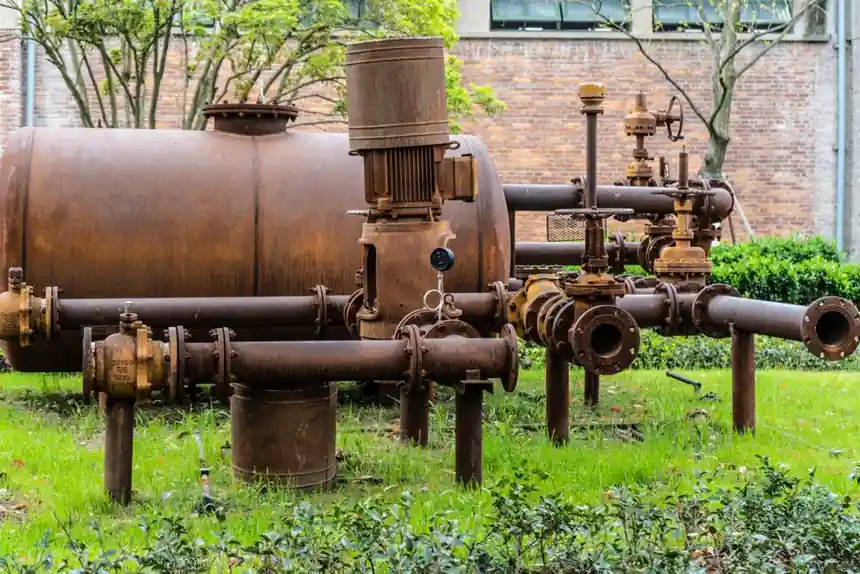
A hydrostatic level transmitter converts the head pressure of a liquid column above its diaphragm into a level reading, making it the default continuous-level instrument for vented tanks, sumps, lift stations, and boreholes where the process fluid is clean and the surface is at or near atmospheric pressure.
The technique is direct: a calibrated pressure cell at the bottom of the tank sees P = rho x g x h, so the only hardware decisions are how much range you need, what alloy the wetted parts are made of, and how the loop power, signal, and hazardous-area approvals are wired. For a deeper framing of how a hydrostatic device relates to other continuous-level technologies, the level transmitter entry in the encyclopedia lays out the cross-technology comparison, and the differential pressure transmitter page shows the close cousin used on pressurized or steam-sparged vessels where wet-leg or dry-leg reference legs become mandatory.
Where the Hydrostatic Method Sits Among Level Technologies
A hydrostatic probe is a sub-class of pressure-based level measurement: the cell is referenced on one side to the liquid head and on the other to atmosphere (gauge) or to a sealed vacuum reference (absolute), and the resulting mV/V signal is amplified into 4-20 mA, 0-10 V, or a digital overlay such as HART or wireless [S1][S3]. Compared with non-contact technologies like guided wave radar the same way: radar reads dielectric contrast, hydrostatics reads weight of fluid, so each fails in opposite conditions.
The technology works because the hydrostatic pressure at the diaphragm is a linear function of liquid height and density. With water at 4 deg C and standard gravity, every metre of head adds roughly 9.81 kPa (0.098 bar); with sulfuric acid at 1.84 sg, the same metre adds about 18.0 kPa, which is why densitometer-style level measurement on heavy media needs tighter range calibration. Submersible hydrostatic probes add a vented cable so the reference side of the cell breathes with the atmosphere, eliminating barometric compensation in the PLC.
Spec Gates That Drive the Right Variant
Five parameters decide 90 percent of the buying decision on a hydrostatic level transmitter, and the OEM datasheets make them explicit: measuring range, process temperature, accuracy as a percent of adjusted span, wetted material, and output protocol [S3].
Range: submersible water/wastewater units commonly span 0.1-10 bar with a 4:1 turndown, which is enough to cover a 1 m well up to roughly a 100 m deep shaft when the media is water [S3]. Foam, turbulence, and aggressive chemicals like HCl or NaOCl will force a different body material; gold-plated or Hastelloy C diaphragms are listed as options on the same datasheet to handle those services [S3].
Accuracy: industrial submersible units are commonly specced at 0.2 percent of adjusted span after turndown, which is the figure published for the Klay Hydrobar family in 2026 [S3]. Premium hygienic and custody-transfer units push into 0.1 percent territory with active temperature compensation, while draft-range or rough-level units sit at 0.5 percent and save cost.
Output: 2-wire 4-20 mA remains the workhorse for tank and well service because it shares cabling with loop power at 12-36 Vdc (13-26.5 Vdc on Ex-ia fixed-range models) [S3]. When a remote well or lagoon has no cable plant at all, a wireless variant with a 1-5 Vdc hydrostatic sensor input, 24-bit ADC, discrete input, and a published 10-year battery life removes the need for trenching entirely [S1].
Approvals: ATEX Ex-ia, IECEx Ex-ia, and EAC Ex-ia are the standard explosion-safety trio for European, IEC-bloc, and Eurasian Customs Union sites, often paired with marine class nods (Lloyd's, DNV, CCS, BV, ABS, KR) and SIL2 functional safety for high-integrity well monitoring [S3]. Sanitary 3-A is the marker for food, beverage, and dairy CIP/SIP service.
Ingress: IP68 on the submersible sensor body and cable, with IP66 on the remote electronics housing for the adjustable-range variant, is the published split that lets the cell sit in a flooded chamber while the indicator stays dry [S3]. Polyethylene cable jacket is standard; Hytrel or PTFE jackets are the options for chemical or hot-water immersion [S3].
Hydrostatic vs Capacitance vs Radar: a Criteria-Based Comparison
Three continuous-level technologies dominate clean-service tank selection, and the right one falls out of four criteria: media conductivity, surface condition, installed distance, and unit cost. Hydrostatic probes win on conductive liquids, calm surfaces, and short to mid cable runs, with the lowest unit cost in the comparison. [S4]
Capacitance probes read the dielectric constant change between a rod and the tank wall, so they tolerate foam, sticky slurries, and oil-water interface detection better than hydrostatics, but they need a calibrated empty-tank baseline and a known dielectric constant for the media [S4]. The capacitance level transmitter encyclopedia page covers the electrode geometry options in more depth.
Guided wave radar and open-air radar are non-contact, immune to foam and vapor, and read through most non-metallic tank roofs, but they cost roughly 3-5x a hydrostatic probe of the same range and are overkill on a clean water well. The magnetostrictive level transmitter entry sits in a different performance tier again, used where high resolution on a float is required.
Who Should Not Pick a Hydrostatic Probe
Agitated, boiling, or sparged tanks break the static-head assumption. A reactor with a 30 percent vapor-phase return or a slurry tank with a top-mounted mixer creates dynamic pressure noise on the diaphragm that no amount of damping can fully reject, and a guided wave radar or non-contact ultrasonic unit is the safer call. Slurries with a high solids loading are a related failure mode: the diaphragm sees the weight of the solids bed, not the true liquid surface, so a submersible ultrasonic or radar mounted through the top of the tank is the correct instrument. [S3]
Closed, pressurized vessels need a different reference architecture: the cell must be referenced against a wet leg, a dry leg, or a second pressure tap, which moves the application out of the hydrostatic level transmitter category and into true differential pressure level. The differential pressure transmitter page covers the wet-leg and dry-leg tradeoffs. Open-air chemical tanks with strong vapors are also a poor fit because vapors condense on the vent tube of a submersible probe and bias the reading over time.
For a related industrial decision pattern where a spec gate collapses a wide product tree into a shortlist, the crawler crane selection for quarrying: 2026 spec gates article applies the same range, ground-bearing, and duty-cycle logic. A different parallel, the thrust bearing selection for textile mills write-up, shows how load, speed, and lubrication gate a similar component decision.
Real Use Cases and the Variants They Pull
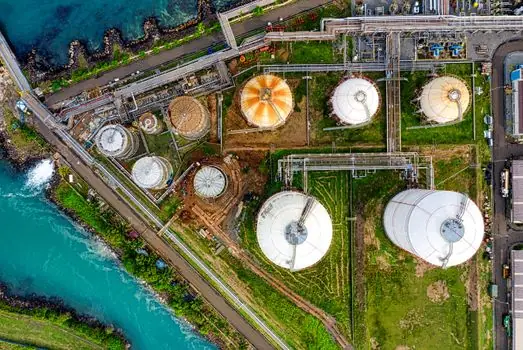
Drinking-water reservoirs and water-board sumps map to a 0.1-10 bar submersible AISI 316L unit with PE cable, ATEX/IECEx Ex-ia, and SIL2 if the well is part of a safety-instrumented function, or a wireless variant with a 10-year battery where running a vented cable is impractical [S1][S3]. Marine ballast, drinking, and oil service pulls the same body with the marine-approval package (Lloyd's, DNV, CCS, BV, ABS, KR) added [S3].
Food, beverage, and dairy storage tanks pull a 3-A sanitary variant with the same 4-20 mA 2-wire output and a Hastelloy C or gold-plated diaphragm for CIP chemicals, while pharmaceutical and high-purity water loops push the accuracy class toward 0.1 percent of adjusted span with active temperature compensation. Wastewater lift stations and digesters usually sit at the 0.2 percent / 0.5-10 bar end of the range with PE or Hytrel cable and IP68 throughout, and they often run on solar-powered wireless loops where grid power is absent [S1][S3].
Across the OEM landscape in 2026, suppliers such as OleumTech (wireless variants with 24-bit ADC and 10-year battery life) [S1], Klay Instruments (the Hydrobar submersible family with ATEX/IECEx, SIL2, and marine approvals) [S3], and AMETEK Drexelbrook (continuous hydrostatic pressure level measurement as one of their five continuous-level technologies) [S4] are the named vendors with public 2026 specifications on these spec gates.
Installation and Maintenance Gates That Decide Long-Term Cost
Three installation choices decide whether a hydrostatic probe stays in spec for five years or fails in eighteen months: the vent tube path, the surge protection on the cable, and the cleaning access to the diaphragm. A kinked, pinched, or moisture-laden vent tube biases the cell and drifts the zero, which is why submersible units with a removable desiccant filter or a reference tube humidistat are worth the small upcharge in flooded-chamber service. [S3]
Surge protection is a hard requirement on any long cable run from a submersible probe to a remote indicator, because lightning-induced transients on the loop wiring are the dominant field-failure mode in well and lift-station service. Cleaning access matters in wastewater and pulp service, where the flush diaphragm on a modern submersible unit (316L by default, with a strong flush face for periodic wipe-downs) keeps the long-term stability that the datasheet claims [S3].
For buyers cross-referencing the level category against other industrial spec gates, the same front-loaded criteria pattern shows up in the steel pipe selection gates for industrial facilities write-up, where pressure class, material grade, and certification collapse a wide product tree into a shortlist the same way ATEX, SIL2, and 4-20 mA collapse the hydrostatic tree.
Trackable signals to watch next: any new ATEX/IECEx Ex-ia variant extending process temperature above the current 70 deg C ceiling, any wireless hydrostatic platform breaking the 10-year battery barrier with a higher-than-1-5 Vdc input range, and any sanitary 3-A body with a published clean-in-place pressure rating above 2 bar [S1][S3].