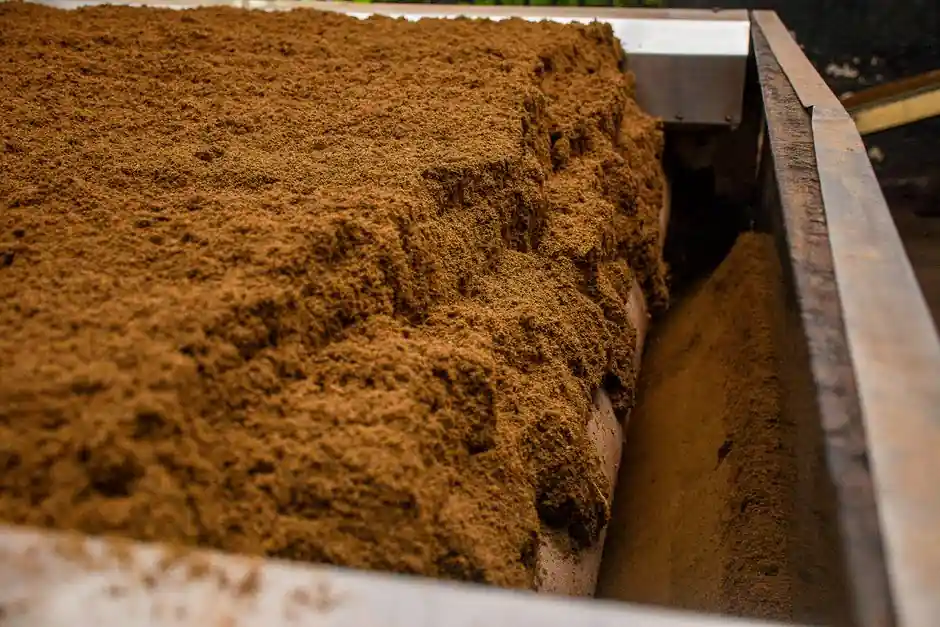
Vibrating shakeout machines and rotary shakeout drums serve the same sand-to-casting separation step, but their mechanics drive fundamentally different decisions on casting damage rate, throughput, energy draw, and dust handling [S2].
The two families diverge on three physical actions: vibratory units (brute-force, two-mass, barrel-horse, and natural-frequency drum) move a sand bed in a controlled linear or orbital path, while rotary drums lift and drop castings as the shell rotates, a tumbling action that aggressively cleans but stresses the casting [S2][S3].
What Each Technology Actually Does
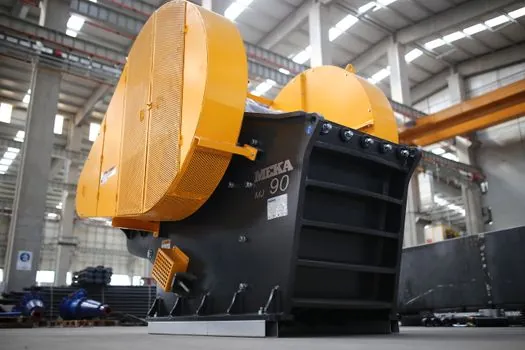
Brute-force shakeouts are a steel trough with a perforated deck and unbalanced drives that impart vibration directly into the mold, a simple box with the motor mass bolted on, requiring significantly higher horsepower per ton of throughput than the alternatives and limiting their use to lower-mold-count foundries [S2].
Two-mass high-frequency shakeouts decouple the drive mass from the shakeout body with a natural-frequency spring system, so the drive only supplies the energy lost to damping; stroke is adjustable, which is why the format is the standard recommendation for high mold-volume facilities [S2].
Rotary shakeout drums (sometimes called rotary media drums) are inclined rotating shells, lined with abrasion-resistant plates, that lift castings and sand a short distance each revolution and let them fall, a tumbling action that is simple and cost-effective but tends to damage fragile castings and raise scrap rates [S2][S3].
Barrel-horse shakeouts sit between the two: a vibrating barrel creates a rotating sand bed in which castings effectively swim, a gentle motion that cleans without the drop height of a true rotary drum [S5].
Throughput, Horsepower, and Sand-to-Metal Range
Two-mass vibrating drums are rated for high capacity to 400 TPH and equalise shakeout sand temperature while reducing sand lumps to original grain size in one continuous pass [S4].
Carrier's vibrating shakeout range accepts sand-to-metal ratios from a low of 5:1 up to 60:1, covering green-sand, no-bake, flasked, and flaskless molds with recipe-driven controls [S5].
For foundries with low mold counts, standard and variable-angle brute-force shakeouts remain workable because a delay between molds is acceptable to achieve full retention time; two-mass units become the economic choice as mold count rises because their lower horsepower per ton offsets the higher mechanical complexity [S2].
Casting Damage and Surface Quality
Rotary drums "tend to lift and drop castings, which can damage them and increase scrap rates", a direct quote from the trade comparison, and are common in ductile-iron foundries only because that alloy tolerates the impact better than brass or no-bake work [S2].
Vibratory drums, by contrast, produce a natural-frequency rotary motion of the sand and casting bed that breaks lumps and cleans surface sand without causing the castings to tumble on each other, which is why General Kinematics positions the Vibra-Drum as optimal for no-bake, brass, and all other applications where reduction or elimination of casting damage is the priority [S2][S4].
The non-rotating, totally enclosed drum design also makes dust collection and air-system attachment easier, supports peripheral attachments such as water addition, and lets auxiliary equipment mate to the drum shell without the sealing headaches of a rotating shell [S2].
Foundry Lexicon View on Application Fit
The German Foundry Lexicon entry on vibration shake-out drums narrows the application window further: "Vibration shakeout drums are used, when the castings which have to be unpacked, are small and have few fins on the outside", a useful filter when the workpieces are small, clean, and finish-sensitive [S6].
For larger castings, heavy sprue, or runners that need aggressive mechanical de-gating, rotary drums remain the pragmatic choice in ductile iron, sprue-tangle reduction being one of their main labour-saving arguments [S2].
Selection Criteria Compared
On a four-axis decision matrix drawn from the research: (1) Casting damage risk is lowest in two-mass and barrel-horse vibratory units, higher in brute-force, highest in rotary drums; (2) Throughput per horsepower favours two-mass at high mold count, rotary at moderate throughput with simple castings; (3) Dust and air handling is simpler on non-rotating vibratory drums, which integrate cleanly with enclosures and wet or dry air-handling [S2][S4][S5]. (4) Maintenance cost is the traditional weak point of older rotary drum designs, addressed by fabricated A/R liner systems (Ducta-Series and equivalents) that drop liner replacement time and risk [S2].
Use this matrix as a hard rule: if the casting is brass, no-bake, thin-walled, or finish-critical, default to a two-mass vibratory drum; if the casting is ductile iron, robust, and the line wants simple de-gating with manual labour minimised, a rotary drum with replaceable liner is the rational pick.
Integration With Sand Reclamation and Conveyor Lines
Castings and sand discharged from a vibratory drum drop onto a vibratory screen to separate processed sand from castings in one step, which feeds directly into a downstream vibrating conveyor returning the cleaned sand to the reclamation loop [S2][S4].
Foundry shakeouts are commonly cited as the front end of a closed-loop sand system because they set the sand cleanliness, lump size, and tramp-metal removal that the reclaimer inherits, a shakeout machine selected on damage rate still has to be sized for the right sand-to-metal ratio before the conveyor and reclaimer can be balanced [S5].
Limits, Failure Modes, and Trackable Signals

Two failure modes recur in the research: brute-force units hit their horsepower ceiling on high-mold lines, and older rotary drums hit their liner-replacement ceiling on continuous ductile-iron service, both of which show up first as rising scrap rates and unplanned downtime [S2].
Trackable signal: monitor casting scrap rate and tramp-metal carryover at the discharge screen monthly; if scrap rises above the foundry baseline, the shakeout's stroke or rotation profile is the first variable to retune before touching the reclaimer, and if tramp-metal carryover rises, the drum liner or the deck screening media is the first part to inspect [S4][S5].
Related comparison: the vertical squeeze casting vs horizontal die casting decision turns on similar casting-damage and throughput trade-offs when sizing upstream shakeout capacity.
The underlying component specifications are covered under rotary encoder.