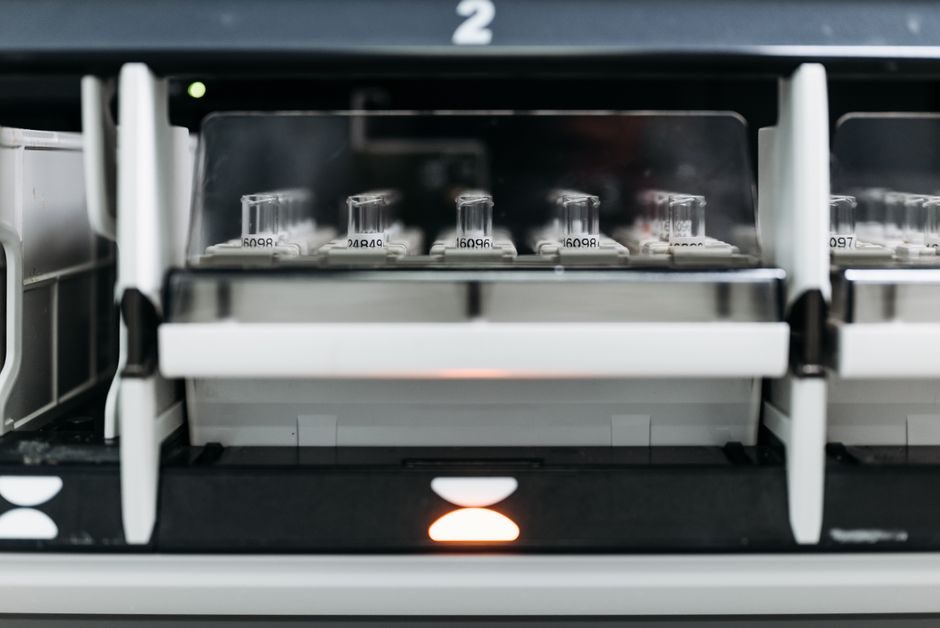
A 2026-06-10 export-portal listing for DongGuan Sinowon Precision Instrument shows a 2.5D auto-focus vision measuring machine for semiconductor work quoted as "Negotiable" at 1-piece MOQ, with magnification 100-500X and a 360° virtual tour available [S4].
The same Sinowon vendor lists a fully-automatic 3D video measuring machine (model Autovision542) on 2026-02-28 with 500x400mm X/Y travel and 200mm Z travel, also negotiable, with in-stock capacity and verified export experience [S8]. On 2026-05-27, Made-in-China.com aggregated Suzhou Yichi benchtop units at US$20,000-80,000 and Dongguan Jaten JTD-QVS-6050CNC units at US$23,000-30,000 [S7].
Three price tiers seen on 2026-06-21 export channels
The Chinese OEM tier (entry-level benchtop and instant systems) clusters around US$13,000-15,000 per unit at 1-piece MOQ — the JVB400CS automatic vision measuring system for small precision parts was quoted at exactly that range by Guiyang Xintian OETECH (founded 1966) on 2026-05-22 [S10]. Sinowon's horizontal instant system IWS-200 was listed at US$20,800 per set on the same channel [S10]. The mid-range CNC tier is dominated by 2.5D/3D auto-focus systems with motorized stages and zoom optics, typically US$20,000-30,000 per set, with optional probe and laser scanner adders [S7][S8]. The imported tier (e.g., Mitutoyo Quick Vision, 3D/CNC continuous) is sold through DirectIndustry with the technical sheet, and pricing is quote-only [S1]. Buyers should treat the Mitutoyo figure as a request-for-quote baseline because DirectIndustry listings do not show a sticker number.
Hardware cost drivers that move the sticker price
Travel envelope, granite base mass, and stage accuracy class are the three largest levers on a vision measuring machine. Sinowon's Autovision542 pairs a 500x400mm XY stage with a 200mm Z column, putting it in the medium-shop bracket rather than the small-precision tier [S8]. Sinowon's 2.5D auto-focus semiconductor system is sold with 100-500X magnification optics, which signals an interchangeable-zoom lens turret rather than a fixed-magnification body — a typical step-up that adds roughly 15-30% to the bill versus a fixed-magnification comparator of the same travel [S4]. For shops moving from manual 2D to CNC 3D, the Xintian OETECH and Sinowon catalogues show that motorized Z and continuous-CNC mode are the spec items that re-anchor the price tier, not raw travel size [S2][S8]. Reference the vision measuring machine encyclopedia entry for the underlying stage/optics taxonomy before comparing two quotes.
Hidden costs: software, calibration, fixturing, facility
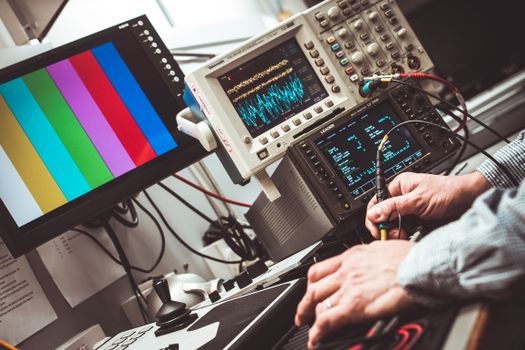
Sticker price is rarely the landed cost. A multi-point calibration traceable to a national length standard (laser interferometer or glass scale verification) typically runs a low-single-digit-percentage of the machine value annually; probe-and-laser scanner retrofits on a 2.5D base can double the optical budget. Fixturing — modular magnetic bases, sub-plates, kinematic nests — is a separate line item that grows with part-mix complexity, and CNC vision systems also need clean, vibration-isolated floors and stable 20±2°C environments, which means HVAC and isolation pads belong in the capital request. Software seats (CAD-to-part, offline programming, statistical reporting) are commonly licensed per concurrent user, not per machine, and renewal terms are where mid-range OEMs distinguish themselves from premium vendors. Use the contour measuring machine reference to scope a complementary comparator purchase if your workflow also needs tactile or laser contour scans. [S1]
Who should buy at which tier — and who should not
A shop running 5-20 simple 2D dimension checks per day on stamped or machined small parts is the target buyer for the US$13,000-20,000 tier (JVB400CS-class, IWS-200-class) [S10]. A shop running 50+ features per part on precision-machined, moulded, or electronic components, with GD&T callouts, should be looking at the US$20,000-30,000 CNC tier and budgeting for probe/scanner adders [S7][S8]. A regulated automotive, aerospace, or medical-implant metrology lab with audit-trail requirements and full 3D free-form measurement is the profile for the imported 3D/CNC continuous tier (Mitutoyo Quick Vision class) where the price is quote-only and the calibration/validation overhead is part of the package [S1]. Buyers who only need occasional 2D checks are NOT a fit for the mid-range CNC tier — a profile projector or benchtop comparator does the job for a fraction of the price.
2026-06-21 comparison: tier vs decision criteria

Three criteria separate the tiers cleanly. (1) Travel and footprint: OEM tier peaks around 400x300mm in a benchtop envelope; mid-range CNC pushes to 500x400mm with a 200mm Z (Autovision542-class) [S8]; imported 3D/CNC continuous systems span small to large envelopes and are sold on a configuration basis [S1]. (2) Automation and mode: OEM tier is mostly instant/2D with operator-driven jogging; mid-range adds CNC and 2.5D/3D auto-focus; imported adds continuous-CNC, multisensor probing, and stitched-field-of-view routines [S1][S2][S8]. (3) Sticker and TCO envelope: OEM US$13,000-21,000 sticker, mid-range US$20,000-80,000 with mid-decade-percentage annual calibration, imported quote-only with software/seat licensing baked in [S7][S8][S10]. The machine vision system entry explains how the imaging pipeline drives accuracy and throughput, which is the real input to the tier choice rather than brand. For a complementary read on instrument cost patterns, the pressure gauge price and cost guide walks a similar TCO breakdown.
Limits, failure modes, and what the export-portal quotes do not tell you
Export-portal price ranges are MOQ-1 FOB ranges, not delivered-installed prices, and "Negotiable" listings on Sinowon's pages (2026-02-28 and 2026-06-10) confirm that published numbers are starting points, not final figures [S3][S4][S8]. The Suzhou Yichi US$20,000-80,000 spread on a single product line on 2026-05-27 is a strong signal that configuration (travel, optics, probe, laser) is doing most of the work inside that range [S7]. A common failure mode is buying on travel size alone: a 500x400mm stage with a low-NA fixed lens will lose to a 300x200mm stage with a high-NA zoom and proper sub-stage illumination on small-feature GD&T work. Another is ignoring throughput — CNC continuous-scan mode (Mitutoyo Quick Vision class) is a step change in cycle time versus stop-and-measure CNC at the mid-range tier, and that gap can justify the imported price for high-mix production metrology [S1].
Sourcing, standards, and how to verify a quote
DirectIndustry pages for imported OEMs publish the technical datasheet and certifications but withhold price; the China export portals publish indicative FOB price and MOQ but not final landed cost — both should be read together, not separately [S1][S7][S10]. For acceptance, request a traceable calibration certificate (typically to a national length standard via laser interferometer), a repeatability test report (ISO 10360-style or equivalent), and a software-validation pack; cross-check model numbers against the vendor's own catalogue page to avoid the common "demo-unit spec sheet" mismatch. Confirm the in-stock and export-experience flags on Sinowon's listing (verified 2026-02-28) before wiring a deposit on a custom configuration [S8].
Next node for buyers: pull a like-for-like RFQ in the next 30 days from at least one OEM-tier and one imported-tier vendor on the same part family, with calibration certificate and probe/scanner options itemized, and pin a delivery + install + validation date in writing. Watch for a Q3 2026 refresh of the Mitutoyo Quick Vision product page on DirectIndustry and any new auto-focus CNC entries from Sinowon and Jaten on Made-in-China.com as two trackable signals for price movement in the second half of 2026.