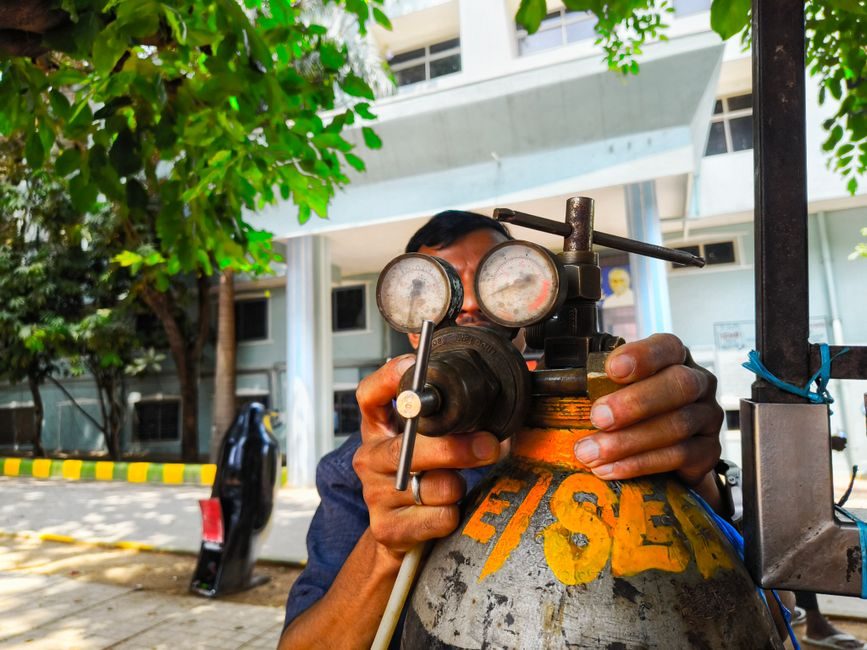
Process-grade Bourdon tube pressure gauges listed by Chinese B2B suppliers in May 2026 carry a 1-piece MOQ of roughly CNY 20 (US$2.80-3.00) for a 0-1.6 MPa axial stainless-cased utility unit [S6], while a portable digital gauge with carry case and field-grade sensor carries a 1-set MOQ of US$90-99.99 from a Sichuan-based OEM [S5].
Costs vary widely because the pressure gauge market is segmented by wetted material, accuracy class, hazardous-area certification, output type (analogue vs. 4-20 mA / HART) and enclosure rating — a raw-material- and FX-sensitive cost stack that suppliers explicitly flag on their 2026 product pages [S1].
Four-quadrant price breakdown for 2026 listings
Published 2026 list-price snapshots cluster into four clear bands. Entry utility / OEM gauges (40 mm or 50 mm steel case, brass wetted, 2.5% FS) sit at US$3-15 at 1-piece MOQ on Chinese wholesale platforms [S6]. Standard process gauges (63-100 mm, stainless case, 1.0% FS, NPT or BSP process connection) commonly list at US$40-180 at trade-portal tier 1 pricing; the AEP JET 2.0 series LCD-display electronic pressure gauge on DirectIndustry, for example, ships in stainless steel with threaded process connection and is sold on indicative pricing that AEP itself warns "may vary by country, with changes to the cost of raw materials and exchange rates" [S1]. High-range / safety gauges (oxygen, nitrogen, CO2 extinguisher service, 0-4 000 bar) from Nanjing Xinrumei carry a US$15-30 price band on Made-in-China, again at 1-piece MOQ [S5]. Hygienic, sanitary-grade or ATEX/IECEx-certified gauges — typically 1.6% or 0.5% accuracy, electropolished 316L, IP67 — list between US$250 and US$2 000+ depending on output and certificate [S2].
Ashcroft's pricing commentary, republished in March 2025, frames the same spread in dollar terms: a basic 2.5% FS utility gauge starts at roughly US$20-50, a 1% industrial gauge at US$100-400, and a high-accuracy or hygienic transmitter-class gauge at US$500-2 000+, with raw-material surcharge clauses for nickel and stainless steel baked into 2024-2025 quote letters [S2].
What you actually pay for: cost drivers, not just list price
The Bourdon tube, diaphragm capsule, or helical element is the sensing heart of an analogue pressure gauge; the same physics also underpins many pressure calibrator reference standards and shop-floor force-gauge hydraulic load cells, so the metallurgy of the wetted path is the single largest cost driver [S3].
Five variables move the quote more than the brand label. (1) Wetted material: brass vs. 316L vs. Monel vs. Hastelloy can swing a quote 3-8×. (2) Accuracy class: jumping from 2.5% to 0.5% full-scale typically adds 40-120% on the same line [S2]. (3) Process connection size and thread standard: 1/4 NPT vs. 1/2 NPT vs. DIN or JIS flanges. (4) Hazardous-area certification: ATEX category 2 (per ATEX 2014/34/EU) or IECEx schemes add a fixed third-party test fee and serialized documentation; intrinsically safe 4-20 mA + HART digital-output variants sit on top. (5) Liquid-fill (glycerine vs. silicone) and case rating: IP65 to IP67 enclosures with welded stainless cases add another 15-30% over dry-case equivalents. Suppliers repeat the same five levers in 2026 datasheets and quote letters [S1][S2].
Standards and accuracy that anchor the price
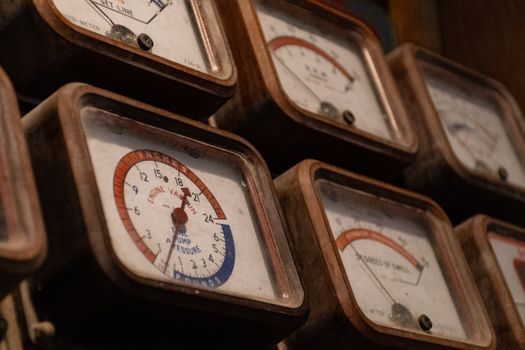
Industrial gauges in this segment are graded against EN 837-1 / EN 837-3 for Bourdon and diaphragm types, with ASME B40.100 covering the U.S. equivalent; process-grade gauges are usually 1.0% of span, while test/calibrator-class gauges move to 0.25% or better, and that grading directly sets the calibration-lab fee embedded in the unit price [S2].
When a gauge is sold with an ATEX or IECEx certificate for zone 1 / zone 2 use, the marking on the nameplate is itself part of the costed BOM, and so is the EN 10204 3.1 material certificate for the wetted parts in oil-and-gas or pharmaceutical service. Buyers in mid-2026 who skip the certificate "to save money" routinely see the gauge rejected at FAT — a re-quote cycle that wipes any upfront saving; the same pitfall is visible in strain-gauge field-installation data sheets where certificate presence is treated as a release-gate field. For high-pressure or oxygen-clean service, additional compliance (e.g. NACE MR0175 for sour-service wetted materials on process-side gauges) must be carried on the supplier's QTR — always request the actual certificate PDFs before issuing the PO.
Comparison: utility vs. process vs. hygienic vs. portable digital
A simple four-criteria grid, drawn from 2026 China-trade and OEM listings, makes the decision visible at a glance. [S1]
Utility Bourdon (e.g. 50 mm brass-wetted, axial): typical 2026 list US$3-15 [S6], accuracy 2.5% FS, output purely local dial, intended for non-corrosive air/water duty on compressors and skids. Standard process (63-100 mm, 316L wetted, dry or glycerine-filled): US$40-180, 1.0% FS, local dial; ATEX variants run US$250-600 once certification is added [S1][S2]. Hygienic / sanitary (Tri-Clamp, electropolished 316L, IP67): US$400-2 000+, 1.6% to 0.5% FS, often specified alongside a 4-20 mA / HART output that the plant DCS can read; the same output philosophy is why a pressure calibrator reference standard is also useful for in-situ verification. Portable digital field gauge (battery, 0.05-0.1% FS, hand-held carry case): US$90-100 list per 2026 Made-in-China posting for a Sichuan OEM 1-set MOQ [S5], frequently bought by calibration technicians as a working reference against which shop-floor dial indicator and gauge block stacks are cross-checked. For metrology-cell buyers, this portable digital tier is the one that overlaps with dial indicator selection for 2026 shop-floor metrology cells.
Who the cheap end is for — and who it will fail

The CNY 20 utility axial gauge from a Yangzhou or Shenzhen wholesaler [S4][S6] is fit for purpose on a non-corrosive pneumatic line, a compressor skid, an OEM machine builder's panel, or a fire-suppression riser — anywhere the media is clean dry air or water and a local needle is all the operator needs. It is not fit for steam, ammonia, sour hydrocarbons, hygienic food-and-beverage loops, or any loop where a transmitter-grade 4-20 mA signal has to be trended in the DCS. A buyer who pays US$3 for that gauge and drops it onto a CIP line will see the case corrode and the bourdon creep within a year, which is why most EPC piping-class tables (e.g. ASME B31.3) require 316L wetted material on process service and explicitly call it out in the line class.
Reading 2026 quotes: the four hidden line items
Published 2026 price lists almost never include the full landed cost. Ask the supplier for these four numbers before comparing two quotes. (a) Raw-material surcharge per unit, indexed to nickel and 316L stainless — almost always present on 2024-2025 quote letters and explicitly mentioned on the AEP JET 2.0 product page [S1]. (b) Calibration certificate fee per serial number, with or without traceable NIST or UKAS / CNAS data. (c) ATEX/IECEx certificate fee (a single certificate often covers a model family, but the nameplate marking and QAN audit cost still flows into the unit price). (d) MOQ-tier discount: most Chinese trade-portal listings drop 20-40% at 100-piece MOQ versus 1-piece MOQ [S5][S6], so the 1-piece list price is a ceiling, not the eventual project price.
2026 sourcing signals worth tracking

Three trackable signals from the 2026 record will tell you where the segment is moving. First, the appearance of LCD-display electronic gauges in the sub-US$200 tier on European trade portals (AEP JET 2.0 example) [S1] is pulling digital-output gauges into the same conversation as a force gauge with USB data logging — a clear commoditization of the electronic local-indicator class. Second, portable digital gauges from Sichuan- and Nanjing-based OEMs are clustering tightly at US$90-100 in 2026 wholesale channels [S5], suggesting the calibration-technician buyer now has a stable price benchmark to negotiate against. Third, the persistence of CNY 20 utility gauges in Yangzhou and Shenzhen storefronts in mid-2026 [S4][S6] is the canary for raw-material 316L pricing — if those listings move above CNY 35-40, expect a 10-20% bump on standard process gauges within two procurement cycles. Comparing any 2026 quote against a linear guide or gauge block RFQ from the same quarter is the fastest way to separate genuine list-price drift from supplier margin changes.