
Hot Box cores cure entirely inside the core box at 180 to 240°C with no amine catalyst, relying on heat alone to activate a furfuryl or phenolic resin [S1][S3]. Warm Box cores start curing in a pre-warmed core box and finish outside it, typically in a separate dryer, with curing temperatures below the Hot Box range [S5].
The energy and tooling implications follow directly: Hot Box trades a higher box temperature for a shorter cycle and zero catalyst gas handling, while Warm Box trades a lower box temperature for a partial cure that the operator must finish externally [S4][S5].
Curing mechanism: heat-only vs heat plus post-cure
Hot Box is a heat-activated, no-catalyst process. The resin-coated sand is blown or poured into a pre-heated core box at 180 to 240°C, and the box wall hardens only the outside layer of the core [S1][S3]. Because there is no gas catalyst, the process skips amine vapor generation, vapor scrubbing, and gassing equipment entirely, a design choice that makes Hot Box a natural fit for the hot-box core machine class of equipment [S3][S4].
Warm Box is a two-stage cure. The box is pre-warmed below typical Hot Box levels, curing begins on contact, and the cores are ejected while only partially set [S5]. Final cure happens outside the box, often in a dedicated dryer, which is why Warm Box cores are often described as offering excellent hot and cold tensile strengths at lower box temperature than Hot Box [S5].
Temperature windows: 180 to 240°C vs pre-warm only
The Hot Box window is fixed by the resin chemistry and the need to form a hard shell on the box wall. The published range of 180 to 240°C [S1] is the operating band that foundries must hold, since under-temperature leaves the shell soft and over-temperature degrades the resin or burns the tool surface.
Warm Box runs cooler, which EMI's 2025 equipment overview frames as a deliberate trade for energy savings, longer tool life, and a wider binder menu [S4]. Prime Core's process page reinforces the same point: lower box temperature extends tooling life, while the post-cure dryer carries the cure to completion [S5]. Operators familiar with a cold-box core machine can think of Warm Box as a thermal midpoint, closer to Hot Box in machinery but closer to Cold Box in finishing.
Catalyst: none in Hot Box, amine vapor in Cold Box
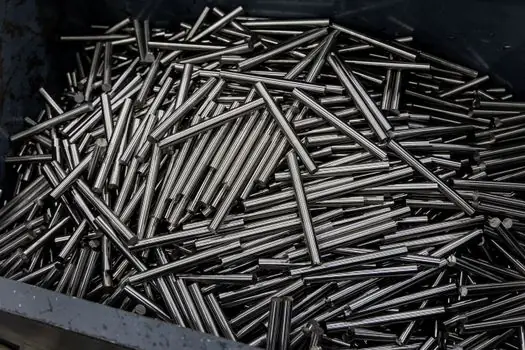
Hot Box uses no catalyst. Le Sueur's process description is explicit: "There is no catalyst used. Instead, heat is used to activate a resin binder" [S3]. The same point is echoed by Primafond, which positions the process around the 180 to 240°C box temperature without any amine gassing step [S1].
Cold Box is the amine-catalyst reference point. Sand enters unheated and below 30°C, a phenolic urethane binder cures in under a minute when a vaporized tertiary amine, typically TEA or DMEA carried in dry air or nitrogen, is purged through the core [S2][S3][S7]. Warm Box is the hybrid: a catalytic or co-reactant system is commonly present, but the box itself is warm rather than hot, and the cure is split between box and dryer. Foundries choosing between them are effectively choosing between zero catalyst at high temperature (Hot Box), catalyst vapor at room temperature (Cold Box), and a warm-box pre-cure plus external finish (Warm Box) [S4][S5].
Decision matrix: temperature, catalyst, cycle, fit
Side by side, the three processes split cleanly on four criteria that matter on a foundry floor: [S2]
Cure temperature: Hot Box 180 to 240°C, Warm Box pre-warm only (below Hot Box, above Cold Box), Cold Box under 30°C sand inlet [S1][S2][S5].
Catalyst: Hot Box none, Warm Box typically present, Cold Box vaporized tertiary amine purged through the core [S1][S2][S3][S5].
Cure location: Hot Box inside the box, Warm Box starts in box and finishes in a separate dryer, Cold Box inside the box at room temperature [S2][S3][S5].
Cycle time: Hot Box and Cold Box are both rapid, with Cold Box cores reported to form in under a minute versus 15 to 20 minutes for some furan systems [S7]; Warm Box cycle is dominated by the post-cure dryer step and is therefore typically longer than Hot Box but shorter than conventional shell [S5].
Tooling impact: Hot Box and Warm Box both run heated boxes, so tool material, heating channels, and venting are critical; Cold Box avoids the thermal load entirely, which is why it holds a market share above 60% of core production [S2].
Where each process fits and where it does not
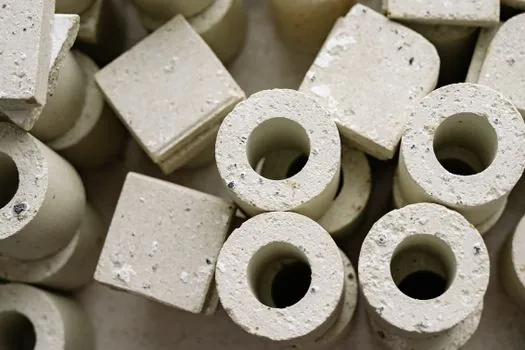
Hot Box fits iron, aluminum, and magnesium foundries running thin-wall shell cores at high volume, especially where the line already has amine-sensitive parts or limited gas-handling infrastructure [S3][S4]. It does not fit operations that need large, solid cross-section cores, since Hot Box only hardens a shell and the uncured interior must be poured out [S3].
Warm Box fits mixed-sand foundries that want some of Hot Box's speed with a cooler tool and a broader binder menu, and where floor space for a post-cure dryer is acceptable [S4][S5]. It does not fit shops trying to eliminate catalyst gas entirely, since most Warm Box systems still rely on a co-reactant or acid catalyst package to complete cure.
Cold Box fits high-mix, tight-tolerance cores, including those with thin walls and complex geometry, and is the dominant process by volume [S2]. It does not fit foundries that want to avoid amine gassing equipment, vapor scrubbing, and the BTX-emission controls that come with phenolic urethane binder systems [S2][S8]. A 2020 Foundry Magazine expert column makes the trade explicit: Cold Box's "no heat" requirement is the overwhelming advantage, and amine-catalyst curing is what enables it [S8].
Standards, sourcing, and equipment signals to track
No international standard numbers governing Hot Box, Warm Box, or Cold Box core-box temperatures appear in the cited sources, so temperature and catalyst numbers above should be read as process-industry practice rather than regulatory minima. Sourcing decisions in 2026 are driven by equipment builders such as EMI (Hot Box, Warm Box, Inorganic core machines [S4]) and by resin suppliers serving the Warm Box and Cold Box binder markets.
Trackable signals include Warm Box energy-consumption case studies from equipment builders, resin supplier data sheets for furfuryl-based Hot Box systems, and amine-catalyst regulatory pressure on Cold Box installations, which has been the main environmental driver pushing some foundries back toward inorganic and Warm Box routes [S2][S4][S8]. For a wider look at how Warm Box compares with hot- and cold-chamber die casting equipment, the vertical squeeze vs cold chamber die casting spec verdict offers a useful contrast in cycle-time and energy tradeoffs. Foundries standardizing core-box tooling can also reference the pneumatic cylinder datasheet reading guide to keep actuator selection aligned with the higher clamping and ejection forces that Hot Box equipment typically demands.
Component reference pages worth checking: hot chamber machine.