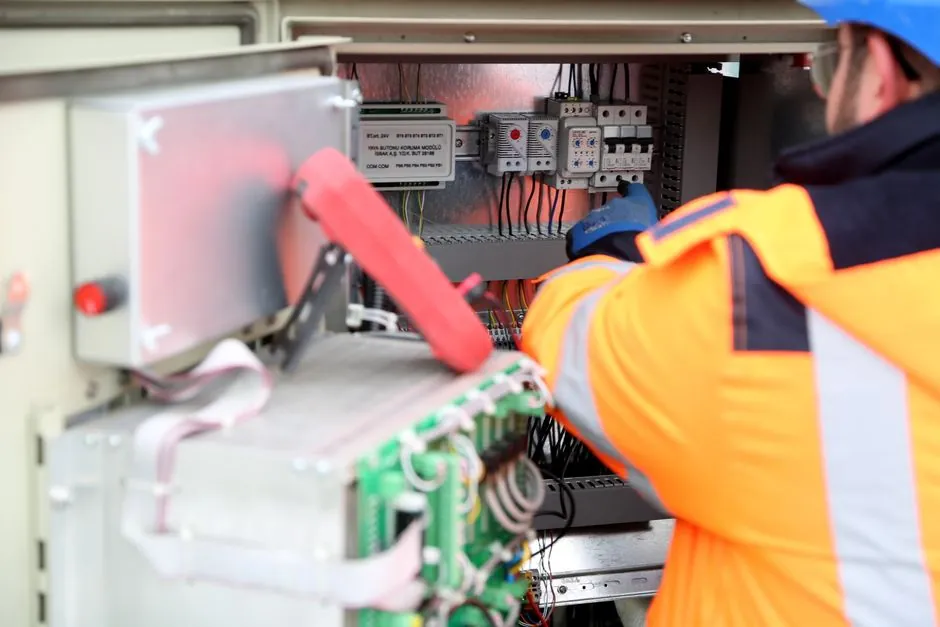
A vertical lift module generally stops powered movement during a power outage, so dedicated backup power is needed only when safe access, controlled recovery, or continued fulfillment cannot be provided by the site electrical design [S2].
The Modula VLM is a fully automated vertical storage system that stores goods, automatically delivers them to operators at an ergonomic retrieval height using a Copilot controller or barcode scan, and handles up to 140 trays per hour with tray payload capacity up to 2,200 lb.
Power loss stops automatic movement
Loss of electrical power removes the VLM's extractor and control functions, so powered tray movement stops rather than continuing under an emergency supply [S2]. The recovery procedure depends on the equipment configuration, control system, safety features, and site requirements, meaning that a generic statement such as “the VLM will restart after power returns” is not a valid procurement assumption [S2].
A complete design must identify whether a tray is between shelves, partly extracted, or parked at the access opening when power fails [S2]. It must also define whether personnel can withdraw a tray manually, whether the carriage can be mechanically released, and who authorizes re-energization [S3]. Kardex identifies light-curtain protection, automatic shutter doors, controlled tray extraction, reduced-speed handling, and manual extraction for oversized or difficult products as safety functions [S3].
Backup power is therefore not synonymous with automatic restart. It can preserve safe positioning, enable controlled extraction, maintain communications, or keep the storage system available during the outage, but each function requires a specified recovery sequence [S2][S3].
Four decision criteria for backup power
The first criterion is consequence: a VLM supporting life-critical parts or continuous production has a stronger continuity case than one used for routine warehouse replenishment [S5]. The second is recovery time: if operators must manually retrieve inventory before production restarts, an uninterruptible power supply or generator-backed branch may be justified even when full extraction capacity is unnecessary [S2].
The third criterion is electrical architecture. Published equipment options include 240 V single-phase, 240 V three-phase, and 48 V three-phase configurations, so the backup system must match the selected VLM and its controls rather than provide an unspecified “battery backup” [S1]. The fourth criterion is installed cost and maintenance, including battery capacity, inverter and transfer equipment, switchgear, enclosure, monitoring, replacement intervals, and space consumed beside the module [S2].
Published VLM capacity makes clear why full-power backup can be expensive: one Modula configuration reaches up to 140 trays per hour with tray payloads up to 2,200 lb. Backup sizing should therefore start with the required outage function, not the module's maximum production throughput.
Compare backup-power strategies
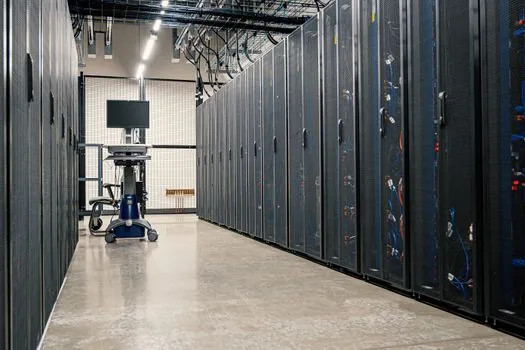
A utility-supported VLM without a dedicated backup source has the lowest capital and maintenance burden, but powered movement stops during an outage and recovery remains dependent on the site and manufacturer arrangement [S2]. A generator-backed supply can support a restart after an interruption, but starting delay, fuel availability, electrical protection, and operator-controlled recovery still affect continuity [S2].
A UPS is appropriate where control power, communications, safe shutdown, or controlled extraction must continue without generator start time. A battery-backed ride-through system can also bridge a generator transition, but battery sizing must be tied to the load and required duration. These engineering comparisons address function, response, maintenance, and footprint rather than treating every outage as identical.
The option table below summarizes the technical trade-off:
No dedicated backup: No added battery or generator package; powered movement stops during an outage; suitable where manual or scheduled recovery is acceptable [S2]. UPS-backed controls: Preserves control and communication functions; supports safe-state handling and possibly selected extraction; requires load and runtime calculation. Generator-backed branch: Can support normal operation and restart; introduces start delay, fuel, controls, and test obligations. UPS plus generator: Covers short interruptions and longer outages; combines battery and generator capital cost, so it needs the strongest operational case.
Who needs backup and who does not
A dedicated supply is justified when a stopped VLM would create a safety issue, interrupt a production line with no viable alternate picking method, delay urgent maintenance spares, or prevent the facility from meeting a documented continuity target. The VLM itself is suited to small parts, slow and medium movers, MRO spares, tooling, and kitting, where density and accuracy matter more than maximum picks per hour [S5].
A dedicated supply is less compelling for a low-criticality warehouse with duplicate storage locations, manual retrieval procedures, scheduled shutdown windows, and no production dependency. Manual extraction can support oversized or difficult items, but that option does not automatically provide the same throughput or repeatability as powered retrieval [S3].
Operator ergonomics is not a sufficient reason to specify backup power. Bringing trays to an adjustable picking position reduces lifting, bending, stretching, climbing, and walking, and can recover up to 85% of floor space compared with conventional shelving [S3]. Those benefits continue when electricity is present, but an outage does not create an additional need for powered operation unless the site has defined a specific recovery requirement.
Safe recovery depends on more than battery capacity
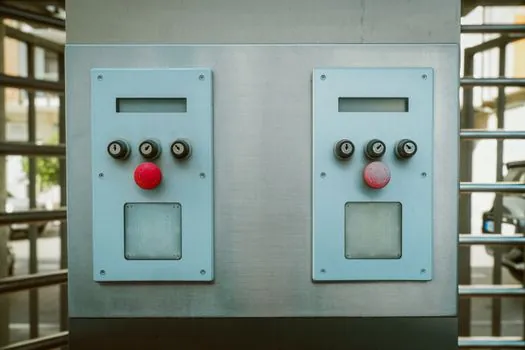
Safe recovery begins with an electrical one-line diagram, listed load data, control voltage, fault-clearing method, disconnect location, and battery or generator runtime [S1][S2]. The design must also document the machine's physical state after interruption and identify whether a technician should restore it before normal operation resumes [S2].
Light curtains stop tray movement when an object or person enters the protected opening, while shutter doors remain closed while trays travel inside the machine [S3]. Backup power must not defeat those functions or allow uncommanded movement. Controlled extraction and speed settings also need to remain available if fragile inventory is handled at reduced speed [S3].
Facility planning must check floor loading, fire protection, and guarding at the access opening before installation [S5]. A VLM can provide lockable storage and tracked access for high-value material, so loss of power also creates a security and inventory-control condition, not merely a production delay [S4].
Specify the outage requirement before buying backup
Write the operating requirement before selecting equipment: state the maximum outage duration, the minimum functions to preserve, whether safe shutdown is sufficient, and the required recovery point. This converts “do we need a backup battery?” into a measurable load, duration, and response specification [S2].
Then validate that requirement with the VLM supplier and electrical engineer. Electrical demand, installation footprint, recovery behavior, and controls integration must be matched to the actual model.
Track two signals after commissioning: measured interruption behavior for each operating state and the time required for a controlled return to service. If either value breaches the facility's stated continuity threshold, revise the backup architecture rather than accepting an improvised manual restart.