
A mesh belt conveyor should use side guards or skirting when fines, lumps, or off-center loading can escape the belt edges, because loss of only 1% of conveyed product can increase operating cost [S5].
The decision depends on material size, belt speed, loading method, transfer geometry, walkway exposure, and containment performance, rather than on mesh construction alone.
Separate Product Containment From Personnel Guarding
Side guards serve product containment, while machine guards protect people from hazardous moving parts. Under 30 CFR §56/57.14107(a), moving machine parts must be guarded to protect persons from contacting gears, sprockets, chains, drives, head, tail and take-up pulleys, flywheels, couplings, shafts, fan blades, and similar moving parts that can cause injury.
A side guard must not be treated as a substitute for guarding a drive, head pulley, tail pulley, take-up, bend pulley, return roller, or power-transmission component.
For a mesh conveyor, the engineering question is therefore twofold: determine whether the cargo needs an edge seal, then determine whether personnel need an independent barrier against dangerous access. A low side skirt may control material without protecting someone reaching into a nip or exposed drive.
When Side Guards Are Justified
Side containment is justified when the loading system can place material beyond the belt centerline, the product includes fines or irregular lumps, or transfer-point impact causes material to rebound toward the belt edges. Transfer skirting is specifically intended to seal the load zone against material spillage and dust [S2].
Additional warning signs include belt sag between support rollers, visible lateral movement, uneven loading, damaged skirt rubber, material accumulation at the frame, and repeated cleanup around the discharge area. The field condition that spillage is present is more persuasive than assuming that a mesh surface alone will retain the load.
Side guards become more defensible where the conveyor is beside a walkway, an inspection area, or a combustible-material handling zone. Spilled rock can reduce clear walking space and create trip hazards, while spilled material can also lead to slips, falls, housekeeping problems, and unexpected shutdowns [S2][S3].
Compare the Main Containment Options
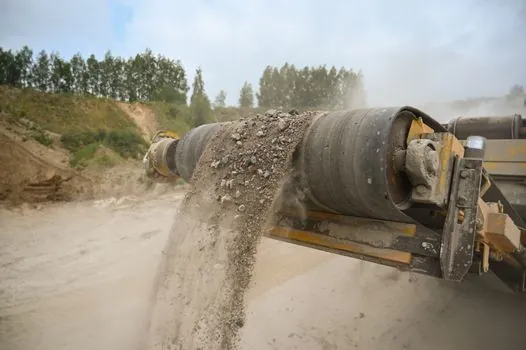
Skirting is the primary option for sealing a transfer or load zone, spill trays or catch pans are secondary collection measures, and side guards are best treated as a defined barrier where material can leave the belt edges. Spill containment trays, side guards, and catch pans are described as additional safeguards for collecting escaped material [S6].
The comparison is not a contest between guards and skirting. A practical system often uses a supported and maintained skirt at the load point, a side guard where larger product can escape, and a catch pan as backup. The installed dimensions, material, and access clearances must be matched to the product rather than copied from a generic layout.
Mesh Belt Does Not Solve the Root Causes
A mesh belt can improve drainage, airflow, and screening, but its open structure does not automatically prevent side spillage. Proper support remains critical because fines and lumps can work through the belt edges when the mesh belt sags or flexes under load [S3].
Spillage can also begin with improper belt tension, inadequate load-zone sealing, overload, mistracking, product surge, or neglected load-zone components [S5]. Edge sealing is effective only after the belt is stabilized, tracked, and held flat. An adjustable skirt clamp can make worn rubber easier to lock, release, and replace [S5].
Keeping the loaded material centered is a primary operating requirement, and a maintained load zone can improve spillage control, belt wear, dust emissions, mistracking, and downstream component condition [S5]. Guarding a mistracked conveyor without correcting alignment changes where material spills, rather than reducing the loss.
Design for the Load, Impact, and Maintenance
Impact cradles, impact beds, sliders, and properly supported skirting help contain material and reduce impact loads on the belt [S2]. ATLAS is a customized, machine-welded steel impact cradle with removable sides that is compatible with SUPER-SCREW, ISC, and FIX'N GO.
The guard height, seal gap, skirt material, and impact geometry must reflect product characteristics. Fine powders demand effective sealing and dust control, while large or jagged pieces can damage flexible rubber or create impact loads. The mesh belt conveyor should remain flat under the calculated load, with support arranged to prevent lateral movement.
Installation details matter as much as guard presence. Side guards should not obstruct loading, inspection access, belt tracking adjustments, or removal of worn skirt blocks. A machine-welded impact cradle with removable sides allows installation in the presence of the belt [S2]. Access to the load zone must allow crews to find and correct damaged seals rather than treating spill accumulation as acceptable housekeeping.
Match the Containment Strategy to Consequence
A short trial or a belt conveyor baseline can establish the rate and location of loss, but for bulk-material projects the belt conveyor design should define the load zone, support, sealing, transfer geometry, and cleanup interface before guard dimensions are frozen. [S2]
WISH guidance notes that conveyor side guards may also be required depending on belt speed and trapping points, including gaps between perpendicular slats fitted to a conveyor [S7]. That makes product containment and personnel safety interdependent on high-speed or slatted systems. A guard intended only to retain cargo may still need guarding review if it creates an accessible trap or pinch point.
The strongest specification is the one that identifies the failure mode. If fines escape at a transfer, specify a supported, maintainable skirt. If pieces roll off an off-center load, specify a side barrier sized for that product. If escaped material presents a walkway or fire consequence, add trays, enclosure, or separation. Use the design detail from spillage control at transfer points only where roller interaction is part of the transfer, since guarding rules change with the conveyor configuration.
Verify Performance Before Acceptance
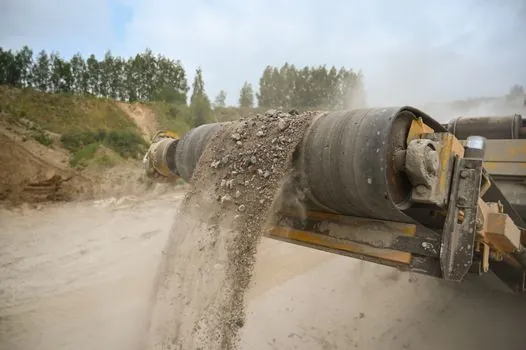
Acceptance testing should include a full load at the intended belt speed, with observations at the infeed, transfer, discharge, and walkway interfaces. Record side escape, dust release, impact noise, belt tracking, edge support, skirt contact, and cleanup volume. A guard that looks effective under a controlled trickle may fail during a surge or when the mesh belt deflects. [S2]
Inspection records should cover belt tension, tracking, roller support, skirt condition, clamp adjustment, fastener security, and accumulated spillage. The cited example of an emergency-stop cable stretched beyond effective reach shows why housekeeping and functional checks belong in the same inspection routine as containment hardware [S3].
No single line item proves that guards are necessary. The defensible decision combines measured spillage, identified failure mechanisms, personnel exposure, material value, dust risk, and maintenance access. That record can show why a skirt alone, a side barrier, or a layered containment system was selected, and it gives operations a clear basis for changing the arrangement when product or throughput changes.