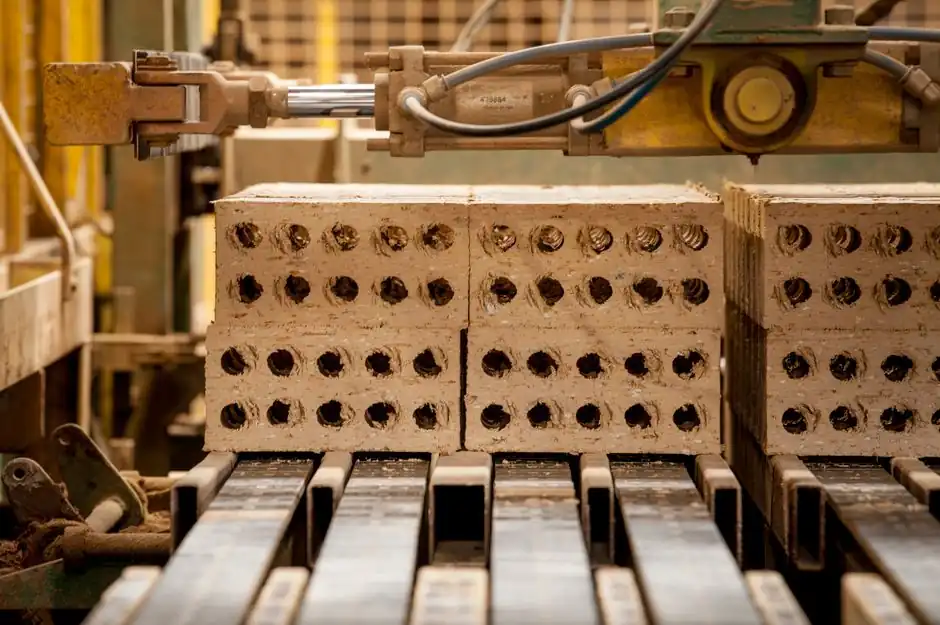
An automatic injection molding line becomes economically stronger as annual volume rises because multi-cavity tooling, faster cycles, and lower direct labor reduce cost per good part, with a modeled break-even driven by tooling, machine time, labor, material, and scrap.
The practical threshold is not one universal part count: high-volume production is commonly defined as 100,000 parts or more, but the faster payback depends on cycle time, cavities, shifts, labor savings, defect rates, and the cost of the automated cell.
Production volume and the automatic molding line
A short-run mold might produce 500 parts, while a high-volume production run can exceed one million parts [S1]. An automatic molding line fits this transition because automation converts a one-shot manual process into a repeatable system with controlled material delivery, machine handling, inspection, and downstream handling [S4].
That range is the first engineering check for payback. A 10-second cycle produces six times as many theoretical shots per hour as a 60-second cycle, so automation cannot overcome a poor cycle design by itself.
Why high volume shortens the payback period
At 100,000 or more parts, fixed tooling and automation costs are distributed across a larger output base, while robotic handling reduces direct labor per unit and automated material metering improves consistency [S1][S3][S4]. The economic mechanism is straightforward: the same automatic system can complete more good parts per paid operating hour without adding the same amount of manual handling.
Automation also supports continuous production. Properly maintained automated systems can operate 24/7, while robotic loading, unloading, sorting, stacking, and inspection reduce interruptions and handling damage [S4]. A second 8-hour shift adds another 16 operating hours without duplicating the complete manual staffing arrangement, assuming the cell, mold, resin supply, inspection system, and downstream equipment have sufficient capacity.
The payback calculation must use good output rather than gross shots. For a 2-cavity mold at 30 seconds and 8 hours per day, gross output is 1,920 parts. At 5% scrap, net output is 1,824 parts, so the same theoretical annual schedule loses 96 parts per shift [S1]. More cavities increase throughput but also increase tooling complexity and cost, making cavity count a design compromise rather than a free productivity gain.
Comparison by volume, cycle, labor, and tooling

The main options are manual molding, a semi-automated cell, and a fully automatic molding line.
For cost per part, divide annual production cost by annual good output. Annual production cost should include amortized tooling and automation capital, machine energy, resin, direct labor, maintenance, quality control, and secondary operations [S3]. The automatic line gains an advantage when its lower labor and scrap costs plus its higher effective output exceed those fixed-cost additions.
Which costs determine the return
Tooling design, fabrication, and testing are often the largest upfront injection molding investment, and complex or multi-cavity molds can cost substantially more [S3]. That choice changes the payback horizon, so a low-price mold that needs rebuilding can erase the apparent savings from automation.
Material cost is controlled by resin grade, shot weight, and scrap. Commodity resins are less expensive than engineering or high-performance grades such as PEEK or carbon-filled resins [S3]. Cycle-time reduction also reduces energy and machine-hour exposure per good part. Simplified geometry and reduced wall thickness can shorten cycles and lower material use, while consolidating parts can reduce assembly labor and the number of molds required [S3].
Labor is not simply the hourly wage. Setup, operation, maintenance, troubleshooting, inspection, testing, and validation all carry a cost [S3]. Automatic material metering can repeat shot volume, pressure, and timing more consistently, while vision systems can orient parts and detect dimensional errors [S4]. The defensible saving is the difference between fully loaded manual hours and the residual hours still required to supervise, feed, inspect, and maintain the cell.
Where automatic molding lines do not pay back quickly
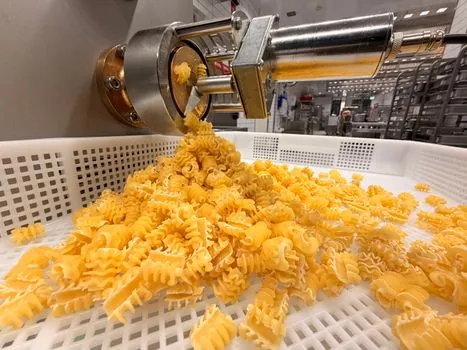
An automatic molding line is poorly matched to low, unstable, or highly customized volume because its tooling and equipment investment must be recovered over fewer parts or through more frequent changeovers. Short-run production can use aluminum or soft-steel tooling with lower entry cost, while a high-volume run can justify more durable tooling and a larger automated system [S1].
The process also faces physical constraints. Cycle time of 10 to 90 seconds is not guaranteed for every geometry, and thick or complex parts can extend cooling and ejection time [S1]. Multi-cavity tooling raises output per shot but also raises mold cost [S1]. Poorly balanced runner design or inadequate clamping capacity can therefore erase the gain that an automatic cell was intended to create.
Quality failures also stop the apparent 24/7 benefit. Automated equipment can alert operators when parts malfunction or require inspection, but it does not remove the need for metrology, process control, maintenance, or qualified troubleshooting [S3][S4]. A line with frequent jams, mold changes, or dimensional rejects may run more hours while producing fewer saleable parts.
A defensible payback test
Calculate net output from cavities, cycle time, scheduled run hours, planned downtime, and scrap. A useful first estimate uses the documented relationship of 2 cavities multiplied by 120 shots per hour multiplied by 8 hours, producing 1,920 gross parts and approximately 1,824 usable parts after a 5% scrap allowance [S1]. Extend that schedule across actual shifts and annual demand, then deduct setup and planned maintenance.
Next, compare two totals: the automated cell's annualized cost, including amortized tooling, against the manual or semi-automated process cost at the same good-part volume. Automation is justified when the incremental annual savings exceed the incremental annualized investment. Automatic Molding Line TCO vs Labor Savings: 2026 Cost Breakdown provides a deeper framework for separating capital, operating, labor, and scrap assumptions.
The two trackable signals are net good parts per paid hour and fully loaded cost per accepted part. A 5% scrap allowance on 1,920 gross parts already removes 96 units per shift, while moving from 60 to 10 seconds can multiply theoretical hourly shots sixfold if the mold, material, cooling, ejection, and downstream handling can sustain the shorter cycle [S1]. Validate both numbers on the actual part before committing the capital budget.