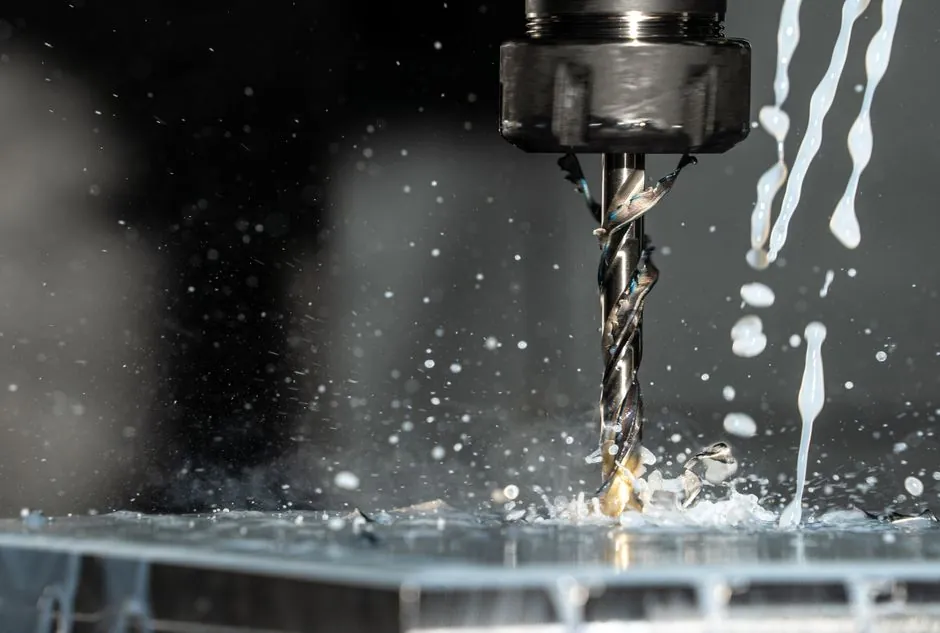
The higher die-casting pressure supports rapid molten-metal filling, while plastic molding combines faster cycles, lower melt temperature, and lower tooling cost for high-volume polymer production.
Pressure and Injection-Speed Selection
Pressure ratings alone do not determine which process fills a cavity faster. Die casting injects fully molten aluminum, zinc, or magnesium and can fill a steel die in a fraction of a second, whereas plastic injection molding uses a screw and piston to push a polymer melt into a shaped cavity [S4].
For cavity filling, the more useful distinction is the behavior of the material. Molten metal in die casting is filled rapidly and then held under intensification pressure during solidification [S4]. Polymer melt cools without a metal solidification front, so injection speed, plasticizing time, packing pressure, and cooling time dominate the cycle [S4].
The practical selection rule is straightforward: specify die casting when rapid metal filling, directional solidification, or pressure-compacted soundness is required; specify plastic injection molding when cycle time, surface quality, dimensional repeatability, and unit cost at volume are the primary targets [S4][S5].
Cycle Time and Throughput
Die casting is suited to medium and large production runs of metal parts, while injection molding is suited to high volumes of plastic components [S5]. Modern injection molding systems can achieve cycle times ranging from seconds to minutes, depending on part geometry and material specifications.
Injection speed should be specified as a fill target, not as a promise of a shorter total cycle. For plastics, the screw must first plasticize the feed material, then fill and pack the cavity; for die casting, the shot system must dose the sleeve and deliver molten metal quickly enough to fill the intended volume [S4][S7].
For housings with thin walls, tool flow balance, venting, melt temperature, and gate design can be more decisive than the headline pressure value. A faster machine cannot correct an unbalanced tool or trapped air, and the die casting machine class includes configurations whose filling performance differs substantially.
Material and Process Comparison
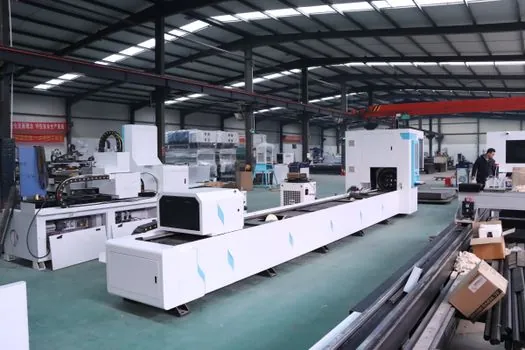
These temperature bands determine tooling, melt-delivery equipment, safety controls, and cycle time.
Die casting is intended for molten non-ferrous alloys, including aluminum, zinc, and magnesium. Plastic injection molding is intended for thermoplastics such as ABS, polypropylene, and polycarbonate [S5]. Metal injection molding is a separate process: it injects metal powder bound with polymer, then debinds and sinters the molded blank, so its tool and post-processing requirements differ from both high-pressure die casting and conventional plastic molding [S4].
On fill behavior, die casting is designed around fractions-of-a-second cavity filling, while plastic filling remains material-, mold-, and machine-dependent [S4]. On mass capability, the aluminum die casting machine route suits metal parts, whereas the static-pressure molding machine is associated with thermoset molding rather than thermoplastic screw injection.
Cost follows the same split. That difference can be outweighed by material, machine, finishing, and post-processing requirements, so tooling cost should not be treated as the full unit-cost decision.
Application Fit and Part Requirements
Choose plastic injection molding for complex polymer housings, consumer products, electronics covers, packaging, and other high-volume parts where a smooth surface, low weight, and economical repeat production matter [S5]. Choose die casting for aluminum, zinc, or magnesium components requiring greater stiffness, mechanical strength, or conductive properties [S5].
Die casting is not the default answer for every metal part. High-pressure die casting is constrained to relatively low-melting-point non-ferrous alloys and is not suited to high-melting-point steel; it is also less suitable for large parts [S2]. Plastic molding is the better fit when the design specifies a polymer and the required production volume can amortize the mold [S2][S5].
The process decision should be made from the drawing. Key questions are what material may be used, what wall thickness and geometry are required, what tolerance and surface finish must be met, what cycle-time target governs the cell, and whether the part can tolerate trimming, machining, or another downstream operation [S4][S5].
For a thin-walled aluminum enclosure, die casting can provide the required stiffness with metal's higher density and thermal behavior, but pressure, fill uniformity, venting, and solidification become critical. For a polymer cover of similar geometry, injection molding generally offers the lower tool cost and shorter 15–60-second cycle envelope, subject to the actual polymer, cooling time, and wall thickness [S1].
Failure Modes and Operating Constraints
Rapid die filling can entrain air when the gating and venting system is poorly designed, while improper control can also create flash, overflow, and incomplete filling [S4]. High metal pressure magnifies tool and shot-system requirements, and the cited die-casting tooling cost reflects the more demanding steel tool construction [S1][S2].
Plastic injection molding has different defects. Thick sections can develop sink marks, uneven cooling can cause warpage, and meeting flow fronts can create weld lines [S4]. A high machine pressure rating does not remove these material-flow risks; mold balance, melt condition, venting, packing control, and cooling design remain essential.
Die casting also requires molten-metal handling and high-temperature furnace capacity, whereas plastic molding uses a hopper, heated barrel, and reciprocating screw [S1][S5]. Operators must therefore match the process control strategy to the machine architecture, including separate intensification or holding behavior for metal solidification rather than treating both systems as identical hydraulic injection systems [S4].
For a production purchase, require the OEM to state whether a quoted pressure is hydraulic line pressure, injection pressure, or cavity pressure. Also request fill-time targets, plasticizing or dosing limits, minimum shot weight, platen and tie-bar dimensions, and the applicable die or mold projected-area limits. These figures make the comparison testable.
Sourcing and Procurement Checks
The decision should be documented using four quoted values from each machine: injection or fill pressure range, maximum injection speed or stated fill time, shot size or shot weight, and cycle-time estimate for the proposed material and geometry. The published ranges provide screening values, 48–172 MPa for die casting and 69–138 MPa for plastic molding, but they do not replace machine-specific commissioning data [S1].
Request process trials using the intended resin or alloy rather than a generic benchmark. For die casting, the trial should examine fill completeness, flash, entrapped air, and solidification; for plastic molding, it should measure fill, pack, sink, warpage, and cycle [S2][S4]. This is especially important where the low-pressure die casting machine category may be confused with conventional high-pressure equipment in an initial quotation.
Track two signals before finalizing the process: achieved fill time at production conditions, and stable cycle time after planned maintenance and changeover. For metal, also confirm that intensification pressure remains effective through the required solidification interval; for plastic, confirm that cooling and pack settings meet dimensional requirements without extending the quoted 15–60-second cycle envelope [S1][S4].
For a related engineering comparison, see Die Casting Machine Hydraulic Pressure and Flow Rating before treating machine pressure as equivalent to cavity-fill performance.