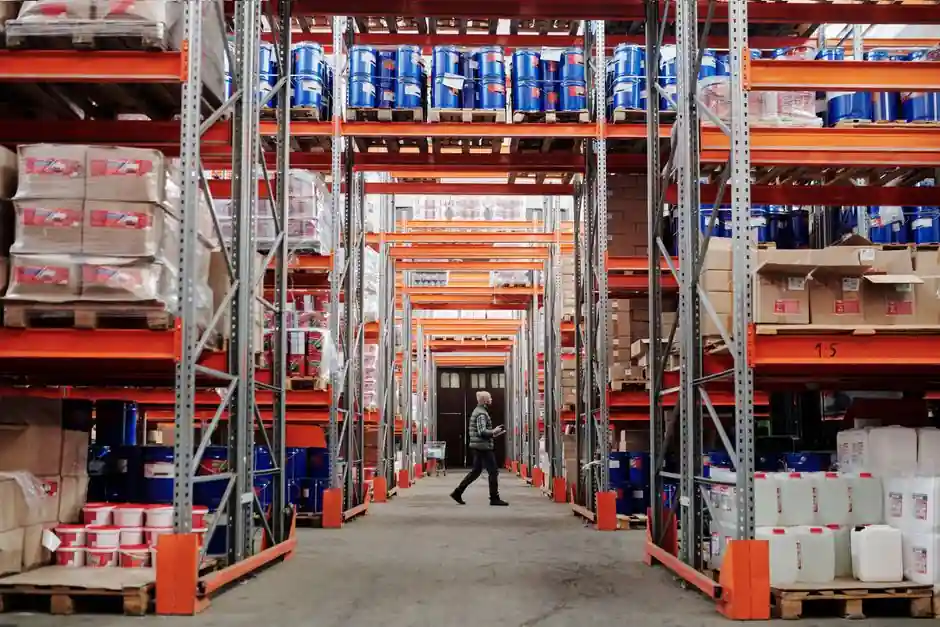
U.S. Standard wooden pallets generally cost between $3 and $35 each in 2026, while the Bureau of Labor Statistics producer price index for wood pallets and pallet containers rose 5.7% from July 2025 to July 2026 [S1][S2].
Buyers face tighter low-grade lumber supply, volatile regional pricing, and added freight costs, although softer demand and excess inventories created downward pressure in some markets during Q3 2026 [S2][S3].
What determines the price of a wooden pallet
Size, grade, condition, construction, treatment, order quantity, and delivery distance determine the unit price. The common U.S. 48×40-inch format costs $10–$35 new, $6–$16 used Grade A, $3–$14 used Grade B, and $5–$16 recycled or rebuilt [S1].
Heat-treated wooden pallets are listed as a distinct pallet type, and custom wooden pallets may cost more based on their specifications [S1]. Pallet size is one of the factors that can affect the cost of a wooden pallet [S1].
These are approximate U.S. ranges rather than guaranteed quotations. Material availability, regional supply, order volume, specifications, and freight determine the delivered price [S1].
Wood supply is tightening despite higher lumber output
The principal pressure sits in low-grade softwood used for pallet manufacturing, not the framing lumber that dominates construction-market coverage.
Industrial pallet lumber prices surged in 2026 as #3 and #4 Southern Yellow Pine supplies tightened and freight costs rose [S6]. Rising low-grade lumber costs were identified as a driver of higher US softwood GMA pallet prices in 2026 [S2].
Grade and condition separate usable cost from sticker price
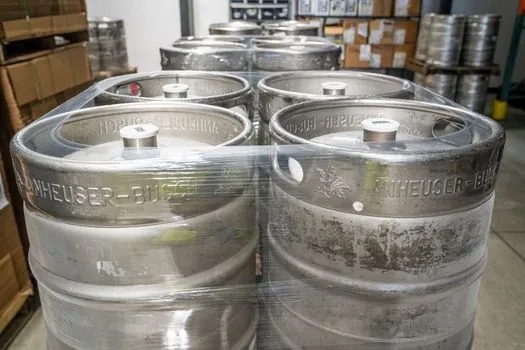
Used 48×40 Grade A pallets averaged $9.04 in U.S. marketplace listings during January and February 2026, compared with $8.33 in 2025 and $6.16 in 2024. The dataset covered 396 suppliers and represented listings rather than audited completed transactions [S4].
Regional listing averages ranged from $5.79 in the Southwest to $10.72 in the West. The Midwest averaged $8.40, the Southeast $8.48, and the Northeast $10.36, although these figures were not matched delivered quotes for identical order sizes [S4].
Grade A generally means intact deck boards, sound stringers, consistent dimensions, and limited repair history. Grade A pallets are structurally sound pallets with intact deck boards, solid stringers, and minimal repair history, and their prices vary with size, region, volume, and stock type [S4]. Grade A carries a premium where appearance, consistent performance, or repeated export handling matters [S4].
Comparing new, recycled, and plastic pallets
One November 2026 comparison placed a recycled 48×40 wood pallet at $27–$29 and a new wood pallet at $46–$49, compared with $50 for an industrial plastic pallet and $155 for a rackable HDPE pallet [S8]. The comparison reflects one supplier’s quoted values rather than a universal market index.
New wood offers consistent dimensions and construction, while recycled wood reduces material cost and waste and can be repaired or remanufactured. Plastic introduces higher acquisition cost but supports designs associated with sanitation, rackability, or consolidated handling, depending on the application [S5][S8].
For repeated shipments, procurement should compare cost per usable trip rather than pallet price alone. New Grade A units may justify their premium when they survive more handling cycles, while Grade B may be adequate for internal movement. Plastic becomes easier to justify where washability, consistent geometry, or specialized rack performance offsets its higher unit cost [S4][S8].
Freight and volume can move the delivered price

Lumber accounts for only one part of the delivered cost. Freight, fuel surcharges, accessorial fees, and taxes must therefore be separated from the base pallet price [S4].
Volume can improve unit economics, but the correct comparison depends on usable output and supply continuity. New pallets may cost $10–$35 each, used Grade A pallets $6–$16, used Grade B pallets $3–$14, and recycled or rebuilt pallets $5–$16 before delivery charges [S1].
A one-dollar change multiplied across hundreds or thousands of units becomes material, but replacement frequency, repair labor, freight, product damage, and internal handling also affect total cost. A lower-priced pallet that requires more trips, repairs, or freight can cost more than a higher-grade unit over a full shipment cycle [S1][S4].
Regional demand and inventory conditions diverge
Global pricing did not move uniformly during Q3 2026. China recorded a significant decline in wooden pallet prices during Q3 2026 as weaker manufacturing activity and higher inventories reduced procurement requirements [S3].
The Chinese correction reflected weaker manufacturing activity, elevated inventories, and adequate finished-pallet availability. Poland experienced a more moderate adjustment as timber availability remained comfortable, while the United States saw a slight decline attributed to adequate industrial lumber availability and contract-based purchasing [S3].
European Q1 2026 pricing was listed at $22.839 per kilogram for wood pallets [S7]. This figure represents a regional market observation with different units and geographic coverage from U.S. per-pallet quotes, so it should not be converted into a direct U.S. comparison without clarifying the included specification and market basis.
Sourcing and treatment requirements must be included in the quote
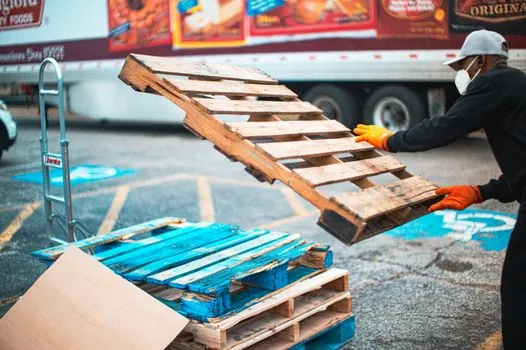
Export buyers should specify ISPM-15 heat treatment when required and confirm the supplier’s certification status. Standard 48×40 GMA pallets are offered in new hardwood, new softwood, and recycled configurations, with heat-treated export options [S5].
ISPM-15 applies to wood packaging moving through international trade. Its requirements should be written into purchase specifications rather than accepted as an unpriced assumption, since heat treatment adds an estimated $1–$3 per pallet [S1][S5].
Procurement should also define whether entry is 2-way or 4-way, the load rating, deck-board configuration, wood species, repair tolerance, dimensions, treatment, and inspection standard. These details distinguish a general warehouse pallet from a tight rack-tolerance unit and prevent nominal 48×40-inch pricing from masking different delivered products [S1][S4][S5].
Trackable procurement signals for the next purchasing cycle are the monthly direction of the wood-pallet producer price index, regional Grade A listing spreads, and the delivered-lumber cost at pallet mills. A broader $3–$35 U.S. range should be treated as a budgeting band rather than a quote, with supplier-specific pricing required for defined size, grade, treatment, quantity, and delivery terms [S1][S2][S4].