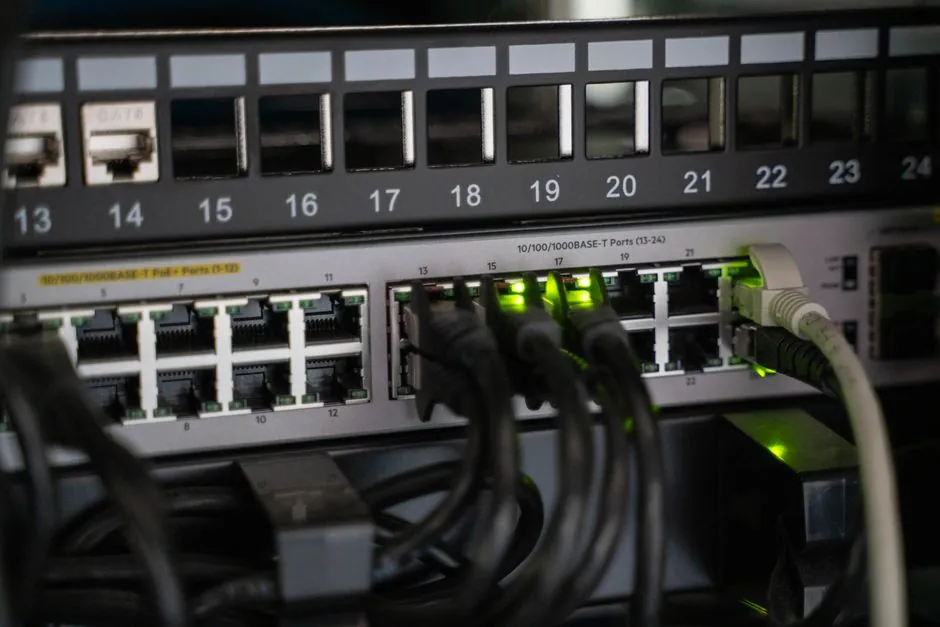
Molex's High-Radix Optical Circuit Switch Platform uses MEMS mirrors to establish optical paths between fibers, avoids optical-electrical-optical conversion, and supports software-controlled workload reconfiguration [S3].
The platform is aimed at AI training and inference fabrics requiring software-controlled reconfiguration, low optical loss and fewer switching tiers, while the broader 2026 merchant market remains concentrated around TPU scale-out deployments [S3][S4].
544-port class addresses scale-up fabric constraints
Availability does not depend on one monolithic optical assembly. That matters for AI fabrics because a transient network failure can interrupt a synchronized accelerator job and create a large operational cost [S4].
The commercial timing remains narrower than the technical roadmap. Cignal AI identified TPU-based scale-out as the only volume application in its 2Q26 assessment and expected it to remain dominant for the next 2-3 years, while GPU scale-up was identified as a larger opportunity for 2028-29 [S4].
MEMS is a serviceability-led supply choice
Molex uses micro-electro-mechanical-system mirrors to establish direct optical paths between fibers without optical-electrical-optical conversion [S3]. This architecture supports protocol-agnostic connectivity, no packet buffering in the switching path and lower electrical switching overhead, while retaining the control and management functions expected from a data-center fabric [S1].
MEMS is not the only OCS actuation approach. The 2026 OCP survey compares robotic, MEMS, liquid-crystal, piezoelectric and silicon-photonics implementations against radix, insertion loss, switching time and scalability [S1].
Radix and switching speed dictate workload fit
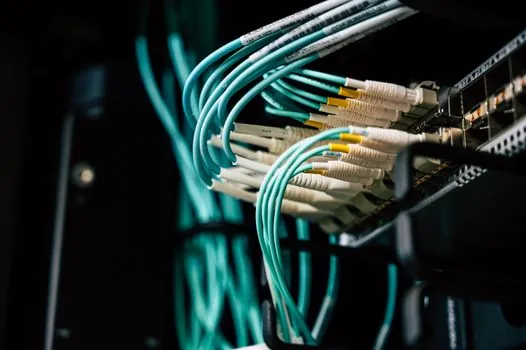
OCS switching is generally performed in the millisecond range, whereas electrical packet switches operate in the microsecond range [S2]. That difference suits training traffic with stable path mappings, including schedules that retain a topology for 30 minutes, 1 hour or several days, but it does not reproduce packet switching behavior for traffic that requires rapid per-packet routing [S2].
Radix is not the only selection criterion. A practical comparison places MEMS platforms against liquid-crystal, robotic or piezoelectric systems on port count, reconfiguration speed, insertion loss and serviceability, with the preferred technology determined by the application rather than by actuator type alone [S1][S4].
Scale-up, scale-out and scale-across demand differs
Scale-up use links accelerators inside a cluster. One documented Google configuration uses OCS to interconnect 9,216 accelerators in TPUv7 pods, compared with 72 GPUs in an Nvidia GB200/300 NVL72 system [S2]. OCS is typically deployed in the uppermost layers of scale-out networks [S2].
Scale-across applies OCS to large data transfers between data centers. In that application, high bandwidth per port and a longer network upgrade cycle can outweigh the desire for frequent reconfiguration [S2]. These demand patterns should be separated before assigning a switch platform or calculating port counts.
Cignal AI's 2Q26 OCS market update analyzes TPU scale-out, emerging GPU scale-up, and OCS port-to-XPU ratios, with significant GPU scale-up contributions expected in 2028/29 [S4]. This means accelerator count alone does not provide a reliable estimate of OCS demand.
Optical power and transceiver choices constrain deployment
Molex states that low insertion loss extends optical reach with fewer amplifiers and regenerators, simplifying the optical power budget for large-scale pods [S3]. This is a system-level constraint because every added conversion stage contributes loss, cost and power, while an all-photonic path removes optical-electrical-optical conversion from the OCS data path [S1][S5].
OCS deployment also changes transceiver requirements.
The quoted commercial threshold also requires optical discipline: a low-loss switch does not remove the need to budget connector, fiber, transceiver and reach losses across the complete path. Molex therefore positions high-radix OCS as a way to simplify power budgeting while reducing the number of electrical switching tiers [S3].
Merchant supply remains the principal 2026 constraint
Cignal AI's 2Q26 update counted more than 20 OCS vendors and expected more entrants from laboratories and startup incubators over the following year, yet near-term revenue remained heavily concentrated in Google [S4]. Its forecast assumed that internal Google development would begin shifting to third-party suppliers over the following year, widening participation in the merchant market [S4].
For buyers, vendor count is less informative than production evidence. Molex identifies proven high-volume manufacturing processes and a global supply-chain capability, while also fielding 16 hot-swappable driver cards and a 544x544 maximum supported configuration [S3]. Those are concrete readiness indicators, but they do not by themselves establish volume output, lead times or delivered capacity.
The OCP assessment found that OCS can reduce electrical switching and conversion complexity, but its deployment still depends on matching switching speed, loss, reliability and optical reach to the workload [S1]. Reliability is the decisive characteristic for AI clusters, while the relative value of radix, switching time and insertion loss varies by application [S4].
Qualification should test failure containment
Qualification for a 544x544-class OCS should test the complete optical path, management plane and maintenance workflow rather than only port count. Relevant checks include insertion loss, switch timing, mirror recalibration, software integration and the isolation provided by hot-swappable driver cards [S1][S3].
Deployment planning should also separate steady-state traffic from reconfiguration events. A training path that remains stable for 30 minutes, 1 hour or several days can absorb millisecond-class switching more readily than a workload requiring continuous path changes [S2]. The expected OCS port count per accelerator should then be derived from the selected TPU or GPU architecture, because the 2Q26 forecast identifies a lower port ratio for Google's next TPU design [S4].
Two trackable signals will determine whether supply readiness is improving: the shift of Google-derived OCS demand toward third-party vendors and the commercial arrival of GPU scale-up deployments, with Nvidia's NVL576 identified as a major integration point [S4]. Until those signals appear in supplier qualifications and purchase volumes, the 544x544 platform represents a documented high-radix option, not proof of broad merchant availability [S3][S4].