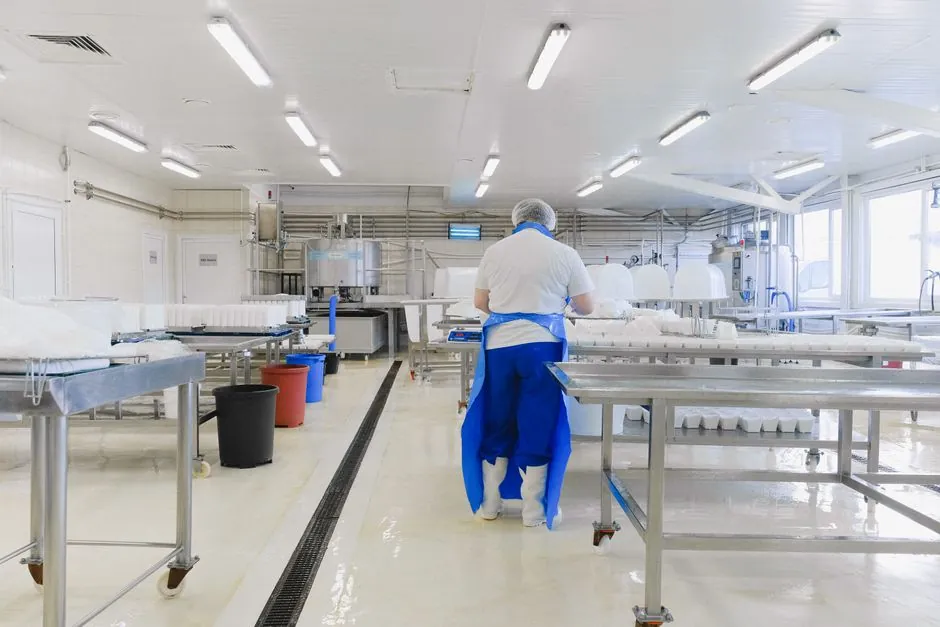
Cleanroom envelope assemblies that incorporate extruded polystyrene (XPS) rigid foam typically declare a thermal conductivity between 0.027 and 0.040 W/mK, with compressive stress classes at 10% deformation between 200 and 700 kPa depending on board density and product family [S1]. These two parameters govern the majority of specification decisions, because cleanroom wall and ceiling panels sit in a controlled humidity and temperature band where moisture uptake and panel deflection directly affect ISO class integrity.
For pharma and semiconductor cleanrooms, XPS is normally specified as the insulated core behind a non-shedding facing, with the board's closed-cell structure limiting water absorption to under 1% by volume, a level that suits continuous 60 to 80% relative humidity operation [S1]. Board thickness is normally driven by the room's thermal set-point delta rather than by structural load, and a comparison map against EPS board and generic insulation board options helps frame where XPS earns its premium.
Why Cleanroom Specs Land on XPS, Not EPS
New XPS boards typically rate R-4.5 to R-5.0 per inch, while the EPS board range lands closer to R-3.6 to R-4.4 per inch [S2]. That gap matters in cleanroom partitions where wall depth is constrained by corridor geometry and return-air plenum height, because shaving 20 to 30 mm off the insulation layer recovers usable internal volume without sacrificing steady-state thermal performance.
More decisive for cleanroom envelopes is the closed-cell structure: long-term water absorption for immersed XPS specimens sits under 1% by volume, while expanded polystyrene's open bead structure pulls several times that figure in the same immersion window [S1]. In a HEPA-filtered envelope with frequent wash-down cycles, the lower absorption translates into a stable R-value over the 25 to 30 year service window, and a stable deflection profile under the laminate facing. Boards arrive with edge profiles such as lap, tongue-and-groove, or shiplap, and these joints must be specified to match the panel system's facing geometry to avoid thermal bridging at panel-to-panel seams [S1].
Compressive Class, Density, and Floor Loads
XPS compressive stress at 10% deformation typically spans 200, 300, 500, 700, and 900 kPa classes, with the 300 and 500 kPa grades covering the majority of cleanroom wall and ceiling panel applications [S1]. Floor-integrated cleanroom slabs that carry rolling carts, portable equipment, or sub-floor return-air plenums generally require 500 kPa minimum, while ceiling-hung modules with rod-hung support framing can usually drop to 200 or 300 kPa, since point loads transfer through the framing rather than the foam.
Density is the lever behind the compressive class. A 32 to 38 kg/m³ board typically maps to the 300 kPa grade, while 40 to 50 kg/m³ boards fall into the 500 to 700 kPa range [S1]. A practical spec rule: for cleanroom panels with a single-layer cementitious or gypsum facing, density above 35 kg/m³ and compressive class 300 kPa is a reasonable minimum to limit creep under sustained point load. Specifiers who want a side-by-side of board-class selection across building types can compare against the XPS Board Selection for Commercial Buildings: 2026 Spec Map reference grid.
Fire Behaviour and the Outgassing Question
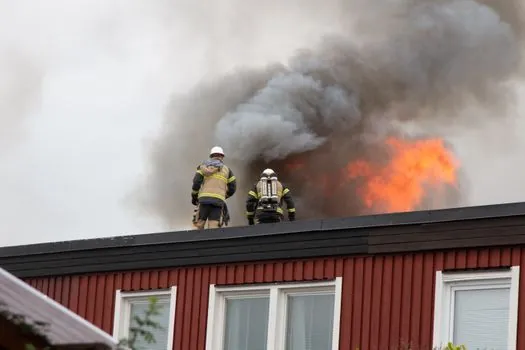
XPS is generally combustible and requires separation from ignition sources, fire-rated facings, or intumescent coatings in any occupied assembly [S1]. The closed-cell structure that delivers moisture performance does not improve fire performance, and cleanroom specs therefore wrap XPS in non-combustible facings rather than relying on the foam for any fire contribution. Specifiers should treat the foam as a thermal and vapour layer, with the fire rating carried by the panel facing system.
Outgassing is the unstated risk: XPS produced with HCFC or HFC blowing agents retains residual blowing agent in the cells, and the slow diffusion over the first 5 to 10 years can elevate total volatile organic compound counts inside an ISO Class 5 or cleaner room. CO2-foamed XPS production lines, where supercritical carbon dioxide replaces legacy blowing agents, address this concern at the manufacturing step and are now a standard equipment offering from multiple Chinese lines [S3]. For new cleanroom builds, asking the board supplier for blowing-agent identity and accelerated outgassing test data is a cheap check that avoids a decade-long VOC bleed.
Edge Profile, Waterproofing, and Joint Detailing
Edge profile selection is more than an aesthetic choice: a tight tongue-and-groove joint reduces convective loop paths behind the panel facing, where moisture and airborne molecular contamination can collect. Lap edges are common in 600 by 1250 mm boards for commercial roofing, but cleanroom wall panels more typically run shiplap or full tongue-and-groove to keep the vapour retarder continuous [S1]. Surface embossing on the bonding face also matters, because a smoother extrusion skin can starve the adhesive bond to cementitious facings.
Compatibility with the project's waterproofing or vapour retarder chemistries is a documented risk, and the supplier literature is explicit: adhesives, primers, and waterproofing compounds must be verified against the specific XPS product to avoid solvent attack on the cell walls [S1]. Solvent-bearing bitumens and certain polyurethane spray foams soften XPS, and a single incompatible product in the bill of materials can debond an entire wall run.
Criteria Comparison: XPS vs EPS vs PUR/PIR for Cleanroom Envelopes
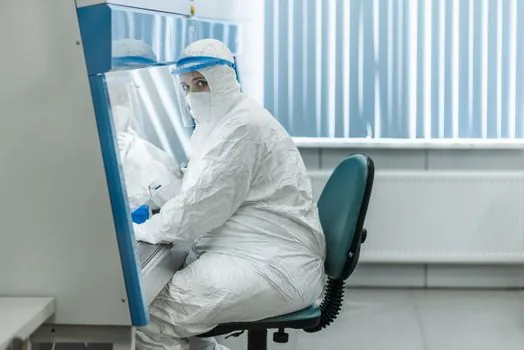
Three insulation families compete for the cleanroom envelope slot, and a four-criteria comparison keeps the decision honest. On R-value per inch, XPS rates R-4.5 to R-5.0, EPS rates R-3.6 to R-4.4, and closed-cell polyisocyanurate typically lands around R-6.0 to R-7.0 per inch [S2]. On long-term water absorption, XPS wins at under 1% by volume, EPS pulls several times that figure, and closed-cell PUR/PIR falls between but with a higher blowing-agent diffusion concern. On compressive stress at 10% deformation, the 200 to 700 kPa XPS window covers most spec points, EPS plateaus near 70 to 200 kPa, and PUR/PIR spans a similar wide window with better fire performance. The cleanroom-specific trade-off is that PUR/PIR's higher R-value per inch lets the wall go thinner, but its fire performance advantage and the legacy HCFC/HFC outgassing issue put EPS and XPS back in the running when the panel fire rating is already carried by the facing system.
Manufacturing Process Note: CO2 Foaming
CO2 foaming technology has moved from a niche process to a standard production-line offering, with supercritical CO2 replacing legacy HCFC and HFC blowing agents in the extrusion step [S3]. The practical spec implication is simple: CO2-foamed XPS can be sourced with a defined blowing-agent declaration, which is the upstream control point for the outgassing question raised above. For projects specifying ISO Class 5 or cleaner, this declaration is no longer a luxury line item.
Specification Watch-Outs and Field Failures
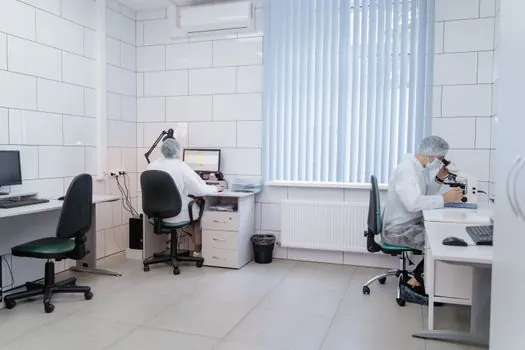
The most common cleanroom XPS failure is bond-line delamination at the panel facing, almost always traced back to one of three root causes: solvent attack from an incompatible adhesive, moisture ingress through a poorly detailed joint, or long-term creep under a sustained point load that exceeded the selected compressive class [S1]. A second common issue is thermal bridging at mechanical fixings, where stainless steel fasteners punch through the insulation envelope and create a 5 to 15% local loss in effective R-value if not thermally broken.
UV exposure during storage and installation is a third field risk: XPS surfaces degrade and yellow within weeks of direct sunlight, and the degraded skin must be removed or sanded before the facing bond, otherwise the adhesive reads the weakened polymer rather than intact foam. Material substitution at the jobsite is a fourth risk, and the specifier should lock both the brand and the product code, not just the generic class, because different 300 kPa XPS products from different lines can vary by 10 to 20% in actual compressive creep performance.
Selection Checklist for Cleanroom Envelopes
A practical cleanroom spec for XPS insulation board lines up as follows. First, declare thermal conductivity in the 0.027 to 0.040 W/mK band and pick a thickness that hits the room's steady-state heat-loss budget at minimum wall depth [S1]. Second, set the compressive class at 10% deformation to 300 kPa for ceiling-hung panels, 500 kPa for floor-integrated slabs, and verify with the panel supplier's long-term creep curve at the design point load. Fourth, require a blowing-agent declaration and accelerated outgassing data, and prefer CO2-foamed product [S3]. Fifth, confirm compatibility with the project's adhesives, primers, and waterproofing chemistries before board release [S1]. Sixth, lock the R-value band at R-4.5 to R-5.0 per inch for cost-effective thickness budgeting against EPS board alternates [S2].
Two trackable signals to monitor: CO2-foamed XPS capacity continues to expand through 2026 as production lines retrofit or build new, and at least one major European XPS producer is documenting long-term outgassing data for ISO Class 5 and cleaner projects, a benchmark that will reshape the blowing-agent declaration as a standard spec line within 12 to 18 months.
The underlying component specifications are covered under xps board.