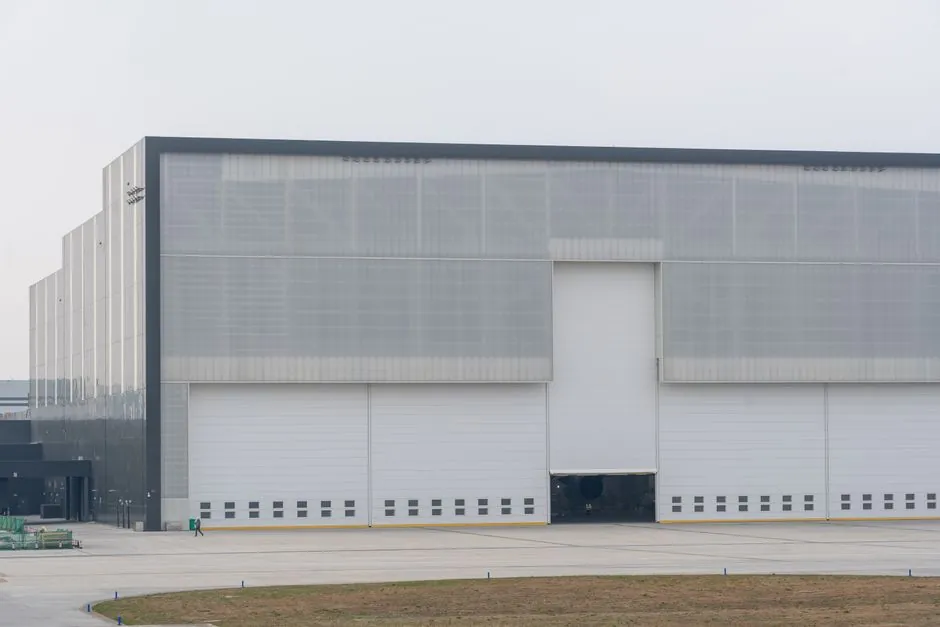
Specifying extruded polystyrene (XPS) insulation for industrial projects comes down to three engineering gates: density tier, declared compressive strength at 10% deformation, and long-term water absorption, all of which must line up with the service environment, from cold-storage floors to inverted-roof loading decks [S3][S9].
Industrial facilities include cold stores, chilled storage warehouses, process buildings, and inverted-roof assemblies, with operating surface temperatures often ranging from -30°C to +25°C and intermittent point loads from pallet jacks, forklifts, and rooftop plant equipment. The reference product category, XPS insulation board, has been a closed-cell rigid foam since DuPont's 1941 invention and continues to dominate below-grade and inverted-roof specifications [S1].
Density tiers and R-value bands
Industrial-grade XPS is typically supplied in 25, 30, 32, and 38 kg/m³ density tiers, with declared thermal resistance of R-4.6 to R-5.0 (per inch) at 24°C mean, per Sto Corp. data, with the higher end of the band corresponding to higher density [S3]. Cold-storage operators should match the 30-32 kg/m³ band to floor and wall assemblies, where the higher R-value per millimetre reduces board count and joint count, both of which are leak paths in refrigerated enclosures [S2][S5].
For roof and freezer-floor assemblies where the structural deck is concrete, a higher density also reduces creep under sustained load, which is a more practical limit than the short-term compressive number on most data sheets. Specifiers should request the 10-year creep-adjusted value (often 60-70% of the short-term compressive strength), not just the headline number, when the application involves sustained point loads from racking or roof-top mechanical equipment [S3].
Compressive strength for inverted-roof and freezer-floor loading
Compressive strength is the second gate: XPS insulation's high compressive resistance allows it to withstand a pressure of >300 kPa, supporting more than 6,144 lbs/ft² (30,000 kg/m²) at a maximum 10% deformation, which makes it a default pick for inverted roofs, rooftop parking decks, and cold-room floors [S3]. In inverted-roof assemblies, the insulation sits above the waterproofing membrane, so it must transmit pedestrian, snow, and maintenance loads directly to the deck without crushing or creeping.
For industrial inverted-roof builds, the 500-700 kPa grade is the common baseline, and the 900-1,000 kPa grade is reserved for areas with vehicular traffic or heavy plant. Compared to polyiso, XPS wins on compressive strength and water behaviour; polyiso typically wins on R-value per millimetre at warm-side temperatures but loses long-term R-value when exposed to moisture, a critical point for cold stores operating with high interior humidity [S6].
Moisture absorption and freeze-thaw behaviour

Water absorption is the third gate: DuPont's published comparison against EPS confirms XPS absorbs significantly less water than EPS, and the closed-cell structure preserves R-value in the presence of moisture, which is the primary failure mode of below-grade and inverted-roof insulation [S1]. Cold-storage envelopes cycle through humidification, defrost, and door-opening events, so any insulation that wicks water will eventually lose thermal performance and become a condensation plane.
Reference figures put moisture-resistant XPS absorption at roughly 0.3% by volume, versus 2-4% for open-cell or expanded alternatives, and grooved-edge boards are available for foundation walls where drainage plane performance matters more than raw R-value [S3]. For freezer floors, the additional step of placing a vapour barrier below the XPS, sealed at joints, is standard practice, because the driving vapour pressure from warm subgrade to cold interior is relentless through any unfaced board [S5][S9].
Selection criteria for cold storage, roofing, and process buildings
For cold-storage floor builds, the practical specification is 30-32 kg/m³ density, 300-500 kPa compressive strength, 50-100 mm thickness in a single layer or staggered double layer, and unfaced or factory-laminated skin, paired with a continuous polyethylene vapour barrier below [S3][S9]. For inverted-roof assemblies, the gate is 500-700 kPa minimum compressive, 25-30 kg/m³ density, and a textured or grooved top surface to support ballast or paving slabs without slip [S3][S6].
For process buildings and equipment enclosures, where thermal performance is secondary to condensation control, 25-30 kg/m³ unfaced XPS at 25-50 mm is typically sufficient. Specifiers working on adjacent cold-chain or industrial refrigeration builds can cross-reference the detailed XPS board selection guide for residential and light-commercial foundations, walls, and roofs, which covers lower-load envelopes and helps differentiate the residential defaults from industrial-grade calls.
Material comparison: XPS vs polyiso vs EPS at a glance
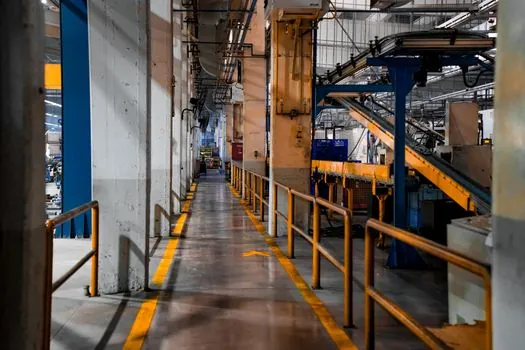
XPS insulation provides thermal resistance with an R-value of 4.6 to 5.0 per inch, depending on density, and a water absorption rate of 0.3 percent [S3]. Polyiso (PIR/PUR) reaches R-6.0 to R-6.5 per inch at warm-side temperatures but drops sharply when wet and rarely exceeds 140-160 kPa compressive, which rules it out for most inverted-roof and freezer-floor applications [S6].
EPS sits at the bottom for both compressive strength (70-100 kPa typical) and water absorption (2-4%), but it is the lowest-cost option for above-grade wall cavity fill where loading is negligible. For cold-chain facilities that pair insulated panels with mechanical refrigeration, XPS is normally selected for floor, ceiling, and external envelope, while polyiso is reserved for internal partitions or warm-side wall layers; when sealing the panel-to-XPS joint, industrial adhesive selection for cold-store construction deserves its own spec pass, since polyurethane and cold-rated acrylics behave very differently at -30°C service [S3][S5].
Sustainability, blowing-agent phase-out, and supplier landscape
Since 1 January 2024, the California HFC prohibition and parallel US federal rules under the AIM Act have forced the major North American XPS lines off legacy HFC-134a blowing agents, and DuPont completed the transition of all North American Styrofoam™ Brand XPS to a low-GWP formulation at the end of 2023, marked by a new grey colour and a 94% reduction in embodied carbon [S1]. European suppliers moved earlier under F-Gas, and BASF, Kingspan, Soprema, and URSA have shipped low-GWP XPS grades across the EU for several years [S4].
The top global supplier list for industrial procurement typically includes Owens Corning, BASF, Kingspan, DuPont, Soprema, URSA, and a Chinese manufacturing cluster led by Feininger, with supply evaluated on density tolerance, declared lambda (typically 0.029-0.036 W/m·K), and EPD documentation rather than brand alone [S4][S9]. For projects chasing LEED v4.1 or BREEAM credits, request the published EPD through UL Environment and confirm the 20% pre-consumer recycled content claim documented by the major North American suppliers, since the low-GWP transition is a verifiable procurement gate, not a marketing line [S1].
Common specification mistakes and failure modes
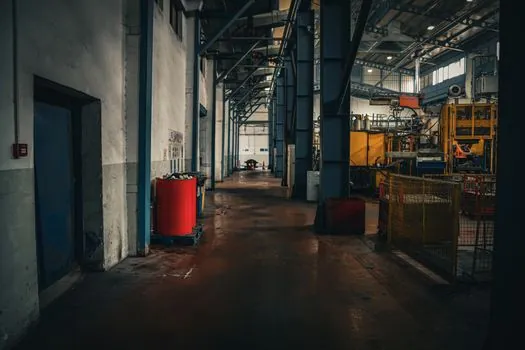
Three failure modes show up repeatedly in industrial XPS installations. First, specifying a low-density, low-compressive board under a freezer floor with forklift traffic, which crushes over 2-3 years and breaks the vapour barrier continuity. Second, leaving joints unsealed or un-taped, which lets water migrate to the membrane side of an inverted roof and then freeze-thaw cycle under the board [S1][S9].
Third, exposing unfaced XPS to direct UV on rooftop plant screens, where the surface degrades within a single season; a foil facing, laminate skin, or weather-resistant cover board solves this.
The next procurement action is to lock the density and compressive-grade call against the project loading schedule, then cross-check lambda at the cold-store design temperature before issuing the PO.
For the relevant spec sheets and selection criteria, see industrial borescope.