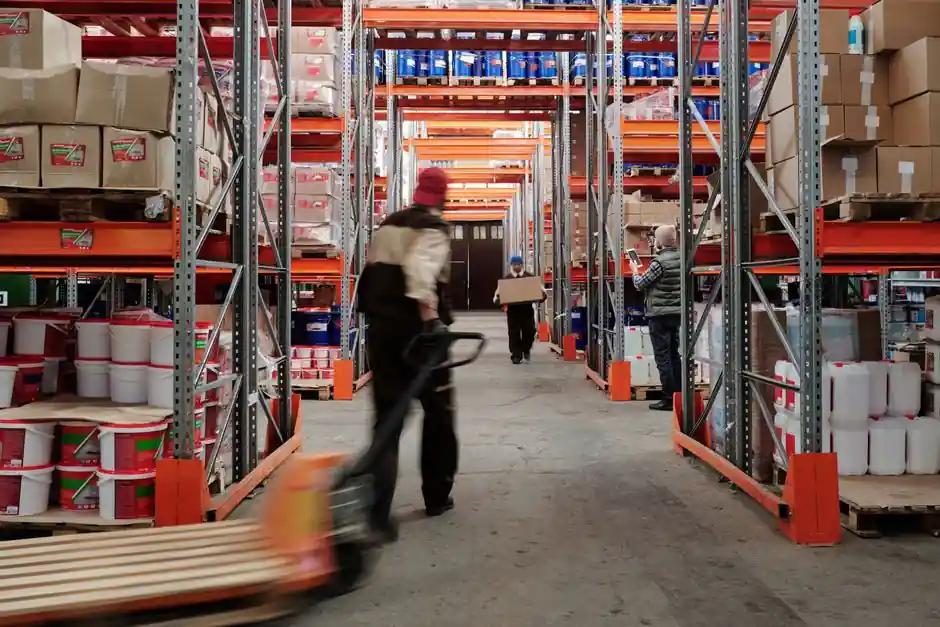
Warehouse rock wool specification is governed by fire rating before R-value: a 100 mm, 100 kg/m³ rock wool core independently achieved 125 minutes of fire resistance in a 2026 Peru logistics-warehouse panel test, exceeding the project's 120-minute REI 120 target [S1].
The 2026 selection picture is shaped by three documents: a 10,000 m² Peru logistics case study dated 2026-02-27, a grain-silo insulation guide dated 2026-07-18 covering warehouse-adjacent storage, and a 2026-04-09 announcement of Rockwool's $175 million Wallula Gap factory in Washington state, the brand's third U.S. plant [S1][S2][S3]. Engineering priorities track the same axis: fire endurance first, thermal R-value second, corrosion third. For the broader insulation context, the rock wool encyclopedia page is the baseline reference for composition, R-value, and density behaviour.
Density and Thickness: 100 kg/m³ at 80-100 mm Sets the Fire Floor
100 kg/m³ at 100 mm is the warehouse fire-rated panel baseline, confirmed by the Peru case where 100 mm thickness delivered 125 minutes of tested fire resistance against a 120-minute project specification [S1]. Rock wool itself can withstand temperatures above 1,000°C without melting or releasing flammable gases, which is why density is the load-bearing variable, not thickness alone [S1]. For roofing and wall panels on logistics warehouses, the working range is 80-100 mm at 100 kg/m³; below that, expect fire ratings to fall under 90 minutes. For comparison, the fire-first logic for cold-storage warehouse envelopes is documented separately in a rock wool panel selection guide for cold storage warehouses, where condensation control shifts the spec to vapour-barrier facing. Rock wool's R-value sits in the R-3.7 to R-4.3 per inch band, a real but secondary data point behind the fire rating [S4].
Fire Rating Logic: REI 120 / EI120 Is the Warehouse Code Trigger
REI 120 (load-bearing, integrity, insulation for 120 minutes) and EI 120 (non-load-bearing variant) are the European fire-resistance class codes most warehouse panel data sheets cite, and the Peru case study explicitly reports EI 120 verification at 100 mm and 100 kg/m³ [S1]. The mineral fibre can tolerate temperatures above 1,000°C without melting, dripping, or releasing combustible volatiles, a property that makes it a default fire-stop and fire-barrier fill in industrial buildings [S1][S2]. Reaction-to-fire tests in independent panels confirm rock wool "does not ignite, melt, or drip", whereas competing materials such as standard PUR/PIR may burn under sustained flame even when formulated with fire retardants [S1]. For warehouses, this means the spec rarely gets simpler than: density ≥ 100 kg/m³, thickness ≥ 100 mm, third-party fire test certificate dated within 24 months.
Facings: Aluzinc Coated Steel Outperforms Galvanized 2x to 4x in Humid Warehouses
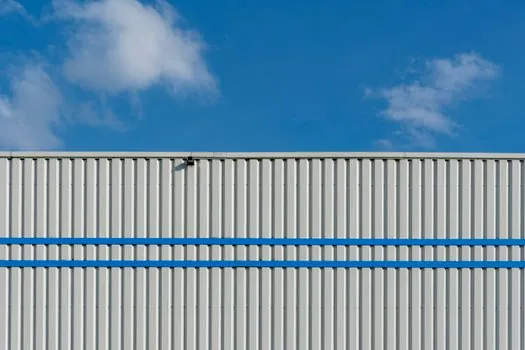
Aluzinc (aluminum-zinc coated, also called Galvalume) steel facings extend service life 2 to 4 times over standard galvanized steel in corrosive warehouse environments, combining zinc's sacrificial galvanic protection with aluminum's long-term barrier resistance [S1]. The Peru logistics project specified Aluzinc plus a protective topcoat because the active warehousing environment carried humidity and chemical exposure from goods handling, conditions that would have visibly degraded plain zinc-coated steel within a few operating seasons. For dry, indoor-conditioned warehouses, standard galvanized G90 is acceptable, but any cold-storage, coastal, fertilizer, or chemical-adjacent facility should default to Aluzinc or aluminum-magnesium coated facings. Sandwich panel facings do the corrosion work, so the facing decision, not the core, often drives total lifecycle cost.
R-Value, Recycled Content, and the Fiberglass Comparison
Rock wool R-value is approximately R-4.0 to R-4.2 per inch, against fiberglass at roughly R-3.0 to R-3.2 per inch, so a 100 mm rock wool layer delivers about R-15.7 to R-16.5 versus R-11.8 to R-12.6 for the same thickness of fiberglass [S5]. Rock wool thermal performance is also stable across the building's lifetime, whereas fiberglass can lose thermal efficiency as it degrades over several years [S5]. On recycled content, brand-specific Rockwool typically contains 16 to 40 percent recycled material, while generic slag-wool can reach up to 75 percent; a Department of Energy estimate of 75 percent average for mineral wool blurs the brand-vs-generic line and is hard to verify product by product [S5]. Manufacturing requires superheating basalt and slag beyond 2,900°F (about 1,593°C), and the resulting fibre can resist temperatures up to 1,400°F with some products rated to 2,150°F without melting, smoking, or igniting [S5]. Melting the source rock takes the cupola furnace to roughly 1,400 to 1,500°C depending on formulation [S4].
When to Use Rock Wool vs Fiberglass vs PUR/PIR in Warehouses
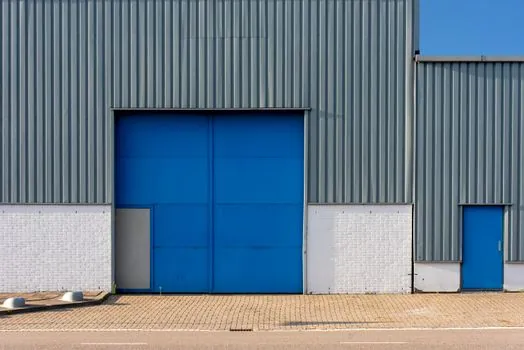
Rock wool wins where fire code is heavy, acoustic damping matters, or the building has high humidity or chemical exposure. The grain-silo guide published 2026-07-18 explicitly recommends rock wool over PUR/PIR for facilities near grain dryers, flour mills, feed mills, or biomass boilers, where fire protection is a primary design driver [S2]. PUR/PIR still wins where the priority is lowest initial investment per R-value and the fire envelope is handled by an external sprinkler or fire-rated structural shell rather than the insulation itself [S2]. Fiberglass is acceptable for budget-driven warehouses with low fire-rating requirements and a dry interior, but the R-value gap of roughly 25 percent means thicker sections or wider stud spacing to hit the same U-value. A useful internal contrast: for noise-sensitive spaces like classrooms, the same logic shifts toward acoustic density targets, detailed in the rock wool selection map for schools, where 40-70 kg/m³ slabs at 50-100 mm cover NRC targets.
Installation Risk and Acoustic Side Benefit
Mineral wool installation carries a known occupational hazard: fibres are an irritant, so PPE (long sleeves, gloves, R95 or P100 respirator, safety glasses) is mandatory when cutting or handling unfaced batts in warehouses without mechanical cladding already in place. Sandwich panels delivered factory-fabricated, like the curved-cut Peru panels, eliminate most on-site cutting and the dust load that comes with it [S1]. Acoustic performance is a real, often unscheduled, side benefit: rock wool's dense fibrous matrix absorbs broadband warehouse noise from forklifts, conveyors, and HVAC, with typical Noise Reduction Coefficient values in the 0.90-1.00 range for 50-100 mm thick 40-70 kg/m³ slabs. The 2026 Wallula Gap factory investment, $175 million for the third U.S. Rockwool plant, signals continued North American capacity expansion, which typically shortens lead times for warehouse-scale orders over the next 12-18 months [S3].
Next verification points: pull the EN 13501-1 or ASTM E119 fire test certificate (must be dated within 24 months) for any warehouse panel quote above 80 mm thickness, and confirm Aluzinc coating mass (AZ150 or AZ185) in writing when the warehouse is coastal, cold-storage, or handles corrosive goods. If the spec crosses into fire-water systems for the same logistics park, the mining and industrial fire-hydrant selection map is a useful adjacent reference for high-flow hose and hydrant sizing on warehouse loading-dock aprons.
Spec-level background on the components involved: pressure transmitter, and flow meter.