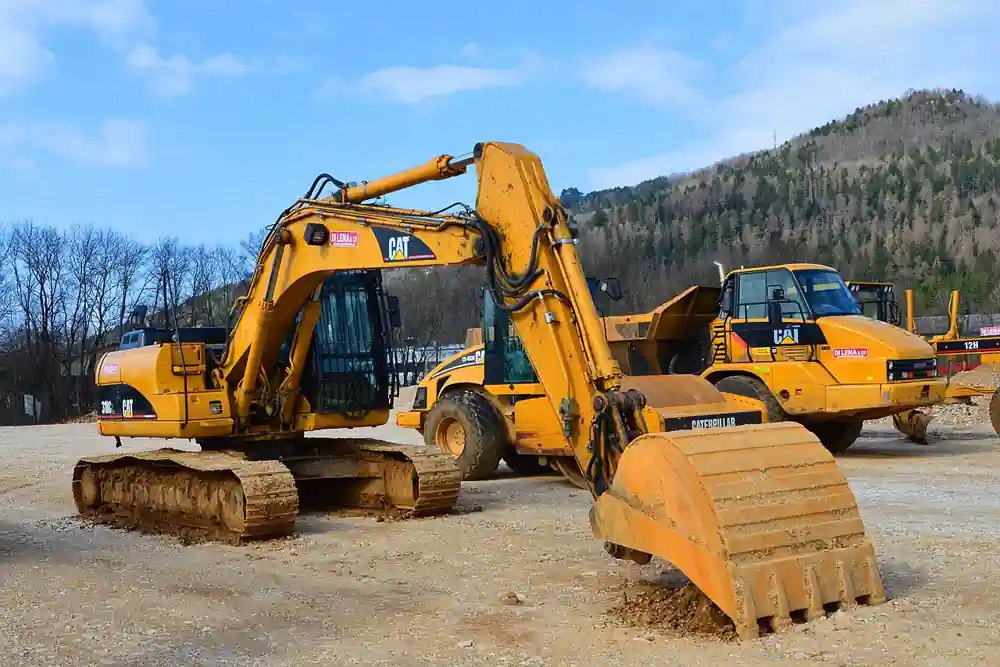
A battery-electric excavator and its diesel twin usually share the same boom, the same stick, the same buckets, and the same dig geometry. What separates them is not digging performance but energy logistics: where the machine gets its energy, how fast it can put that energy back, and how much each stored kilowatt-hour costs over the ownership period. That makes powertrain selection a duty-cycle decision first and a machine-model decision second.
This page is written for procurement engineers and site planners who must commit to one powertrain or the other, often for a mixed fleet. It works through the duty-cycle question, the physics and the honest runtime numbers for each architecture, the machine classes commercially available today, the specification lines that actually predict field behavior, a cost model with hourly energy math, and the field practices that keep a battery machine productive and safe through its service life, from pack thermal management to the condition monitoring system that tracks cell health across the fleet.
This guide is aimed at industrial purchasing and design engineers. It covers 6 chapters from the duty-cycle question and powertrain physics through machine classes, specification decoding, a total-cost model with hourly energy math, and field practice. Standards and regulations referenced include US EPA Tier 4 Final, EU Stage V, ISO 6396 for exterior noise, UN 38.3 for lithium battery transport, and CCS or J1772 charging interfaces.
Chapter 1 / 06
The Duty-Cycle Question
Every powertrain selection starts with a load histogram, not a brochure. An excavator working a short-cycle urban utility job spends much of its shift at low average draw: dig for 20 seconds, swing, place, wait for the next truck, reposition. An excavator opening a trench line or loading a dump truck cycle after cycle runs near continuous high load for hours. The same machine model can consume two to three times more energy per hour in the second job than in the first, and that ratio, not the nameplate, decides which powertrain fits.
The applications where battery-electric excavators already earn their place share a pattern: the duty is intermittent, the site is constrained, and energy is available nearby. Short-cycle urban utility work fits because average draw is low and mid-shift breaks create natural charging windows. Indoor demolition fits because a diesel machine indoors generates carbon monoxide, nitrogen oxides, and particulate that must be mechanically ventilated, while a battery machine produces none at the tailpipe. Noise-restricted city work fits because municipal night-work permits and hospital, school, and data-center adjacency rules are written in decibels, and a quieter machine unlocks work hours a diesel cannot buy at any price.
The applications where diesel keeps a durable advantage share the opposite pattern: sustained high load, no grid, and unforgiving schedules. Long continuous digging on a mass-earthworks project runs the hydraulics at high average power for 10 hours, which pushes most current battery packs past their runtime envelope. Remote sites off the electrical grid have no realistic charging source, and hauling a diesel generator large enough to fast-charge an excavator erases the emissions and cost case. Very high breakout force missions, such as ripping hard pan or secondary rock breaking, load the system with high peaks for long stretches, which favors the energy-dense fuel tank.
A useful framing exercise is to log a representative week of the existing diesel machine and reduce it to four numbers: average fuel per hour, peak load share, longest continuous run between breaks longer than 20 minutes, and annual operating hours. Those four numbers map directly onto battery capacity sizing, charge-power needs, and the total cost of ownership crossover computed in Chapter 5. Fleet context matters too: a site that already runs an electric wheel loader or a compact electric skid steer loader has charging habits and trained operators in place, and a spread that pairs the excavator with an electric dump truck on a fixed haul loop can share one charging point roster. Site infrastructure prices the same way: a power point that also feeds a motor grader on night duty or a cable-connected crawler crane on a quay spreads the feeder and transformer cost across the fleet instead of across one machine.
What is actually being decided, then, is not a machine but an energy arrangement: tank and fuel deliveries versus pack and electrical service. Both arrangements can deliver the same bucket through the same geometry. Only one of them will match your load histogram, your site power, and your permit conditions, and the rest of this page is the process of finding out which.
Chapter 2 / 06
How Each Powertrain Works
In a conventional diesel excavator, a 100 to 160 kW diesel engine in the 20-tonne class drives a bank of hydraulic pumps through a power take-off. Typically two or three pump sections share the drive: main piston pumps for the work circuit, a dedicated pump for swing, and a gear pump for pilot pressure. A load-sensing pressure-flow control system watches the demand from the joystick potentiometers and the hydraulic cylinder strokes on boom, stick, and bucket, then tilts pump displacement to hold pressure just above the highest load. Swing and travel are driven by a hydraulic motor each, with planetary reduction, and the entire upper carriage rotates on a slewing bearing that carries combined axial, radial, and moment loads between carbody and house.
Energy that is not converted to work becomes heat. When the operator arrests a full swing, the swing hydraulic motor pumps its kinetic energy across a relief valve and out through the cooler. When the boom lowers, the potential energy stored in the boom and its load meets metering orifices and leaves the same way. Diesel architecture accepts these losses because the fuel tank holds so much energy: a 350 to 500 L tank at roughly 10 kWh of chemical energy per liter of diesel sustains a full 10-hour shift plus margin, and refueling takes minutes.
The diesel engine also carries an emissions control system. Machines sold in regulated markets meet US EPA Tier 4 Final or EU Stage V with a diesel oxidation catalyst, diesel particulate filter, and selective catalytic reduction dosing diesel exhaust fluid at roughly 3 to 5 percent of fuel volume. These systems add maintenance items, impose regeneration cycles on light-load duty, and are the first components an indoor or urban permit writer looks at.
A battery-electric excavator replaces the engine and tank with a lithium-ion pack in the 300 to 600 V class, typically 250 to 450 kWh in the 20-tonne class, feeding electric motors that drive the same kind of hydraulic pumps. In many designs an electric motor directly replaces the diesel on the pump drive, so the valve blocks, hydraulic cylinder set, and travel and swing hydraulic motor set carry over nearly unchanged. The interesting differences are in energy recovery. Braking a swing with an electric swing drive turns the motor into a generator and puts the swing's kinetic energy back into the pack. Lowering the boom through a hydraulic motor acting as a pump recovers part of the boom-down potential energy that a diesel machine burns off as heat. Combined with near-zero idle draw, these recoveries are why an electric machine draws noticeably less energy from storage than a diesel burns in fuel for the same cycle.
The binding constraint is energy density, and it is not close. Diesel fuel holds roughly 12 kWh per kg of chemical energy; current lithium-ion packs deliver about 0.2 to 0.3 kWh per kg at pack level, including structure, cooling, and battery management. A practical consequence: the stored energy in a fully charged 400 kWh pack equals about 33 L of diesel, while the pack weighs on the order of 2 to 3 tonnes. This forty-fold gap is why runtime, not power, is the number to negotiate in an electric excavator quotation, and why the duty-cycle analysis of Chapter 1 comes before any model comparison.
Realistic runtime for the 20-tonne class is roughly 4 to 8 hours per charge depending on duty. Light utility work with long waits runs at the top of the range; continuous heavy dig in hard material runs at the bottom. Manufacturers quote energy consumption between about 30 and 55 kWh per hour for this class, so a 450 kWh pack covers a full shift of light duty or a half shift of hard production digging. Charging is typically 50 to 150 kW DC, which restores a pack in roughly 1 to 3 hours, and opportunity charging during crew breaks is a designed-in operating mode, not an emergency measure. Site electrical service is therefore a real selection input: a 150 kW DC charger draws on the order of 190 to 210 A at 480 V three-phase and usually needs a dedicated feeder, sometimes a pad transformer, and always a coordinated permitting conversation with the utility.
Attribute
Diesel Hydraulic Excavator
Battery-Electric Excavator
Prime mover
100 to 160 kW diesel engine
Electric motors on 300 to 600 V pack
Stored energy, 20 t class
350 to 500 L diesel, about 3,500 to 5,000 kWh chemical
250 to 450 kWh electrical
Energy density of storage
About 12 kWh per kg fuel
About 0.2 to 0.3 kWh per kg pack
Runtime, 20 t class
10 h plus margin per tank
Roughly 4 to 8 h per charge by duty
Replenish time
5 to 10 min refuel
1 to 3 h at 50 to 150 kW DC
Swing braking energy
Heat through relief valve
Regenerated into pack
Boom-down energy
Heat at metering orifices
Partly recovered via motor-generator
Idle consumption
3 to 8 L per hour fuel
Near zero, auxiliaries only
Tailpipe emissions
NOx, particulate, CO after Tier 4 / Stage V treatment
None
Noise at operator station, typical
80 to 90-plus dB(A)
Often 70 to 75 dB(A)
Emissions hardware
DPF, SCR, DEF dosing
None
Chapter 3 / 06
Machine Types and Duty Boundaries
The commercial electric excavator market currently spans roughly 1.5 to 26 tonnes of operating weight, with the deepest coverage at the two ends: compact minis for indoor and urban work, and the 20-tonne class for general contracting. At the compact end, machines in the 1.8 to 2.5 tonne class carry packs of about 15 to 25 kWh and recharge overnight from ordinary 110 or 230 V outlets, which is what makes them practical for renovation contractors who move between buildings with no site power at all. Examples in current production include 16 to 20 kWh packs in sub-2-tonne minis and a 17.3 kWh pack in a 2-tonne class machine with full-size dig geometry; several manufacturers quote a full shift of typical mini-excavator duty on one charge.
The middle of the range, roughly 5 to 10 tonnes, is where electric variants exist but choices thin out, because packs sized for meaningful runtime in this class are expensive relative to the machine price and the diesel competition is strong. Buyers here should check whether the electric option quotes runtime at a stated duty or at an optimistic light-load cycle, and whether the charger is included in the quoted price.
At the top of the electric range, the 20-tonne class is where the engineering is most mature. One current machine carries a 450 kWh pack at operating weights from about 21 to 26 tonnes with bucket capacities of 0.6 to 1.9 cubic yards, using a CCS2 DC connector. Runtimes quoted across this class cluster around a full shift of utility duty or roughly half a shift of heavy production, consistent with the consumption figures in Chapter 2. Companion machines matter for fleet planners: electric wheel loaders in the 5 to 6 tonne class now carry 200 kWh-plus packs with 5 to 9 hours of runtime, and one 22-tonne electric loader with a 423 kWh pack quotes 8 to 12 hours of operation and a two-hour full charge, which sets the reference bar for what site charging can support across a mixed fleet.
Cable-connected variants occupy a separate niche. A machine on a shore cable, plugged into an industrial socket through a cable reel or gantry, has effectively unlimited runtime within its reach envelope, which suits scrap yards, ports, indoor material handling, and fixed-position sorting or feeding duty. The trade is the cable itself: trip management, swing restrictions, and a work envelope limited by the reel. For duty cycles that stay within a fixed radius, cable power removes the runtime constraint entirely and should be evaluated before committing to a large battery.
Hybrid architectures split the difference. Electric swing with regeneration buffering into a capacitor or small battery, with diesel retained for travel and pump drive, reduces fuel burn on swing-heavy duty without runtime limits. And for fleets with serviceable diesel carriers, a hydraulic retrofit path exists: specialized integrators replace the diesel engine and its aftertreatment with an electric hydraulic power unit driving the existing pumps, keeping the valve blocks, cylinders, and motors untouched. Retrofit suits confined facilities with fixed duty and long asset lives; it rarely matches a purpose-built electric machine on energy efficiency or on integration quality, and warranty responsibility is usually split between integrator and OEM, which procurement must nail down in writing.
Where diesel still wins, stated plainly: remote off-grid sites with no charging source within reach; production digging that must run 10 continuous hours between breaks; and very high breakout force missions with sustained peak loads. In those duties the diesel tank's energy density is not an incremental advantage but a categorical one, and no current pack chemistry changes the arithmetic. A diesel machine also still makes sense as the rescue asset for a battery fleet, a point that reappears in the RFQ checklist of Chapter 5.
General contracting, noise and emissions constrained work
50 to 150 kW DC charging required on site
Cable-connected excavator
Grid feed, no storage limit
Scrap, ports, fixed-position indoor duty
Cable management constrains envelope
Hybrid swing machine
Diesel plus buffer battery or capacitor
Swing-heavy duty needing range independence
Fuel saving partial, aftertreatment retained
Diesel hydraulic, any class
350 to 500 L tank at 20 t class
Off-grid, 10 h continuous dig, high breakout missions
Still the rescue machine for battery fleets
Chapter 4 / 06
Key Specification Parameters
The decode table below lists the specification lines that separate an electric excavator quotation from a diesel one and says what each line means for selection. The core geometry lines do not change: dig depth, reach, bucket capacity, and payload class are set by the carriage and front-end architecture, which carry over from the diesel platform, so those lines verify that nothing was traded away, while the energy lines are where the real comparison happens.
Specification line
Diesel typical, 20 t class
Electric typical, 20 t class
What it means for selection
Operating weight
20,000 to 22,000 kg
21,000 to 26,000 kg
Pack mass often raises weight; check transport permits and ground pressure
Net power / continuous electric power
100 to 160 kW engine
90 to 150 kW electric, peak higher
Electric peak power can exceed continuous rating; ask which is quoted
Usable battery capacity
Not applicable
250 to 450 kWh
Confirm usable versus nameplate; usable excludes buffer margins
Energy consumption at stated duty
15 to 25 L per hour fuel
30 to 55 kWh per hour
Demand the duty definition behind the number, ideally a load histogram
Runtime per charge at stated duty
10 h plus per tank
Roughly 4 to 8 h by duty
The single most important line; anchor it to your logged duty
Charge power accepted
Not applicable
50 to 150 kW DC, 24 kW AC typical
Sizes the site electrical service in Chapter 5
Charge time, 20 to 80 percent
Not applicable
Roughly 1 to 2 h at 150 kW
Fits a lunch break or truck-change window
Peak hydraulic power / main pump flow
2 x 200 to 260 L per min at about 350 bar
Comparable on electric twins
Verify cycle times on electric twin, not just flow numbers
Bucket breakout force
150 to 180 kN class
Comparable on electric twins
High-force sustained duty still favors diesel per Chapter 3
Max dig depth, bucket capacity
Class standard
Unchanged versus diesel twin
Confirms no geometry trade for the pack
Noise at operator station
80 to 90-plus dB(A)
Often 70 to 75 dB(A), cabs quoted near 59 to 65 dB(A)
Determines night-work and indoor permit eligibility
Replenishment
5 to 10 min refuel
1 to 3 h DC charge
Plan opportunity charging into the shift schedule
Two decode habits pay for themselves. First, convert every runtime claim into an implied consumption by dividing pack kWh by quoted hours, then compare that number against your logged diesel liters per hour times roughly 2.5 to 3 kWh of chemical energy per liter. If the implied electric consumption is far below the diesel energy consumption, the quoted duty is lighter than yours. Second, treat charge power as a site infrastructure commitment, not a machine attribute: a machine that accepts 150 kW only delivers that number if the feeder, transformer, and charger all support it, and quoting one without the other is how sites end up with a machine that trickle-charges overnight.
On noise, insist on a measured figure with the measurement standard named. Exterior noise per the ISO 6396 family and operator-position noise are different numbers and both differ from a cab figure. The practical threshold test: if your permit condition is expressed in dB(A) at the property line, get the manufacturer's exterior sound power or pressure data for both powertrains and have your acoustic consultant run the propagation math before ordering, because the delta between 72 and 88 dB(A) at source is the difference between a granted and a refused night-work variance.
Chapter 5 / 06
Selection Decision Factors
The decision sequence below is ordered so that each step can kill the option cheaply before the next step spends real engineering time. Skipping straight to a machine comparison is the common failure mode; a machine that wins the spec-sheet comparison can still fail on step 2 or step 3 of this list.
Log the duty histogram: average load, peak share, longest continuous run, breaks over 20 minutes, annual hours. Without this, every downstream number is a guess.
Convert the histogram into an energy envelope: kWh per hour at your duty, hours needed between charge windows. If the envelope exceeds the 20-tonne class figures of Chapter 2 by a wide margin, diesel is decided by arithmetic, not preference.
Check site power availability: service size, distance to the panel, transformer capacity, utility interconnection lead time. A 150 kW DC charger drawing about 190 to 210 A at 480 V three-phase is a construction project of its own and can carry a 3 to 9 month utility timeline in constrained areas.
Check emissions and noise regulation: municipal low-emission or fossil-free site rules, indoor air requirements, night-work decibel limits, and any Stage V or Tier 4 Final compliance documentation the permit demands for diesel alternatives.
Verify production requirements: sustained breakout force needs, cycle-time targets, truck-matching rates. If the mission is high-force continuous production, return to diesel or evaluate cable power.
Choose a charging strategy: overnight-only, opportunity charging during breaks, or a cable-connected machine for fixed-position duty. Each maps to a different pack size and charger count.
Price the infrastructure: charger hardware, installation, transformer upgrade, trenching, and demand-charge effects on the electricity tariff. Add these to the machine capex before any comparison.
Audit the service network: high-voltage qualified technicians within response distance, spare pack or loaner availability, remote diagnostics, and training for your own operators and maintenance staff.
Weigh contract length and resale: a 3-year inner-city project with a fossil-free clause is a different economic case than a 10-year general earthworks fleet role. Resale liquidity for used electric machines is still thin; state of health documentation is the currency.
If the case is close, pilot one machine against a logged diesel baseline for 3 months with metered charging, then extrapolate. Metered data beats every brochure calculation, including this page's.
The cost model below compares a representative 20-tonne diesel against a battery-electric equivalent at 1,500 annual operating hours, using illustrative tariffs that should be replaced with your contracted rates. The energy line is where electric wins decisively: at 18 L per hour and 1.05 USD per liter, diesel fuel costs about 18.9 USD per hour, while at 40 kWh per hour and 0.12 to 0.18 USD per kWh, electricity costs 4.8 to 7.2 USD per hour. Maintenance favors electric as well, because engine oil, fuel and air filters, turbo and aftertreatment service, and DEF handling all disappear; published fleet figures around 25 to 35 percent lower maintenance cost are consistent with that removal. Against these stands the capital premium: electric machines in this class have listed at roughly 1.5 to 3 times their diesel twin, and installed DC fast charging adds a site cost best budgeted case by case.
Cost line, 20 t class at 1,500 h per year
Diesel excavator
Battery-electric excavator
Energy price assumption
1.05 USD per L diesel
0.12 to 0.18 USD per kWh
Energy use per hour
15 to 25 L per hour
30 to 55 kWh per hour
Energy cost per hour
About 15.8 to 26.3 USD
About 3.6 to 9.9 USD
Maintenance cost per hour
6 to 9 USD, engine-inclusive
3 to 6 USD, 25 to 35% lower typical
Fluids and consumables
Oil, filters, DEF at 3 to 5% of fuel
Hydraulic oil and filters retained, coolant service
Machine capital
Baseline
About 1.5 to 3 x diesel list
Charging infrastructure
Fuel storage and delivery only
Charger plus feeder and possible transformer
Indicative operating saving
Baseline
About 10 to 20 USD per hour before capex
Run the crossover explicitly. At a 12 to 17 USD per hour combined energy-plus-maintenance advantage and 1,500 annual hours, annual operating savings land near 18,000 to 25,500 USD, and a 100,000 to 200,000 USD capital premium including charging pays back in roughly 4 to 11 years. That wide spread is the honest answer: at high utilization with cheap night-rate electricity and expensive diesel, electric crosses over inside a typical ownership period; at low annual hours it does not. Emissions-zone access and night-work permits, where they unlock billable hours or entire contracts, are worth more than the energy arithmetic and belong in the same column of your spreadsheet.
What to write in the RFQ, as a checklist. Attach the duty histogram and require runtime and consumption quoted against it, not against a standard light cycle. State site power availability and require the supplier to size and price the charging package as part of the offer, including connector type, whether CCS2 or J1772 or OEM-specific. Require exterior and operator noise data with the measurement standard named. Attach the emissions-zone or indoor-work permit text and require written confirmation of compliance. Require battery warranty terms stated in years, hours, and energy throughput, with the state-of-health threshold that defines end of warranty. Require a written rescue procedure for a discharged machine: what it takes to move, tow, or recover a dead pack, who performs it, and what it costs. Require a condition monitoring system with access to cell-level voltage and temperature trends for your own fleet dashboard. Finally, require the training package for operators and maintenance staff, including high-voltage awareness and lock-out authorization, delivered before machine handover.
Chapter 6 / 06
Field Practice and Lifecycle Management
Battery thermal management is the first field discipline. Packs accept full charge and discharge power only inside a temperature window, commonly between about -20 and +45 deg C with derating outside narrower bands, and both extremes are manageable with planning. In cold climates, preconditioning the pack while plugged in before the shift restores charge acceptance and regenerative capability, and machines parked outdoors overnight in winter should be left on charge so the battery management system can hold temperature. In hot climates, park in shade, avoid charging immediately after a heavy dig cycle, and expect faster calendar aging; sustained high cell temperatures shorten pack life more than deep working cycles do. For storage beyond a few months, OEM guidance is typically to store the machine with the pack near 50 to 80 percent state of charge in a cool location, because a full pack left hot ages fastest.
High-voltage safety is the second discipline. The pack bus in a 300 to 600 V class machine is in the same hazard family as industrial switchgear, and a rescue or service procedure that treats it like a 24 V system is dangerous. Operators need awareness training on the orange cabling, interlocks, and no-go zones; maintenance staff need manufacturer high-voltage qualification, insulated tooling, and meters rated for the category before any panel containing the bus is opened. Your site lock-out-tagout procedure needs a machine-specific annex written from the manufacturer's service literature. Charging equipment adds its own layer: arc-flash labeling on the charger feeder, dedicated overcurrent protection, and inspection of couplers and cables as a daily item, because a damaged DC coupler is both a safety and an availability risk.
Charging discipline determines realized runtime. Fleets that do well treat the DC coupler the way diesel crews treat the fuel nozzle: every break over 15 minutes is a plug-in event, chargers sit where the machine naturally waits rather than where installation is cheapest, and charging is scheduled into night-rate tariff windows where the tariff makes that worthwhile. Fleets that treat charging as an end-of-shift event discover that their 8-hour machine is really a 6-hour machine on heavy days. Meter the charger, log kWh per hour, and post the weekly number where operators see it; measured consumption typically drifts from the brochure within a month and that drift is your real planning basis.
Pack condition monitoring closes the loop. A condition monitoring system that reports cell-level voltage spread, temperature extremes, state of charge calibration, and state of health trend converts the pack from an opaque lump into a managed asset. Review the state-of-health trend monthly against the warranty threshold; a widening cell voltage spread under load is the early signature of a module problem, and catching it inside warranty is worth real money. Require in the purchase contract that you, not only the dealer, get access to this data at fleet-dashboard granularity.
Warranty terms for packs are quoted in years and hours plus an energy throughput cap in MWh or full-cycle equivalents, and the throughput cap is usually the binding limit on heavy-duty sites. Read the exclusions with care: deep discharge events below a storage floor, operation outside the temperature window, unauthorized opening of HV enclosures, and charging with non-approved equipment are standard carve-outs. Plan a replacement or second-life reserve in the life-cycle cost from day one, sized from the throughput math rather than the calendar, because a pack that cycles twice a day reaches its cap in half the years of one that cycles once.
Resale and service reality close the lifecycle picture. The secondary market for used electric excavators is young, prices are volatile, and the single document that carries value is a verifiable state-of-health history from the machine's telematics, so preserve the data trail even across dealer changes. Service network maturity varies sharply by region: before committing, confirm the distance to the nearest high-voltage qualified technician, the availability of spare modules rather than whole packs, remote diagnostic coverage, and whether loaner machines exist for long repairs. An electric fleet in a region with thin HV support converts every pack fault into a project delay, which is why Chapter 5 put the service audit ahead of the purchase order.
FAQ
How long does a 20-tonne battery-electric excavator actually run per charge?
Roughly 4 to 8 hours depending on duty. Consumption in this class runs about 30 to 55 kWh per hour against packs of 250 to 450 kWh, so light utility work with waiting time lands near a full shift while continuous heavy dig lands near half of one.
Opportunity charging during crew breaks extends the effective shift; treat any runtime quote as valid only against the specific duty cycle it was measured on.
What site electrical service does a 150 kW DC charger need?
A 150 kW charger at 480 V three-phase draws roughly 190 to 210 A at unity power factor, so plan a 200 to 250 A dedicated feeder, verify transformer capacity, and add conduit and protection. Where no suitable service exists, a pad-mount transformer and a utility interconnection request are part of the project, and lead times of 3 to 9 months occur in constrained areas.
Smaller 50 to 100 kW chargers trade slower charging for simpler service requirements.
Can a battery-electric excavator work indoors or inside an emissions zone?
Yes, and that is one of its strongest cases. With no tailpipe there is no carbon monoxide, NOx, or particulate output, so indoor demolition needs ventilation sized for dust only rather than engine exhaust. Low-emission and fossil-free city site rules are written around exactly this capability, and the same machines qualify for night-work permits where diesel noise is refused.
Confirm each permit clause directly, since some rules also regulate machine noise or require documentation.
When does total cost of ownership break even for electric?
At 1,500 annual hours, an energy-plus-maintenance advantage of roughly 12 to 17 USD per hour yields about 18,000 to 25,500 USD per year. Against a capital premium of 100,000 to 200,000 USD including charging, payback lands around 4 to 11 years.
High utilization, cheap off-peak electricity, expensive diesel, and permits that unlock billable hours pull that crossover inside a normal ownership period; low-hour fleets may never cross it.
What maintenance disappears with an electric excavator?
Engine oil and filter changes, fuel filtration, turbo and injector service, and the diesel particulate filter plus selective catalytic reduction system with its diesel exhaust fluid all go away. Published figures around 25 to 35 percent lower maintenance cost reflect that removal.
What remains is the hydraulic side: oil and filter service on pumps, valves, cylinders, and swing and travel motors, plus coolant service on the pack circuit and daily HV cable and coupler inspection.
Does the hydraulic architecture change on an electric machine?
Mostly no. The valve blocks, work and pilot circuits, and the hydraulic cylinder and hydraulic motor sets carry over from the diesel platform; an electric motor simply replaces the engine on the pump drive. The meaningful changes are energy recovery paths: electric swing regeneration and boom-down recovery feed energy back to the pack instead of dumping it as heat.
A hydraulic retrofit that substitutes an electric hydraulic power unit for the diesel engine keeps the rest of an existing machine intact.
How long do the batteries last and how should replacement be planned?
Expect warranty structures around 5,000 to 8,000 full cycles or 8 to 10 years, whichever comes first, with throughput caps in MWh that heavy sites hit first. Capacity typically fades 10 to 20 percent by the warranty threshold. Plan from throughput math, monitor state of health monthly, and carry a replacement or second-life reserve in the life-cycle cost rather than assuming calendar-life numbers will hold on production duty.