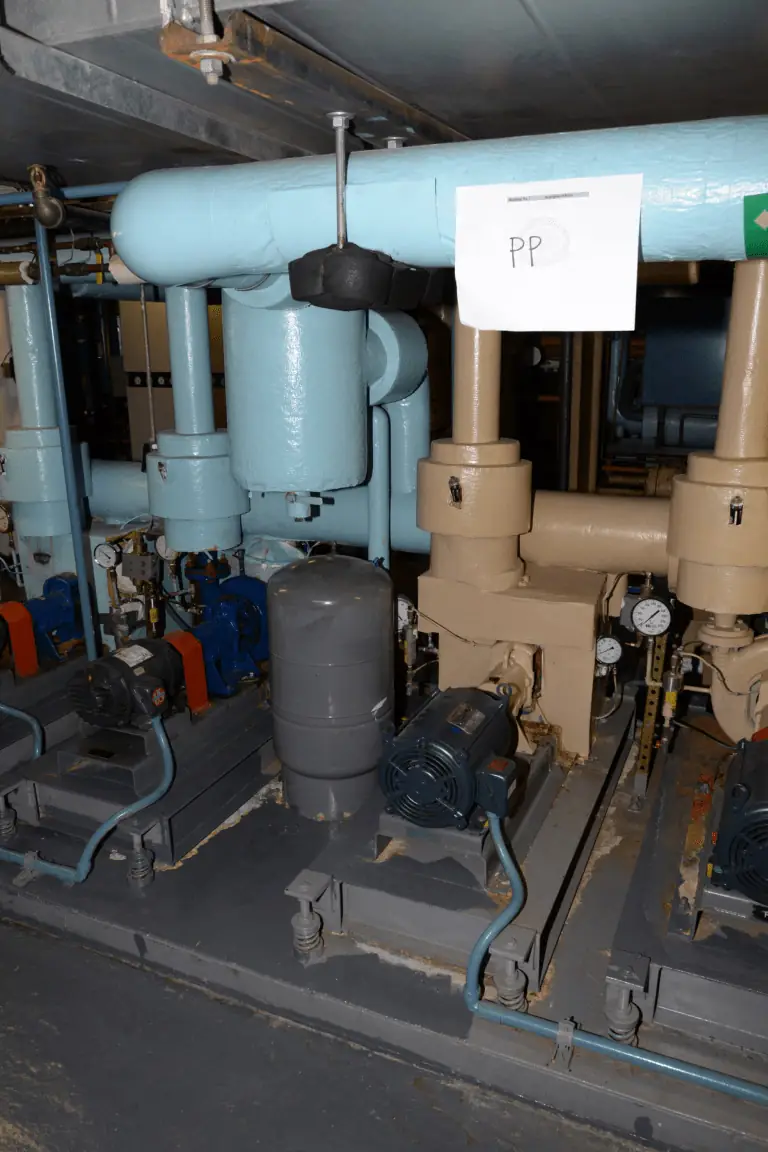
Pumps convert mechanical energy into fluid motion and pressure, valves regulate, isolate, and direct that flow, and piping physically connects every component into a pressurized network. Together they determine throughput, safety margins, energy consumption, and the long-term maintainability of any fluid-handling installation. The reference material compiled here draws on industry trade events, technical articles on pumping efficiency, and published standards documents to present a vendor-neutral overview.
Because the three disciplines share fluids, pressures, and failure modes, they are specified and procured as a system rather than as isolated line items. Variable speed pumping, standardized valve testing, and internationally recognized thread and flange norms all interact, and a procurement decision in one discipline constrains the choices in the others. The chapters that follow treat the category as that integrated system, with grounded numbers wherever the supplied sources allow a verifiable figure.
Pumps, valves, and piping form the integrated fluid-handling backbone of every process plant, HVAC system, and water network. This reference page consolidates working principles, specification parameters, configuration families, selection logic, applicable standards, and the global market context for procurement and engineering professionals.
Chapter 1 / 06
Fundamentals and Working Principles
A pump adds energy to a fluid, raising its pressure, velocity, or elevation. Industrial pumps are broadly classified as positive displacement, where a fixed volume of fluid is mechanically forced through the device each cycle, or centrifugal (rotodynamic), where an impeller imparts kinetic energy that is partially converted to pressure in the volute or diffuser. The mechanical input is typically an electric motor, and the coupling between motor speed and pump curve is the first design decision a buyer faces.
A valve is a pressure-containing device with a movable element that controls flow rate, isolates a line, prevents backflow, or relieves overpressure. Gate, globe, ball, butterfly, check, and pressure relief are the principal families, each with a characteristic pressure drop, torque, and leak-tightness profile. The choice of trim, seat, stem, and sealing material is dictated by the fluid chemistry, temperature, and the allowable seat leakage class defined in the governing standard.
Piping is the connective tissue: the tubes, fittings, flanges, gaskets, and supports that route fluid between pumps and valves and ultimately to the process. The piping class defines the material, wall thickness, corrosion allowance, and end connection, and the class must match the pressure-temperature rating of every attached component. When a variable speed pump changes its duty point, the piping system must absorb the altered surge, water hammer, and thermal expansion regimes, which is why the three disciplines are designed in parallel rather than independently.
Energy efficiency in fluid handling is dominated by pump and valve losses, with the system curve and control philosophy setting the operating point. According to the heating-and-ventilating trade article, variable speed pumping offers lower energy consumption, better system performance, enhanced Building Regulations compliance, longer equipment life, and reduced noise compared with constant speed operation, and modern sensorless variable speed drives are available up to 55 kW without the need for remotely mounted system feedback. These benefits accumulate only when valves and piping are sized to avoid throttling losses and excessive velocity.
Chapter 2 / 06
Specifications and Key Parameters
The primary pump parameters are flow rate (volume per unit time, expressed in m^3/h, l/s, or US gpm), total developed head (pressure rise, in m or bar), speed (rpm), power input (kW), net positive suction head available (NPSHa) versus required (NPSHr), and efficiency at the design point. The primary valve parameters are size (NPS or DN), pressure class (ASME Class, PN), temperature rating, end connections (flanged, threaded, butt-weld, socket-weld), body and trim material, seat leakage class, and actuation type (manual, gear, electric, pneumatic, hydraulic).
Piping is specified by its nominal size, schedule (wall thickness), material grade, corrosion allowance, and the standard governing its dimensions and manufacture. A complete data sheet ties all three together with the fluid properties, the design code (for example ASME B31.3 for process piping or B31.4 for liquid pipelines), the test pressure, and the acceptable weld procedures. Misalignment between the pump shut-off head, the valve pressure-temperature rating, and the pipe allowable stress is one of the most common sources of field rework.
Where the source material offers a specific value, the table below records it verbatim. Because the supplied references are limited to a trade article, a trade-show description, and a standard's addendum, most rows reflect the kinds of parameter a buyer must capture rather than a vendor-specific lineup. The Force row, for instance, is the variable speed drive rating reported in the heating-and-ventilating article, not a market-wide maximum; the reader should treat each cell as the figure documented in its named source.
Selection proceeds from the process duty point back to the hardware. The required flow and head fix the pump size; the required temperature and pressure fix the valve class; the required velocity and pressure drop fix the pipe diameter. Once each device is sized, the control philosophy (variable speed drive, control valve, or throttling bypass) is layered on, and the energy, noise, and maintenance budgets are reconciled. The variable speed drive rating of up to 55 kW cited in the trade article covers only a portion of the building-services market; process-industry drives extend well beyond that figure, so the reader should consult vendor data for higher powers.
Parameter
Symbol / Unit
Representative value or class (source)
Volumetric flow rate
Q (m^3/h, l/s, gpm)
varies by model
Total developed head
H (m, bar)
varies by model
Rotational speed
n (rpm)
varies by model
Power input
P (kW)
varies by model; VSD rating up to 55 kW (Armstrong, heatingandventilating.net)
Net positive suction head
NPSH (m)
varies by model
Valve pressure class
ASME Class / PN
varies by model
Valve size
NPS / DN
varies by model
Seat leakage class
Class I to VI
varies by model
Pipe schedule
Schedule 5S to XXS
varies by model
Drain thread size, valve NPS 1/2 to 1-1/2 (DN 15 to 40)
in. (mm)
1/4 (8) (API Spec 6D Add 1, 2015, Table 2)
Drain thread size, valve NPS 2 to 8 (DN 50 to 200)
in. (mm)
1/2 (15) (API Spec 6D Add 1, 2015, Table 2)
Drain thread size, valve NPS 8 (DN 200)
in. (mm)
1 (25) (API Spec 6D Add 1, 2015, Table 2)
Chapter 3 / 06
Types and Configurations
Centrifugal pumps are subdivided into end-suction, in-line, multistage, split-case, and submersible configurations, each matched to a different combination of flow, head, suction condition, and footprint. Positive displacement designs include reciprocating piston, diaphragm, gear, screw, and progressive cavity pumps, and they are chosen when the duty demands a near-constant flow rate independent of pressure, or when very high heads are required. Within each family, arrangements such as vertical versus horizontal, oil-lubricated versus oil-free, and magnetic-drive versus packed stuffing box multiply the available options.
Valve types map closely to function. Isolation duties are commonly served by gate and ball valves; throttling and modulating duties by globe and control valves; flow-direction control by check, swing, and lift valves; and overpressure protection by safety and relief valves. Butterfly valves occupy a large middle ground in sizes above NPS 2 and are widely used in water and HVAC services where tight shut-off is less critical. The end connection (flanged, threaded, butt-weld, socket-wend, wafer, lug) further fragments the market and determines the maintenance philosophy.
Piping configurations are described by the geometry of the network: looped (ring main) versus branched (tree), header-and-riser, and unitized skid. Material choices span carbon steel, stainless steel, alloy steels, ductile iron, copper, CPVC, PE, HDPE, PP, and lined or clad constructions for corrosive services. The trade show listing for the 2026 Thailand Pumps & Valves exhibition groups the relevant products as valves, pumps, sealing elements, variable-speed supply equipment, water tanks, vibration and isolation equipment, pipe and tubing, fittings, pipe-network inspection facilities, pipe production machinery, and pipe-network repair engineering technologies, an enumeration consistent with the breadth of the supply chain.
Exhibition taxonomy also reinforces the link between fluid handling and adjacent industries. The 2026 Thailand event lists its buyer industries as food and agriculture, petrochemicals, construction, environmental protection, water treatment, engineering, electrical and electronics, steel and machinery manufacturing, refrigeration, plastics, and automation components. Pumps, valves, and piping therefore cross industry lines, and the configuration selected for a given duty must respect the cleaning, hygiene, fire-protection, or hazardous-area rules that come with each end market.
The procurement process begins with the process duty: required flow, required head, fluid properties (density, viscosity, temperature, solids content, corrosivity), and the operating window including turndown. From these, the engineer derives NPSHa, the required pressure-temperature rating for the valve, and the allowable pressure drop for the pipe. Only after these are fixed should commercial factors such as price, lead time, and local service support be layered on, because an undersized pump or a wrongly rated valve will impose cost penalties for the entire life of the asset.
Energy and control strategy is the second major decision. The trade article notes that variable speed pumping offers lower energy consumption, better system performance, enhanced Building Regulations compliance, longer equipment life, and reduced noise compared with constant speed operation, and that sensorless pumps reacting automatically to demand without remotely mounted feedback are now available with variable speed drives up to 55 kW. The decision to specify variable speed, therefore, should be driven by the load profile and the relative weighting of capital cost against operating cost in the buyer's evaluation.
Reliability, maintenance, and parts availability complete the picture. Specifying a pump with documented mean time between failures, a valve with field-replaceable seats and seals, and piping with standardized flanges and fittings reduces the total installed cost over decades. For hazardous or hygienic services, the buyer must also demand the relevant material certificates, weld procedure qualification records, hydrostatic test reports, and traceability documentation before releasing payment.
Commercial terms deserve a structured review: scope of supply (bare shaft, baseplate, coupling, guard, motor, drive), documentation deliverables (data books, IOM manuals, spare parts lists), inspection and test plan, performance test acceptance criteria, warranty, and the post-commissioning service commitment. Procurement language should require the vendor to demonstrate compliance with the named standards (for example API, ASME, ISO, EN) rather than generic equivalences, because standard references anchor the warranty and the dispute resolution process if a field failure occurs.
Define process duty: Q, H, fluid, temperature, NPSHa, turndown
Select control strategy: constant speed, variable speed up to 55 kW (per trade article), control valve, bypass
Specify standards and materials: API, ASME, ISO, EN references in the datasheet
Set commercial terms: scope of supply, documentation, inspection, warranty, service
Chapter 5 / 06
Standards, Compliance and Testing
Pumps, valves, and piping are governed by a layered set of standards. API standards cover the upstream and pipeline industries: API Spec 6D specifies requirements for pipeline and piping valves, and the 2015 Addendum 1, dated March 2015, revises the definitions of assembler/manufacturer, the drain and thread requirements, the heat-treating equipment qualification, the non-destructive examination timing, and the nameplate marking rules. ASME standards cover pressure design, materials, dimensions, and testing for piping, flanges, and valves, while ISO and EN standards provide the global equivalents for end connections, face-to-face dimensions, and test procedures.
Threaded connections on drains and instrument tappings must follow ASME B1.20.1 for tapered threads or ISO 228-1 for parallel threads, and the API Spec 6D Addendum warns that threaded connections can be susceptible to crevice corrosion. The addendum's Table 2 fixes the minimum pipe thread size for drain connections at 1/4 in (8 mm) for valve sizes NPS 1/2 to 1-1/2 (DN 15 to 40), 1/2 in (15 mm) for NPS 2 to 8 (DN 50 to 200), and 1 in (25 mm) at NPS 8 (DN 200), giving the procurement engineer a direct reference for the smallest fittings the supplier is permitted to weld or thread into a pressure-containing body.
Heat treatment and non-destructive examination rules in API Spec 6D require production-type furnaces calibrated to Annex F, post-weld heat treatment, and final surface (MT and PT) and ultrasonic (UT) NDE activities conducted after final heat treatment or post-weld heat treatment, with final radiography (RT) after final heat treatment unless otherwise agreed. These sequencing rules are written to catch the defects that develop during thermal cycles, and a buyer that accepts a non-conforming sequence is implicitly accepting a higher inspection burden on site.
Pumps are tested against hydraulic performance acceptance grades (ISO 9905, ISO 9906, or hydraulic institute standards) and against mechanical and NPSH tests. Valves are subjected to shell, seat, and backseat tests at the pressures listed in the chosen standard (commonly API 598, API 6D, or FCI 70-2 for seat leakage). Piping is hydrostatically tested, with pneumatic testing reserved for services where water cannot be tolerated. Documentation of these tests, including calibration certificates for the instruments used, is a contractual deliverable and the basis for the vendor's warranty.
API Spec 6D, 24th Edition, August 2014, with Addendum 1 dated March 2015 for pipeline and piping valves
ASME B1.20.1 for tapered pipe threads, ISO 228-1 for parallel pipe threads (per API Spec 6D Add 1, 2015)
API Spec 6D Add 1, 2015, Table 2 for minimum drain pipe thread sizes by valve NPS
ASME B31 series for piping design and testing, ASME B16 series for flanges, valves, and fittings
ISO 9905 / ISO 9906 for pump hydraulic performance acceptance, API 598 / FCI 70-2 for valve seat leakage
Annex F of API Spec 6D for furnace calibration, Annex G for NDE timing
Chapter 6 / 06
Market Landscape and Buying Process
The pumps, valves, and piping market is global and fragmented, served by both multinational engineering firms and regional fabricators. Trade exhibitions are the principal channel for vendors to reach specifiers and end users. The Belgium Antwerp international pumps and valves exhibition, known as PUMPS&VALVES, has been held biennially since 1984, anchoring the European industry calendar. In Asia, the Thailand Pumps & Valves exhibition is supported by Thailand's municipal water authority and organized by Informa, the listed exhibitions and conferences group, and is co-located with the Thailand Water exhibition, the Thailand New Energy exhibition, and a regional water and wastewater forum, drawing buyer industries that include food and agriculture, petrochemicals, construction, environmental protection, water treatment, engineering, electrical and electronics, steel and machinery manufacturing, refrigeration, plastics, and automation components.
According to the 2026 Thailand event listing, the exhibition is scheduled for 1 to 3 July 2026 at the QSNCC Queen Sirikit National Convention Center in central Bangkok, a purpose-built facility chosen for the scale of the regional water and energy weeks. The combination of pumps, valves, piping, water treatment, and new energy in a single venue is deliberate: it lets a procurement team covering both fluid handling and adjacent process utilities complete a sourcing trip in one visit, and it lets a vendor demonstrate cross-discipline capability.
The buying process typically proceeds in three phases. First, the owner issues a request for quotation with a detailed data sheet, asking bidders to confirm compliance with the listed standards and to provide certified performance curves, material certificates, and a documented quality plan. Second, technical and commercial evaluations are run in parallel, with technical weightings that reflect the criticality of the service (for example, higher weight for safety-integrity services) and commercial weightings that reflect total cost of ownership rather than first cost alone. Third, the award is made subject to a pre-shipment inspection at the vendor's works, where hydrostatic tests, performance tests, and documentation reviews are witnessed by the buyer's inspector.
Procurement professionals should also weigh after-sales support, local service partners, and the vendor's capacity to deliver spare parts over the life of the asset. A pump, valve, or pipe section that is technically superior on paper but lacks a regional authorized service network is rarely the lowest total cost. As the trade-show listings and the variable speed article together suggest, the strongest buying positions combine documented compliance with the relevant standard, verified performance data, and a credible local service footprint, and the largest exhibitions remain the most efficient single venue for surveying all three.
PUMPS&VALVES Antwerp, Belgium: biennial, founded 1984 (per Douyin source citing the event)
Thailand Pumps & Valves 2026: 1 to 3 July 2026, QSNCC Bangkok, organized by Informa, supported by Thailand municipal water authority
Co-located events: Thailand Water, Thailand New Energy, regional water and wastewater forum
Buyer industries: food and agriculture, petrochemicals, construction, environmental, water treatment, engineering, electrical and electronics, steel and machinery, refrigeration, plastics, automation
Buying phases: RFQ and data sheet, technical and commercial evaluation, pre-shipment inspection and acceptance
FAQ
What is the difference between a centrifugal pump and a positive displacement pump?
A centrifugal pump uses a rotating impeller to add kinetic energy to the fluid and converts that energy to pressure in the volute, so its flow varies with pressure. A positive displacement pump traps a fixed volume of fluid and mechanically forces it through the device, so its flow is nearly constant regardless of pressure, at the cost of lower maximum speeds and higher mechanical complexity.
Why are variable speed drives specified for pumps?
The heating-and-ventilating trade article cites lower energy consumption, better system performance, enhanced Building Regulations compliance, longer equipment life, and reduced noise as the principal benefits. Sensorless variable speed drives are now offered up to 55 kW, removing the need for remotely mounted system feedback on smaller building-services duties.
What does API Spec 6D cover?
API Spec 6D, 24th Edition, August 2014, with Addendum 1 dated March 2015, specifies requirements for pipeline and piping valves, including definitions, drain and thread provisions, heat-treating equipment qualification, NDE timing, and nameplate marking. The addendum is the operative revision for procurement references.
How are drain thread sizes determined under API Spec 6D?
Per API Spec 6D Addendum 1 (2015), Table 2, the minimum drain pipe thread size is 1/4 in (8 mm) for valve sizes NPS 1/2 to 1-1/2 (DN 15 to 40), 1/2 in (15 mm) for NPS 2 to 8 (DN 50 to 200), and 1 in (25 mm) at NPS 8 (DN 200). Tapered threads must conform to ASME B1.20.1 and parallel threads to ASME B1.20.1 or ISO 228-1.
Which standard applies to seat leakage for valves?
API 598 and FCI 70-2 are the commonly referenced seat leakage standards, classifying leakage from Class I (practical for metal-to-metal) through Class VI (bubble-tight for soft-seated). The applicable class is selected by the buyer and listed on the valve data sheet; the test is then performed at the pressure defined in the same standard.
When is a heat-treated or post-weld heat-treated valve re-examined by NDE?
API Spec 6D Addendum 1 (2015) requires that final surface (MT and PT) and ultrasonic (UT) NDE be performed after final heat treatment or post-weld heat treatment, and that final radiography (RT) be performed after final heat treatment unless otherwise agreed, so that any cracking introduced by the thermal cycle is captured before shipment.
What are the principal trade exhibitions for the pumps, valves, and piping market?
PUMPS&VALVES in Antwerp, Belgium, has been held biennially since 1984, and the Thailand Pumps & Valves exhibition, supported by Thailand's municipal water authority and organized by Informa, is scheduled for 1 to 3 July 2026 at the QSNCC in Bangkok, co-located with Thailand Water, Thailand New Energy, and a regional water and wastewater forum.