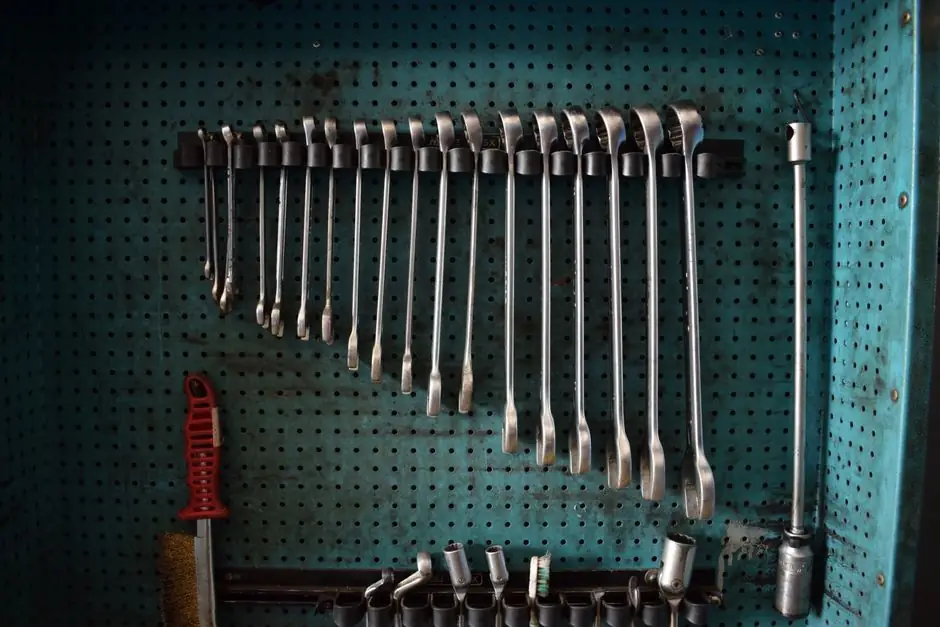
Choose a 1/4-inch drive for confined access and light fasteners, a 3/8-inch drive for general mechanical work, or a 1/2-inch drive for wheel, suspension, and other higher-torque jobs.
The drive square sets tool capacity and accessory compatibility, not the fastener size: a 10 mm socket can be supplied with 1/4-inch, 3/8-inch, or 1/2-inch drive, while the fastener opening remains 10 mm [S3].
Drive Size Changes Capacity, Not Fastener Fit
Drive size is the square connection between the socket and the ratchet, extension, breaker bar, torque wrench, or impact wrench; socket size is the opening that fits the nut or bolt [S1][S3]. A 13 mm socket can therefore have different drive squares, and a larger drive does not make the hex opening stronger or improve its fit [S1][S3].
The three common hand-tool drives are 1/4, 3/8, and 1/2 inch, followed by larger heavy-duty options [S3]. Practical socket coverage overlaps: 1/4-inch sets commonly span about 4–14 mm, 3/8-inch sets about 8–19 mm, and 1/2-inch sets frequently begin at 10 or 12 mm [S1].
Torque capacity is a property of the complete tool combination, not the drive dimension alone. The ratchet, socket, extension, universal joint, and fastener all contribute to the limit, so the weakest rated component governs safe use [S3]. Check the tool and accessory markings rather than assigning a universal torque number to every 1/4-, 3/8-, or 1/2-inch drive product.
1/4-Inch Drive for Access and Light Work
A 1/4-inch drive is the compact choice for work where handle clearance limits larger tools. Typical uses include dashboards, engine covers, motorcycles, hose clips, trim fasteners, electrical fittings, and low-torque engine components [S1]. Its smaller ratchet head and common 4–14 mm sockets can reach confined fixings that obstruct a 3/8- or 1/2-inch ratchet [S1].
A 1/4-inch drive is compact and suited to lighter-duty applications [S1].
Escalate the drive or use an appropriately rated breaker bar rather than applying excessive hand force.
3/8-Inch Drive for General Mechanical Work
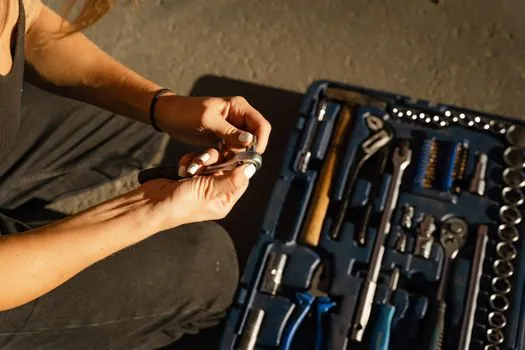
A 3/8-inch drive provides the best balance for routine automotive and maintenance work when the required fastener falls roughly within 8–19 mm [S1].
Compared with 1/4 inch, a 3/8-inch drive offers more torque capacity [S1]. Compared with 1/2 inch, it is easier to maneuver in confined spaces and can remain the better choice where access, rather than maximum leverage, controls the job [S1].
A ratchet only drives the fastener and does not measure tightening torque [S1]. A forum participant reports that Milwaukee 1/4- and 3/8-inch non-fuel ratchets are rated at 30 and 35 ft-lb, respectively, while their fuel versions are both rated at 35 ft-lb [S2].
1/2-Inch Drive for High-Torque Vehicle Work
A 1/2-inch drive is the normal selection for wheel nuts, hub work, suspension components, drivetrain repairs, and heavy automotive jobs [S1].
For impact applications, 1/2 inch is the preferred everyday drive for tire changes, heavy suspension work, and stuck lug nuts, while 3/8 inch fits general under-hood and brake work in tighter spaces [S5]. An impact wrench should be matched to the fastener and the intended work [S5].
Comparison by Access, Capacity, and Workload
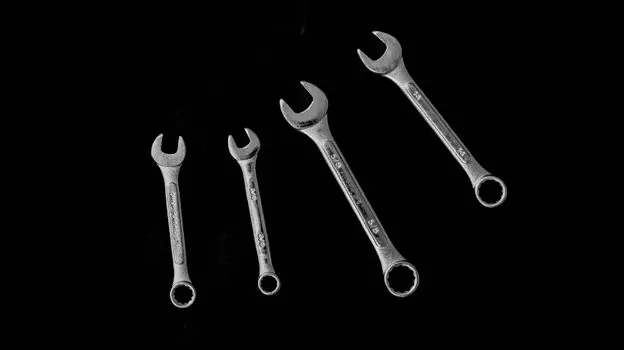
For clearance, 1/4 inch is best, 3/8 inch is intermediate, and 1/2 inch has the largest ratchet head. For typical socket coverage, the overlapping ranges are approximately 4–14 mm, 8–19 mm, and 10–12 mm upward respectively [S1]. For heavy loosening, 1/4 inch is least suitable, 3/8 inch is the general workshop compromise, and 1/2 inch is the practical choice when a longer breaker bar or impact tool is justified [S1][S4].
The table below compares the three options by the criteria that determine the selection, rather than assigning universal torque figures that the research does not support.
Match the Tool to the Actual Fastener
For interior trim, small engine parts, and confined spaces, specify 1/4 inch [S1][S5]. For routine under-hood service, brake work, and mixed automotive maintenance, specify 3/8 inch [S1][S5]. For wheel nuts, heavy suspension components, and seized fasteners that need substantial force, specify 1/2 inch [S1][S5].
Do not force a 1/4-inch tool onto a larger fastener merely because the socket fits. The fastener geometry, required torque, joint condition, and component rating determine the safe tool [S1]. For controlled assembly, begin with a compact drive where access is restricted, then use the specified torque wrench and correct drive size; over-torque can damage the fastener or joint [S2][S6].
A ratchet is for removal and installation, a torque wrench is for controlled tightening, a breaker bar is for initial loosening, and an impact wrench is for rapid removal and installation. Their permitted loads and accessory requirements differ, so a single “torque capacity” cannot be assigned safely to a drive size [S1][S5].
Build the Set Around the Workload
One general set can cover much routine work, but no single drive covers every practical situation [S1]. A technician working under dashboards benefits from 1/4 inch, a technician handling calipers and engine mounts benefits from 3/8 inch, and a technician removing wheels or working on suspension benefits from 1/2 inch [S1][S5].
Commercial vehicles, agricultural machinery, and heavy plant normally justify moving beyond the 1/2-inch range to 3/4-inch or larger drives [S1]. The research also identifies roughly 350 ft-lb as the threshold at which work is associated with the 1-inch-drive range, but that is a practical selection guide rather than a universal rating for every tool [S2].
Before purchase, verify three items in the manufacturer’s product data: the drive-square rating, the tool’s stated torque or load limit, and whether the intended socket is standard or impact-rated. Record the fastener specification separately, especially for final torque, and match the torque wrench range and drive size to that value [S1][S3][S6].