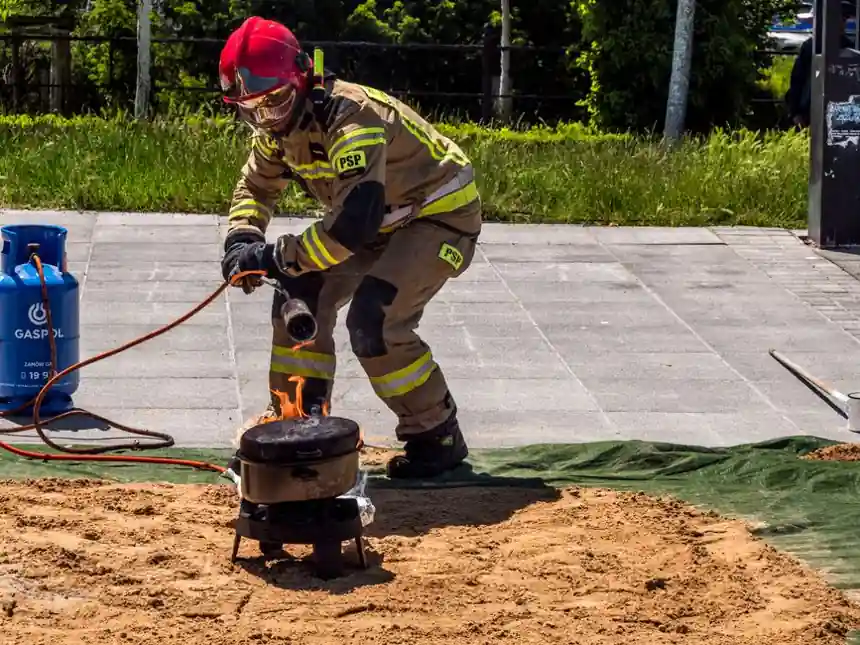
The Amerex Model 240 is a 2.5 gallon stored-pressure water extinguisher, UL and ULC rated 2-A, that pushes a 45–55 ft stream of water for roughly 55 seconds of discharge, and ships empty so the end user fills and charges it to 100 psi [S2][S4][S5].
That 2-A rating translates to roughly 2.5 gallons of agent and is engineered exclusively for Class A fires: ordinary combustibles such as wood, cloth, paper, rubber, and many plastics that leave an ash residue when burned, and the same scope applies to the equivalent Buckeye 2.5 gallon unit carrying the matching 2-A listing [S2][S6].
What the 2-A Rating Actually Delivers
The UL 2-A rating on a 2.5 gallon water extinguisher is the minimum Class A performance tier for that capacity and the highest rating a 2.5 gallon water unit can carry, since 2-A corresponds to ~2.5 gallons of water and each step up in A-rating requires roughly one additional gallon of water or equivalent agent [S2][S4].
Discharge time of 55 seconds is the spec engineers care about for operator reaction: by rule of thumb a pressurized water extinguisher lasts ~20 seconds per gallon, so 2.5 gallons yields ~50 seconds, a window considered forgiving for untrained operators compared with a 10 lb ABC dry chemical extinguisher, which typically discharges for only about 10 seconds [S3].
Range of 45–55 ft at the nozzle gives a horizontal reach of 30–55 ft, roughly 2–3 times the 5–20 ft reach of a typical ABC dry chemical, so the operator can stay back from the seat of the fire and still put agent on the fuel [S3][S5].
Where the 2.5 Gallon Water Extinguisher Is Specified
Paper warehouses, schools, offices, and similar Class A-heavy occupancies are the canonical spec for the 2.5 gallon 2-A water unit, with the Buckeye model marketed directly for schools and paper storage and the Amerex 240 used in warehouses, hallways, and light industrial spaces [S2][S5][S6].
Agricultural equipment is a strong fit: pressurized water extinguishers are standard on balers and increasingly carried on combines, where the primary fuel load is dust, chaff, and harvest debris around the engine compartment, and a water stream cools that smoldering debris below its reignition temperature [S3].
The unit is also a credible choice in woodworking shops, textile storage, libraries, and museum back-of-house, anywhere the fuel is cellulosic and the Class B or Class C risk is segregated, and the fire extinguisher selection basics come down to matching the fuel class first, then picking capacity by the area to be covered.
Where It Is the Wrong Tool
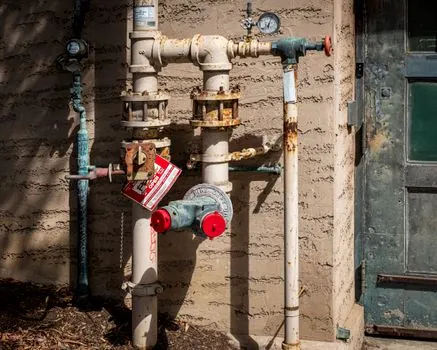
Pressurized water on a Class B flammable-liquid fire (gasoline, diesel, hydraulic oil, grease) is dangerous: water is denser than most hydrocarbon liquids, sinks below the fuel surface, and can flash-boil, spreading the burning liquid, so a 2-A water unit must never be carried where a fuel or solvent pool is the expected risk [S3].
Pressurized water on energized electrical equipment (Class C) is a shock hazard, since the 100 psi stored-pressure charge and the conductive water column provide a path back to the operator, which is why combine operators are trained to size ABC units as the primary extinguisher and reserve water units for confirmed Class A smoldering [S1][S3].
Freeze exposure is a separate failure mode: a standard water charge freezes near 32°F and ruptures the stainless steel cylinder, so the Model 240 must be loaded with the Model 506 anti-freeze charge for any installation rated down to −40°F, otherwise the unit must be pulled from service in unheated spaces [S4].
Water vs ABC Dry Chemical on the Same Hazard
Mechanism is the dividing line: water cools the fuel below its autoignition and re-ignition temperature, soaking into Class A material to prevent reflash, while ABC dry chemical works by coating the fuel and interrupting the chemical chain reaction at the surface, separating fuel from oxygen [S3].
Operator metrics stack up clearly: 2.5 gallon water delivers ~50–55 s of discharge at 30–55 ft reach, versus a 10 lb ABC at ~10 s of discharge at 5–20 ft, so water trades raw knock-down power for duration and standoff, which is the right trade for incipient Class A smolder and the wrong trade for a flaming liquid pool [S3].
Selection logic for a facility floor: if the worst-credible fire is a trash can, a pallet, a baler, or a combine engine bay with mostly cellulosic debris, the 2.5 gallon 2-A water unit is the right primary, paired with at least one ABC unit for any fluid or electrical risk, and the portable extinguisher sizing guide is the place to start before locking the spec.
Charging, Recharge, and Service Intervals
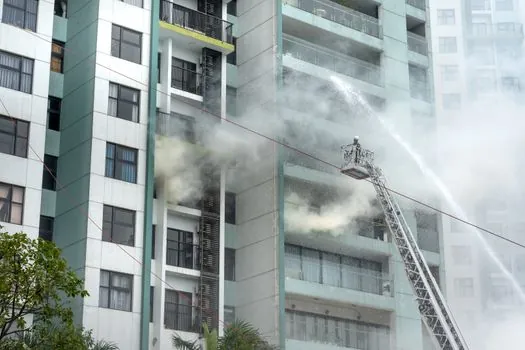
The unit ships empty (tagged "Ships empty, filled by end user") and is pressurized to 100 psi using an air compressor or a bicycle-type tire pump following the manufacturer's directions, which is a notable difference from pre-charged dry chemical units that arrive factory-sealed [S1][S4].
Amerex backs the cylinder, brass valve, and polished stainless steel body with a 5-year manufacturer's warranty, but warranty is not the same as service life: hydrostatic test, 12-year internal inspection, and 6-year external maintenance intervals are the NFPA 10-driven cadence the owner is responsible for once the unit is in service, regardless of whether the body still looks new [S2].
Anti-freeze charge is the single most common field modification: a Model 506 anti-freeze load extends the lower limit to −40°F, the same −40°F threshold used for cold-storage warehouses and unheated farm outbuildings, and any 2.5 gallon water unit installed without it in a space that can drop below freezing is a flat-out misapplication [S4].
Comparable 2.5 Gallon 2-A Units on the Market
Amerex 240, Buckeye 2.5 gallon stored-pressure water, and Badger Extra 16888 are the three UL 2-A 2.5 gallon water units commonly stocked side by side, all rated 2-A, all Class A only, with the Buckeye positioned as the value option and the Amerex 240 positioned as the corrosion-resistant polished-stainless option with chrome-plated brass valve [S2][S5][S6].
Price band is tight: the Amerex FE 240 lists around $246 empty, the Buckeye 2.5 gallon water lists around $142 empty, and the Badger Extra 16888 lists around $147 empty, so spec writers who do not need the Amerex cylinder finish can save roughly $100 per unit by switching to Buckeye or Badger for the same UL 2-A performance [S5].
A water-mist variant exists for sites that need Class A and a controlled Class C capability: the Buckeye 2.5 gallon water mist unit is UL 2-A:C, deionized-agent and nozzle-pattern engineered to interrupt energized electrical risk, but it is a different SKU and a different refill discipline from a plain 2-A water unit, so do not cross-substitute in a fire extinguisher cabinet without rechecking the listing [S5].
Trackable Signals for Specifying Engineers
Two field signals are worth monitoring on a 6-month review cycle: any change in NFPA 10 hydrostatic-test or 12-year internal-inspection language affecting stored-pressure water cylinders, and any consolidation among the three 2.5 gallon 2-A suppliers (Amerex, Buckeye, Badger) that would tighten the price band or change distributor stocking patterns for the Model 240, the Buckeye 2.5 gallon water, and the Badger Extra 16888. [S2]
The underlying component specifications are covered under ballast water treatment, and measurement test 2.
This topic is covered further in Super Long Front Excavator Arms: Reach vs Lift Capacity Trade-Off.