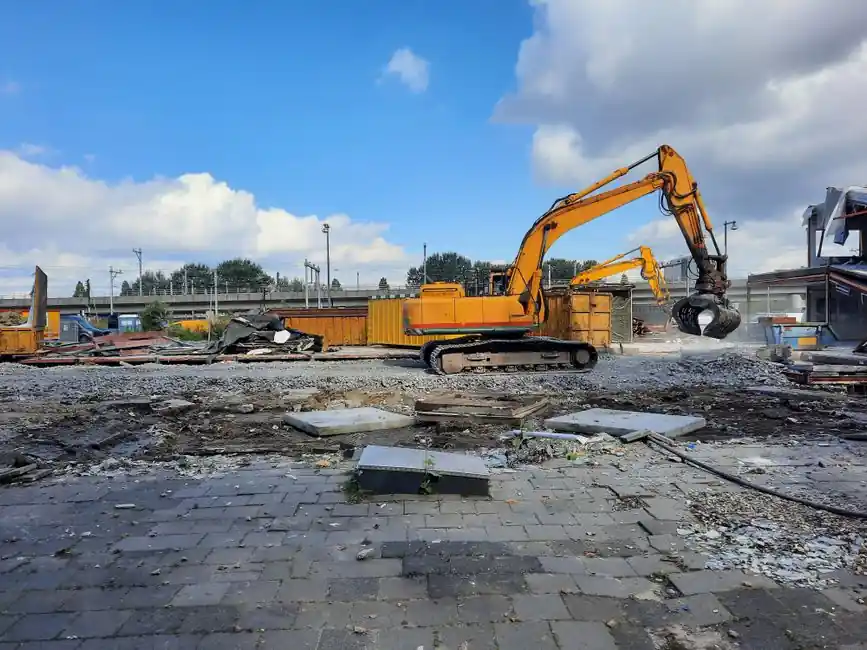
Super long front arm packages extend an excavator's horizontal reach beyond 15 m, but the moment-arm penalty reduces rated lift capacity and digging force at full extension compared with a standard arm of the same weight class [S1][S3].
The trade-off is mechanical, not marketing: lift capacity falls as the load moves further from the excavator's center of rotation, forcing the operator to specify smaller buckets and accept reduced cycle performance in exchange for the extra metres [S2][S4].
Why Reach Steals Lift: The Moment-Load Math
Moment load on an excavator scales linearly with arm length when all other factors are held constant: doubling arm length with the same load weight doubles the overturning moment, which the machine must resist through counterweight, track width, and hydraulic pressure [S4]. Manufacturers respond by extending the boom, the arm, or both, and by reinforcing the front-end frame where the extra length adds strain, yet lifting capacity still falls at the tip [S3].
Komatsu product manager Andrew Earing frames the consequence in physical terms: the longer the front, the smaller the attachment allowed, and over-the-side stability becomes the limiting factor operators have to analyze on every lift [S2]. Doosan marketing manager Aaron Kleingartner adds that the biggest trade-off is machine balance, since the center of gravity is moved further from the center of the machine, and by physics, the further out you go, the lower the lift capacity [S2].
For context on how that geometry shows up in standard configurations, see the excavator boom and arm reference for the lever and linkage terminology used in the rest of this article.
Standard, Long Reach, and Super Long Front: Where Each One Fits
Most OEM excavator lines ship with three arm options that bracket the same carrier: a short or mass-excavation arm, a standard arm, and a long arm, plus an optional super long-reach package on selected models [S2]. Standard arms typically deliver 9 to 10 m of horizontal reach at full rated breakout force; long reach versions push past 15 m, and super long front packages stretch further still, with horizontal reach crossing 18 m on the larger carriers [S3].
The comparison below lines the three configurations up against the criteria that actually drive the buy decision:
Short / mass-excavation arm: highest lift capacity at any given radius, best for truck loading in close quarters, smallest dig depth, best cycle time on bulk earthwork [S2]. Standard arm: balanced for general digging, mid-range reach, full rated breakout force, the default pick for site prep and utility work [S3]. Long reach / super long front: maximum horizontal reach and dig depth, reduced digging force and lift capacity at the tip, narrower buckets, reinforced front frame, reserved for niche standoff work [S1][S3].
The standard vs long-reach trade-off is therefore a clean three-way choice on three criteria: reach in metres, lift capacity at full radius, and bucket size the linkage can swing safely, and only one of those three is improved by going long [S1][S3].
What You Actually Lose: Digging Force, Bucket Size, and Cycle Time
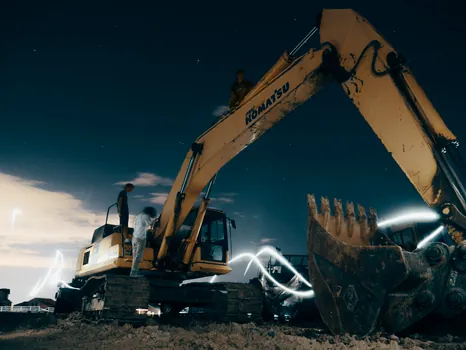
At full extension, both digging force and lift capacity drop compared with a standard excavator of the same weight class, and the operator compensates by stepping down to a narrower, lighter bucket that keeps loads within the extended linkage's safe lift envelope [S3]. Komatsu senior product manager Kurt Moncini states the trade-off bluntly: as you extend reach, bucket sizes go down; you are trading reach for capacity, and the actual load on the machine stays about the same [S2].
That bucket-down principle has a second-order effect: cycle time suffers because the smaller bucket moves less material per pass, so the extra reach only pays off when the job genuinely needs the standoff distance, such as pond and waterway dredging, deep trench work, or pulling material down from a structure [S3][S7]. Mini-excavator operators hit the same wall: longer reach boosts versatility, but reduced hydraulic force means the machine must suit the workload, otherwise the operator is just swinging air [S6].
Stability hardware also changes with the configuration. Long reach and super long front packages frequently add counterweight and a rebalanced undercarriage, and high-reach demolition variants can take that to 160 ft of vertical reach with a tilting cab and arm-tip camera for surgical work above the operator's natural sightline [S2].
Who Should Spec a Super Long Front, and Who Should Not
Super long front arms are built for three job profiles: waterway and pond dredging where the machine must sit on the bank and reach the centerline, deep excavation where the cut depth exceeds a standard arm's geometry, and standoff demolition of low-rise structures where a clean drop zone matters [S2][S3][S7]. On these jobs, the extra metres convert directly into either a safer work position or a dig depth no standard arm can reach.
Super long front arms are the wrong choice for routine truck loading, bulk mass excavation in open ground, and any lift chart that needs to swing heavy pipe or precast at radius, because the operator will be working with a smaller bucket and a lower lift rating the entire shift, and the cycle penalty never goes away [S1][S2]. Volvo CE's demolition sales director Walt Reeves also flags a service argument against bolting a third-party long boom onto a standard machine: the owner ends up dealing with two companies on repairs and warranties, and loses the OEM's integrated performance envelope [S2].
For a related engineering decision on telescopic motion stages, see the spec walkthrough on telescopic multi-stage linear actuator sizing.
Sourcing the Numbers: OEM Data Sheets and Lift Charts
Before ordering a long reach or super long front package, pull the OEM lift chart for the exact carrier, arm, and counterweight combination, and read the over-the-side, full-radius values rather than the over-the-front or at-ground figures, because that is the working envelope where the trade-off bites [S2][S4].
Two rules of thumb from the field shorten the spec: if the lift at full reach is less than the heaviest single lift the job demands by a safety margin you are comfortable with, the arm is too long; and if the planned bucket size exceeds the linkage's recommended tip mass, the cycle will not pay for the extra metres [S3][S4]. Both checks should be made against the carrier's data sheet, not the marketing brochure.
Trackable signals for the next planning cycle: OEM release of updated lift charts on 30-tonne-plus carriers with super long front options, and any new ISO 10567 update that re-baselines the rated hydraulic force test method for extended-reach geometries, which would change the headline numbers above.
Detailed specification references: reach truck, and vertical lift module.