AISI 201 holds 3.5–5.5% nickel, while AISI 304 holds 8.0–10.5% nickel, and that single alloying difference drives most of the performance gap in chloride, food-contact, and outdoor service [S1][S2].
201 is a chromium-manganese-nickel austenitic grade (16–18% Cr, 5.5–7.5% Mn, up to 0.25% N) developed as a lower-nickel substitute for 304; 304 is the classic 18-8 chromium-nickel austenitic grade (18–20% Cr, 8–10% Ni) [S1][S2][S4]. Both grades are austenitic in the annealed condition and are generally non-magnetic, but cold work can pull 201 toward magnetic response while 304 stays largely non-magnetic [S4].
Nickel and Manganese: The Trade That Defines Both Grades
Nickel is the austenite stabilizer in 304 at 8.0–10.5% by mass, and that level is what gives the grade its combination of corrosion resistance, low magnetic permeability, and toughness at cryogenic and ambient service [S1][S2][S5]. In 201, nickel is cut to 3.5–5.5%, and the lost austenite stabilization is taken up by 5.5–7.5% manganese plus up to about 0.25% nitrogen, which is why 201 still reads as austenitic on a mill cert but at a noticeably lower corrosion budget [S1][S2][S4]. Manganese also raises work-hardening rate and tensile strength, so a properly worked 201 plate can show higher UTS than an annealed 304 sheet, with sources reporting 515–750 MPa UTS and 275–380 MPa yield for 201 versus typical 304 figures below that on light-gauge stock [S1][S6]. The cost angle is the reason this trade exists at all: nickel is the expensive input, and cutting it from roughly 9% to roughly 4.5% is what lets 201 compete on price in indoor consumer and architectural applications [S2][S4][S5].
Corrosion Resistance: What the Lower Nickel Actually Costs You
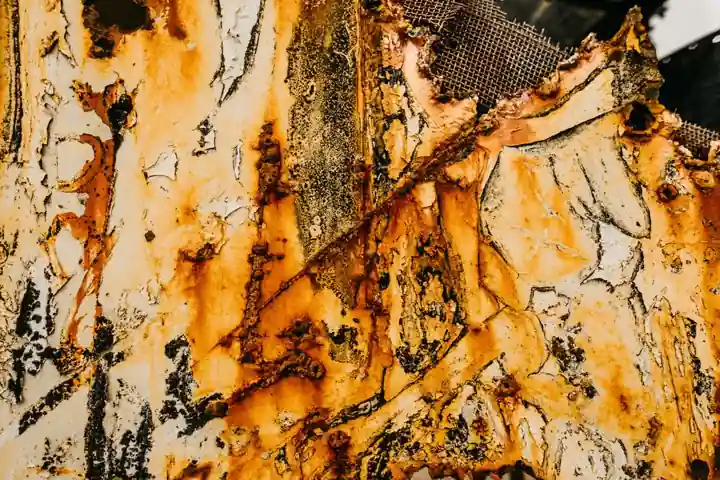
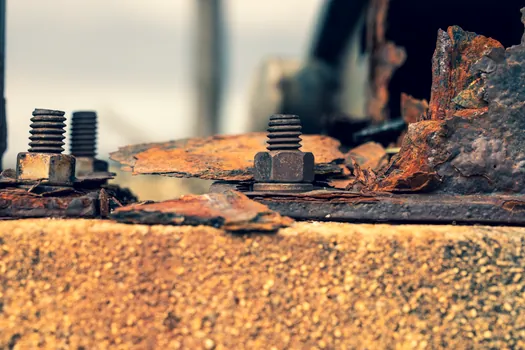
Both grades derive their stain resistance from a chromium-rich passive film, but 304's higher chromium (18–20% vs 16–18%) plus higher nickel gives it a Pitting Resistance Equivalent Number above 18, while 201 typically sits in the 16–17 range, which is the operative reason 201 shows surface rust, pitting, and tea-staining in chloride or damp conditions that 304 walks through [S1][S4]. In coastal air, road-salt splash zones, swimming-pool halls, and unvented outdoor enclosures, 201 is documented to pit and discolour where 304 holds its finish, and 201 is considered inadequate for insulated water-bottle and food-contact service by several commercial references [S2][S4]. For a broader view of how this grades family fits into the wider alloy map, the stainless steel overview page lays out the same Cr-Ni rationale across the 200, 300, and 400 series. The general decision line: if the part sees chlorides, repeated wet-dry cycling, or food/beverage contact, pick 304 or higher; if the part lives indoors, stays dry, and is mostly decorative or structural in a benign environment, 201 is an acceptable cost-down choice [S1][S2][S4][S5].
Mechanical and Physical Numbers You Can Spec Against
Density is essentially identical at about 7.93 g/cm³ (0.286 lb/in³) for 201 and about 8.0 g/cm³ for 304, so weight-driven designs do not need to switch on alloy alone [S1]. 201's published tensile range of 520–750 MPa with yield 275–380 MPa and a higher work-hardening rate makes it useful where dent resistance matters more than deep corrosion resistance, for example in appliance panels, furniture frames, and decorative trim [S1][S4][S5]. 304 typically tracks 515 MPa UTS minimum with better fatigue life and deeper draw formability, which is why kitchen sinks, food-processing tanks, and architectural handrails default to it [S1][S4]. Welding behaviour diverges: 201's higher carbon ceiling (up to 0.15% versus 304's 0.08% cap) raises sensitization risk in heavy sections, so 304L / 201L variants exist for welded assemblies where intergranular corrosion must be controlled [S2][S4]. Magnetic response after cold work is a useful field-sorting clue: 201 can read noticeably magnetic on a formed corner, while annealed 304 stays close to non-magnetic [S4].
Decision Matrix: 201 vs 304 on Four Selection Criteria
Lining the two grades up against the criteria that actually drive a sourcing call: on corrosion resistance, 304 is rated high and 201 moderate, with 201's weakness showing in chlorides, acids, and unvented humidity [S1][S4][S5]. On strength, 201 wins on raw UTS thanks to manganese and nitrogen, and 304 wins on fatigue, toughness, and deep-draw formability [S1][S4]. On cost, 201 is the cheaper buy per kilogram because the nickel is roughly halved, with no published percentage attached to that gap, only the qualitative "lower material cost" used by every source [S2][S4][S5]. On food safety and hygiene, 304 is broadly accepted as food-grade while 201 is treated as limited and is flagged as inadequate by name for insulated water-bottle service [S2][S4]. The matrix says, plainly: 201 for dry, indoor, decorative, cost-driven work; 304 for anything wet, salty, hygienic, or safety-critical.
Use Cases and the Specific Jobs Each Grade Should Not Get
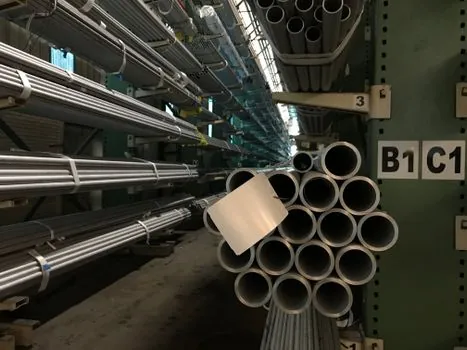
201 fits indoor appliances, decorative panels and trim, furniture frames, jigs and fixtures, and door hardware where the surface stays dry and the duty cycle is light [S2][S4][S5]. 304 is the default for food processing equipment, commercial kitchen utensils, medical and laboratory instruments, fasteners and fittings, architectural handrails, and outdoor enclosures [S4][S5]. 201 should be excluded from insulated drinkware (where the source material directly calls its use inadequate), from marine or coastal exposures, from chemical-process wetted parts, and from any welded assembly in heavy gauge where the 0.15% carbon ceiling can sensitize the HAZ [S2][S4]. A closely related 18-8 vs 18-10 spec discussion is covered in 18/8 vs 18/10 stainless steel, which extends this same Cr-Ni logic one step further into the 18-10 consumer-cookware question. For shop-floor marking of these alloys once they arrive, the practical differences between color-marking fiber lasers on 201 versus 304 surfaces are detailed in MOPA vs Q-switched fiber laser for color marking on stainless steel.
Standards, Sourcing, and What to Verify on the Mill Cert
Both grades sit inside the AISI / SAE numbering system (201 and 304) and are produced to common ASTM sheet, plate, bar, and tube specifications; AISI 304 is also written as 18-8 in older commercial literature and as EN 1.4301 / X5CrNi18-10 in the European system, which is worth confirming when a drawing cites a DIN or EN callout [S1][S2][S4]. On the mill cert, lock down the four numbers that decide everything: Cr must be inside 18.0–20.0% for 304 and 16.0–18.0% for 201, Ni must be inside 8.0–10.5% for 304 and 3.5–5.5% for 201, C must be at or below 0.08% for 304 (or 0.030% for 304L) and at or below 0.15% for 201, and Mn must be at or below 2.0% for 304 but 5.5–7.5% for 201 [S1][S2][S4]. If a quote arrives with nickel anywhere in the 5–8% band, treat it as a 201-vs-304 mis-grading and reject it before fabrication, because that is the exact window where the corrosion performance of the finished part silently drops from "304-like" to "201-like" [S1][S2][S7].
The nickel differential is the whole story: 304 at 8.0–10.5% Ni is the right pick whenever the part sees moisture, chlorides, food, or carries a safety case, and 201 at 3.5–5.5% Ni is a defensible cost-down only in dry, indoor, non-corrosive service. The next signal worth tracking is the spread of low-nickel 200-series variants into structural and architectural specifications, where several current 201-vs-304 buyer guides frame the choice as a deliberate corrosion-versus-cost trade rather than a like-for-like substitute [S5][S6].
For component-level specifications, see nickel alloy, and stainless pipe.