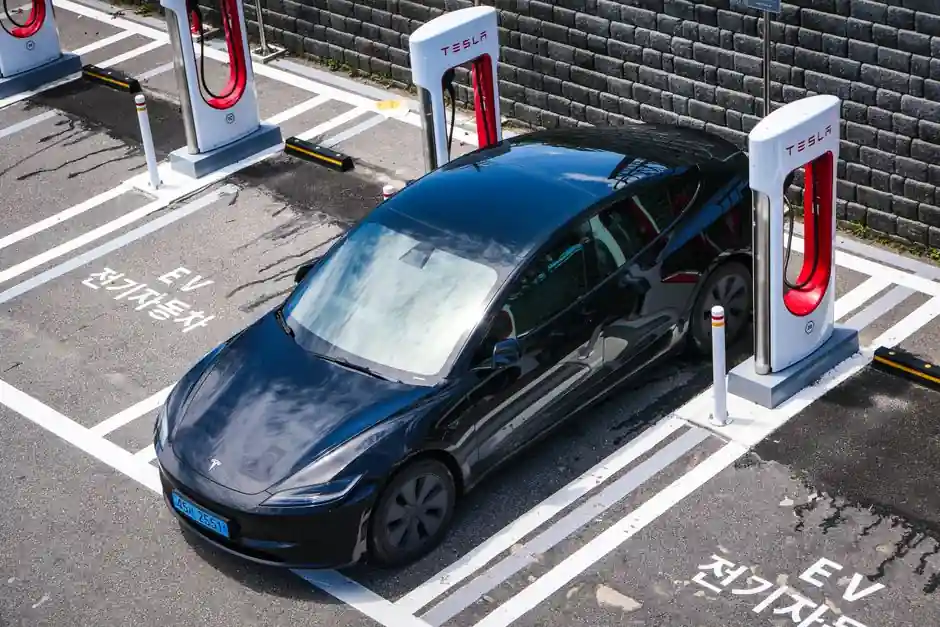
Lithium demand for stationary energy storage is forecast to increase 55% in 2026 after rising 71% in 2025, extending the sector into a material source of lithium-carbonate-equivalent growth [S1].
Electric vehicle batteries now account for the majority of lithium demand, and lithium demand is expected to rise sharply with the electrification of the transport sector [S3].
Storage demand is changing the 2026 lithium balance
Stationary energy storage is forecast to deliver a 55% increase in lithium demand during 2026, following 71% growth in 2025 [S1]. That acceleration matters because storage batteries are being added alongside EV batteries rather than merely replacing one another, so each project category adds to the same lithium requirement.
Global lithium consumption grew 45% through May 2026, exceeding the earlier 15%–40% forecast range, with stationary storage identified as a principal driver [S7]. A 45% five-month increase is not a full-year growth rate, but it indicates that demand was expanding rapidly before the second half began.
The market interpretation is not simply “more lithium.” It is a change in the demand mix, with grid-scale batteries adding load from utility procurement, data-centre power management and renewable-energy balancing. The physical lithium remains expressed in LCE, a unit that converts different lithium products to the equivalent contained lithium carbonate.
EVs remain the anchor, storage supplies the growth increment
EV batteries now account for the majority of global lithium demand, while transport electrification remains the structural driver [S3]. Global lithium demand has increased by about 25% per year on average over the preceding 2 years, reflecting the combined effect of EV adoption, storage deployment and broader electrification [S4].
EVs are therefore the correct anchor for a long-range lithium forecast, but not a sufficient basis for a 2026 volume forecast. Lithium demand for EVs rises with vehicle production, average battery size, chemistry changes and regional sales, while storage demand depends more heavily on project commissioning, grid economics and installed power capacity.
The two channels also face different constraints. EV demand is linked to automotive production cycles and consumer or fleet adoption. Storage is more exposed to interconnection timing, financing costs, electricity-market rules and project delivery. A procurement plan based only on historical EV growth would miss the acceleration recorded in stationary storage during 2025 and early 2026 [S1][S7].
Supply growth is substantial, but the surplus remains contested
A 10% supply increase does not automatically mean a deficit, because demand depends on battery chemistry, energy density, recycling availability and the lithium intensity of each application.
S&P Global’s market framing points to a narrowing lithium-carbonate surplus in 2026 rather than unrestricted oversupply [S2]. A separate 2026 analysis concludes that lithium supply capacity can meet most projected demand through 2035 [S3]. Both positions can coexist: aggregate capacity may be sufficient, while individual products, regions and delivery periods can remain tight.
That range is not a 2026 balance estimate, but it demonstrates why near-term surplus narrowing does not remove the longer-term project pipeline.
Forecast growth diverges after 2026
Near-term storage growth and the 2030–2035 outlook point in different directions. The 2026 forecast calls for 55% storage-related lithium-demand growth [S1], while Benchmark Mineral Intelligence expects stationary-storage lithium demand to grow by about 5% annually through 2030 [S6].
| Decision criterion | EV batteries | Stationary storage batteries | Lithium supply | |---|---|---|---| | 2026 growth signal | Structural demand leader; majority of lithium demand [S3] | 55% forecast growth in 2026 [S1] | 10% growth to 1.63 million mt LCE [S2] | | Growth horizon | Transport electrification through 2030 [S3] | 55% in 2026, then about 5% annually to 2030 [S1][S6] | Capacity can meet most projected demand through 2035 [S3] | | Main physical driver | Vehicle production, battery size and chemistry | Grid storage and renewable balancing | Mining, processing and refining capacity | | Key planning variable | EV sales and pack loading | Project commissioning and grid economics | Product mix and geographic concentration | | Main risk | Chemistry reducing lithium intensity | Slowdown from financing or interconnection constraints | Concentrated mining and refining chains [S5] |
A high growth rate applied to a rapidly expanding 2026 base can coexist with a much lower percentage rate during later years. Forecasters should separate the absolute annual volume from the percentage growth rate before building procurement or capacity assumptions.
Demand assumptions must follow lithium intensity

Battery megawatt-hours and tonnes LCE are not interchangeable. Total lithium demand depends on the number of cells, their energy density, cathode chemistry, lithium utilization and recycling supply. EV demand is already the majority of the market, so even a modest change in lithium loading per vehicle can affect the aggregate requirement [S3].
Storage provides an additional uncertainty because stationary systems can be designed around different duration targets. A system intended for short-duration peak support does not carry the same energy capacity as a multi-hour grid battery installed for renewable shifting. Procurement forecasts should therefore separate EV packs from storage projects by usable energy, duration and commissioning schedule.
LCE comparisons also require careful product treatment. Lithium carbonate and lithium hydroxide are converted into comparable LCE quantities for market analysis, but differences in conversion yield, impurity profile and battery-cell qualification can affect practical procurement. This is especially relevant when comparing lithium carbonate futures versus spot pricing, where the benchmark represents a market reference rather than a complete physical supply specification.
Supply-chain concentration remains the operational constraint
Mining capacity is only one part of the lithium balance. Most raw lithium comes from a small group of countries, while refining is even more concentrated, exposing automakers, battery makers and utilities to disruption when processing or refining is interrupted [S5].
Supply-chain concentration is relevant to demand planning because raw-material availability does not guarantee battery-grade delivery. A 1.63 million mt LCE supply estimate for 2026 measures lithium raw materials at an aggregate level [S2], while battery production also depends on processing, refining, qualification and logistics.
The 2030 demand range of 2–3 times 2024 levels makes project timing commercially material [S5]. New mines alone do not remove concentration risk if battery-grade conversion remains geographically clustered. For industrial planners, the relevant question is not only whether 2026 supply rises by 10%, but how much qualified material can be delivered to the intended cell plant or storage integrator [S2][S5].
Planning for a narrower but not guaranteed deficit
The working 2026 balance combines three sourced signals: 55% growth in storage-related lithium demand, 10% growth in global lithium raw-material supply to 1.63 million mt LCE, and a forecast that the lithium-carbonate surplus will narrow [S1][S2]. EV demand remains the largest demand component, with global lithium demand previously growing around 25% per year over a 2-year average [S3][S4].
For procurement teams, the appropriate response is to separate volume growth from supply availability. EV programs should be reconciled with pack sizes and chemistry, while storage forecasts should use commissioned MWh rather than announced project pipelines. Supply contracts should distinguish raw lithium products from battery-grade materials and account for refining concentration.
Two signals are worth tracking beyond the headline balance: monthly battery deployments that support or contradict the 55% storage-growth estimate [S1], and the conversion of the projected 1.63 million mt LCE raw-material supply into qualified battery-grade output [S2]. The market can move toward tighter carbonate availability without a system-wide physical shortage, so product-level conditions matter more than the headline surplus label.