
Global machine tool demand is forecast at US$93.6 billion in 2026 [S1].
The electrical industry is the fastest-growing named end-use segment, with a forecast CAGR of 7.3% from 2026 to 2033 [S3].
Three end markets create three machining demand profiles
This segment offers scale, but its investment case remains tied to production volume, model changes, material substitution and capacity loading.
Aerospace demand is driven by high-precision component machining, advanced light materials and complex geometries [S1][S7]. In the United States, additive manufacturing is forecast to advance at a 7.8% CAGR because of aerospace precision requirements [S6]. That technology complements, rather than automatically replaces, metal cutting and forming because hybrid processes can combine additive build-up with precision finishing.
Energy-related demand sits mainly within the electrical-equipment end market, which is forecast to grow at 7.3% from 2026 to 2033 [S3].
Market size estimates establish scope, not precision
Published 2026 estimates range from US$82.40 billion to US$123.7 billion globally [S1][S3][S4][S8]. The upper estimate projects US$183.5 billion by 2033 at a 5.8% CAGR from 2026, while the lower estimate reaches US$110.97 billion by 2033 at a 4.3% CAGR [S3][S4].
The two forecasts project 2033 market values of US$183.5 billion and US$110.97 billion [S3][S4]. Market definitions, product coverage and estimation methods therefore matter more than a single headline figure when evaluating supplier or investment decisions.
One additional global estimate places the 2026 market at US$110.53 billion and forecasts US$185.76 billion by 2035 at a 5.94% CAGR [S8]. For engineering planners, the practical conclusion is that market direction is consistently expansionary, but numerical market sizing should retain its source definition and forecast interval.
Selection criteria differ sharply by end market
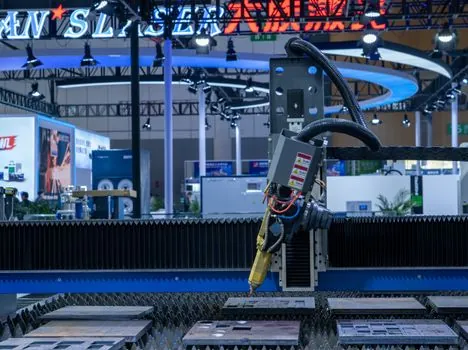
For automotive production, the decisive criteria are cycle time, repeatability, tool life, changeover capability and total cost per component. High-volume plants need stable unattended operation and rapid loading, while EV programs require machining systems capable of handling transmission components, housings, shafts and other complex parts associated with changing vehicle architectures [S1][S5].
For aerospace, precision, material capability, traceability and validation dominate. Aerospace programs often involve smaller production volumes than automotive, so machine utilization, certification and process capability carry more weight than unit price alone. The identified demand drivers for 2026 include aerospace component machining and precision-part requirements [S7].
For energy equipment, the relevant comparison is component geometry and production scale rather than a single application label. Renewable-energy hardware, electrical equipment and grid infrastructure require accurate metalworking capacity, with the electrical segment forecast to outgrow the overall market at 7.3% CAGR through 2033 [S3].
Automotive versus aerospace versus energy equipment
Aerospace offers lower volume but greater emphasis on precision, complex materials and validated performance, while its expansion supports premium machine utilization [S6][S7].
The electrical industry ranks first among the named end-use segments for forecast growth, with an estimated CAGR of 7.3% from 2026 to 2033 [S3]. That growth does not automatically make energy the largest buyer because the segment starts from a smaller base than automotive.
Automotive suits high-throughput, high-utilization systems; aerospace suits compact, precision-capable and process-controlled systems; energy equipment suits flexible cells capable of handling renewable, electrical and grid components. These options are complementary, not interchangeable, and a plant should qualify machines against part geometry, batch size, material and required accuracy.
Automation raises capability and capital requirements
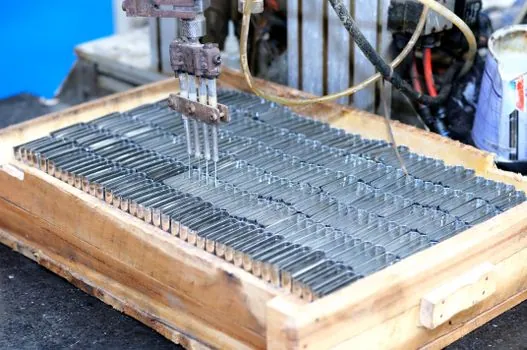
CNC systems accounted for an 85.7% share of the global machine tool market in 2025 [S3]. The technologies already dominate the installed market, so differentiation comes from automation, connectivity, process monitoring and application-specific capability rather than CNC alone.
Connected machine tools support predictive maintenance, adaptive control and real-time optimization. In the United States, Industry 4.0 adoption includes connected devices, cloud platforms, sensor networks and real-time analytics, while multi-axis machines and robotic arms support changing production requirements [S5].
The constraint is cost. CNC purchase, installation, training and maintenance expenses can exceed the resources of smaller manufacturers, and operators need programming skills beyond basic manual-machine operation [S3]. Automation therefore raises labor productivity but also increases commissioning complexity, integration cost and dependence on skilled personnel.
Regional conditions shape where demand is sourced
Asia Pacific held 56.2% of the global machine tool market in 2025, with China leading the region [S3]. A separate assessment assigns the region a 40% global share in 2026 and identifies 7.0% growth in China and an 11.6% CAGR for India [S1]. The two estimates cannot be merged because their scopes differ, but both place Asia Pacific at the center of global supply.
United States estimates also vary. The national market is valued at US$14.36 billion in 2026 with a 4.4% CAGR through 2031, while another assessment records US$12.7 billion for 2026 and a 3.58% CAGR through 2034 [S2][S5]. A separate US estimate gives US$14.5 billion and identifies additive manufacturing growth of 7.8% [S6].
Domestic modernization is supported by precision engineering, automation, digitally integrated manufacturing, reshoring and changing production requirements [S5]. For buyers, regional availability can influence lead time, service access, automation integration and the total cost of ownership, even when parts and machines originate from different markets.
Equipment planning should follow actual part requirements

Machine selection should start with the component family rather than the end-market label. The minimum engineering inputs are material, stock geometry, tolerances, surface finish, annual volume, lot size, required tooling and allowable cycle time. Those inputs determine whether a 3-axis machining center, multi-axis platform, turning center, grinding system, metal-forming machine or hybrid additive-subtractive cell is justified. [S5]
For automotive suppliers, validate repeatability and changeover under production conditions. For aerospace suppliers, validate dimensional capability, material traceability and process-control requirements. For energy-equipment producers, compare part families and cycle-time requirements because demand associated with renewables, semiconductors and smart grids does not point to one machine architecture.
Trackable signals for procurement planning include the electrical-equipment CAGR of 7.3% through 2033, the automotive share of 42.4% in 2026, and CNC penetration of 80–85.7% across the cited market assessments [S1][S3]. Together, these figures support expanding precision capacity while keeping investment tied to measurable workloads rather than broad end-market forecasts.