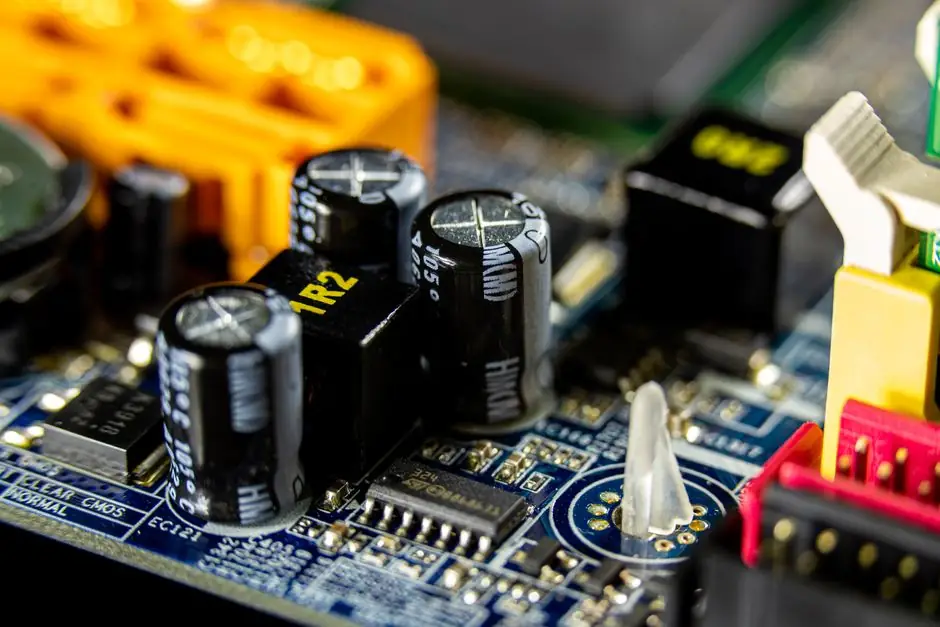
Global semiconductor test equipment sales are forecast to reach $15.3 billion in 2026, a 31.0% increase after 55.3% growth in 2025, driven by AI accelerators and high-bandwidth memory testing [S6][S8].
Demand is concentrated in automated test equipment, wafer-level test, handlers, probers, probe cards, and test interfaces, with memory equipment growing faster than logic and processing semiconductor equipment [S1][S4].
2026 Market Scale and Demand Drivers
Two market estimates define the scale of the 2026 opportunity. SEMI-based forecasts place semiconductor test equipment sales at $15.3 billion in 2026, following 55.3% growth in 2025 [S6][S8]. A separate forecast values the 2026 market at $8.2 billion and projects $13.9 billion by 2033 at a 7.8% compound annual growth rate [S4].
The estimates differ in market scope, but both identify the same demand mechanism: AI processors, HBM, advanced logic, and more complex integrated circuits require greater test intensity [S1][S4]. Rising production of AI processors and high-bandwidth memory is strengthening demand for automated testing, specialized test systems, and semiconductor interfaces [S1].
AI infrastructure is also reshaping memory allocation. That concentration raises the importance of HBM supply, known-good-die control, and test coverage because one failed die can compromise an entire vertically integrated package [S3].
Equipment Types: ATE, Handlers, Probers, and Probes
Automated test equipment represented 55.6% of the market in 2025, generating $9.00 billion, and is projected to grow at a 13.1% compound annual rate during 2026–2032 to $21.30 billion [S1]. Its role extends beyond pass-or-fail screening: wafer-test data supports yield analysis, process optimization, production-cost control, and device characterization [S3].
Automated test equipment is therefore best suited to high-volume validation of AI accelerators, advanced system-on-chips, processors, and memory [S1]. Handlers remain essential for moving packaged devices between test stages and environmental systems, while wafer-level test requires probe cards, contactors, probe stations, and precise die-level measurement [S1][S4].
Probe equipment is forecast to be the fastest-growing product category in the 2026–2033 period, with a compound annual growth rate of 9.1%, as wafer-level testing expands [S4]. This distinction matters because HBM manufacturing must validate individual dies before stacking, not merely inspect the finished package [S3].
HBM and AI Systems Raise Test Complexity
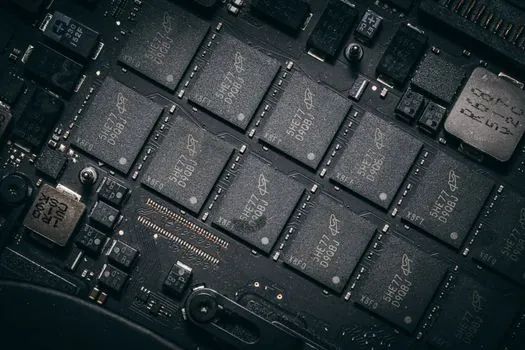
HBM stacks multiple memory dies vertically and connects them through advanced packaging, so every die entering assembly must be functionally qualified before packaging [S3]. Known-good-die testing at wafer level can improve package yield, reduce assembly costs, limit expensive downstream failures, and raise confidence in final system performance [S3].
AI accelerators compound this requirement because they integrate logic and memory within advanced packages, including chiplet-based designs [S3]. Test engineers must characterize each die and its interaction with other dies after integration, rather than evaluating a monolithic device only at final test [S3]. Advanced packaging throughput and HBM availability can constrain accelerator shipments even when leading-edge logic capacity is available [S2].
Memory semiconductors generated approximately $3.16 billion in associated test-equipment revenue in 2025 and held an estimated 19.5% share [S1]. The same research projects a 15.5% compound annual growth rate for memory test equipment during 2026–2032, faster than the 12.5% forecast for logic and processing semiconductors [S1].
Decision Criteria for Test Equipment Buyers
ATE, probe systems, handlers, and burn-in systems serve different stages of production, so no single equipment category can cover the full HBM and AI-chip test flow. ATE supplies electrical validation, wafer-level probing screens dies before packaging, handlers automate device movement and presentation, and burn-in systems apply controlled stress for reliability screening [S4].
For AI logic, the primary criteria are channel density, test speed, measurement quality, system-level coverage, and the ability to support advanced package validation. For HBM, buyers must add die-level testing capacity, high-bandwidth connectivity, precision handling, and known-good-die traceability. For mixed-signal and RF devices, analog, mixed-signal, and RF capability becomes more important [S3][S4].
For capital planning, an ATE strategy offers the broadest coverage of high-volume processor and memory validation, while a probe-led strategy targets the wafer-level bottleneck created by HBM and advanced packaging. Handlers and interfaces should be evaluated as part of the production cell, not as accessories, because throughput and reliability depend on the complete path from wafer probe through package test [S1][S3].
Regional Capacity and Supplier Constraints
Asia Pacific is forecast to represent approximately 42% of the semiconductor test equipment market in 2026, while semiconductor manufacturing accounts for about 48% of demand [S4]. This concentration aligns with the location of advanced DRAM fabrication, HBM stacking, packaging, and customer-qualification ecosystems [S5].
Memory capacity expansion has long construction lead times and high fixed costs, making equipment orders sensitive to both fab-build schedules and customer qualification timelines [S5]. The global memory shortage is expected to persist through 2027, with some industry estimates extending it into 2028 as significant new manufacturing capacity becomes available [S5]. HBM capacity expansion was expected to ease the memory bottleneck by mid-2027 in the January 2026 supply assessment [S2].
Supplier depth is another constraint. Cohu supported more than 25,000 active equipment systems across more than 280 high-volume semiconductor manufacturing facilities in 2025 [S1]. Advantest, Teradyne, Cohu, FormFactor, and Technoprobe cover portions of test platforms, handling, probing, interfaces, and measurement equipment, while Advantest introduced the M5241 Memory Handler for high-performance memory applications in December 2025 [S1].
Demand Fit by End Market
Semiconductor manufacturing is forecast to remain the largest end-use segment in 2026, with about 48% of the market, and AI is the central technology driver for testers and probe cards [S4]. Automotive is projected to grow faster than the overall market at an 11% compound annual rate through 2033, supported by advanced driver-assistance systems, but this does not displace AI and HBM as the leading source of test complexity [S4].
The equipment mix is also broader than ATE. Digital testing is expected to dominate in 2026, while mixed-signal and RF testing are projected to expand at a 10.2% compound annual rate during 2026–2033 [S4]. Consumer electronics, automotive, military and defense, and IT and telecom remain additional application pools, but AI data centers create the strongest near-term mix shift toward advanced logic, memory, and high-density packaging [S1][S4].
Demand planning should track three linked signals: AI accelerator production, HBM stack output, and advanced-packaging throughput [S2][S3]. The interaction between AI chips, probe cards, and test sockets deserves particular attention because interface availability can constrain otherwise funded test capacity.
Risks in the 2026 Forecast

Market forecasts differ materially, with 2026 estimates of $8.2 billion and $15.3 billion, so buyers should verify whether a forecast includes testers, handlers, probers, interface products, inspection systems, or only selected categories [S4][S8]. The narrow AI semiconductor test equipment segment is projected to grow from $5.38 billion in 2025 to $20.195 billion in 2032 [S7].
Demand remains exposed to memory cycles, long fab lead times, qualification timing, and customer concentration [S5]. The structural thesis is strong, but a purchase order is not equivalent to installed capacity: handlers, probe cards, contactors, test sockets, thermal control, and factory integration must arrive together to sustain production throughput [S1][S3].
The most defensible procurement trigger for 2026 is not a general AI spending headline, but a committed HBM or accelerator packaging schedule supported by die-level test capacity, compatible handling, and qualified interfaces [S2][S3][S5].